https://www3.nhk.or.jp/nhkworld/en/news/weather-disaster/tsu...
https://earthquake.usgs.gov/earthquakes/map/?currentFeatureI...
https://www.tsunami.gov/?p=PHEB/2025/12/08/25342050/2/WEPA40
Considering leaving Hokkaido by air if a Hokkaido and Sanriku Subsequent Earthquake Advisory is issued, don't really want to be in a potential megaquake.
I agree the parent will likely be fine, but it can be stressful in the aftermath of a large quake. And if they want to leave the area and have the opportunity to do so calmly and safely, I think that’s justified.
[1] https://www.usgs.gov/faqs/what-probability-earthquake-a-fore...
And also point out that last night’s earthquake in Northern Japan was not a “prophecy”. Just a regular, large earthquake - which do occur pretty frequently in Japan. And I say "large" not just because of the magnitude, but because parts of Aomori experienced 6+ shaking on the shindo scale [2] which is categorized as "brutal" [3].
[1] https://en.wikipedia.org/wiki/July_2025_Japan_megaquake_prop...
[2] https://www.data.jma.go.jp/multi/quake/quake_detail.html?eve...
[3] https://en.wikipedia.org/wiki/Japan_Meteorological_Agency_se...
The July megaquake prophecy scare was dumb because it originated in a work of fiction, not intended to be taken seriously by its author and not based on any scientific evidence. If the "prophecy" had come true, it'd be by luck alone. fwiw, I'd say it didn't come true; the 8.8 magnitude earthquake was near Kamchatka and didn't actually damage Japan, though a tsunami seemed plausible enough that there was a precautionary evacuation.
This "strong quake" is a thing that happened, not a "smart prophecy" [1]. Talk of aftershocks is not a prophecy either; it's a common-sense prediction consistent with observations from many previous earthquakes.
[1] smart prophecy is an oxymoron. A prediction is either based on scientific evidence (not a prophecy) or a (dumb) prophecy.
Again, sorry if this seemed antagonistic or something, I really am just unsure of what you were saying.
A relatively major (but not M8.8) quake has now hit in December 2025. It is intelligent to expect there may be aftershocks in the days after a significant earthquake actually happens, which can sometimes be larger than the initial quake. This is a well-accepted scientific fact born out of large amounts of data and statistical patterns, not whimsical doomsdayism.
Fukushima's M9.0-9.1 was around a 1-in-1000-year scale event. The last time Japan saw such a powerful earthquake was in the 869 AD. It would be reasonable to expect one of that scale to not happen again for another 1000 years.
BTW, you are safer in hotel than outside. No need to stay in lobby, go to bed, just protect your head. I experienced much bigger one in Sapporo in 2018.
- make sure nothing can fall on you when you're in bed (no mounted artwork above the headboard; no lamps etc on side tables that are high enough to fall on you)
- make sure you have footwear in your bedroom, so you can be mobile if there's broken glass everywhere
- store extra drinking water somewhere (I used a 6-gallon carboy that I periodically refilled)
Probably there are other good things to do, but all those made a lot of sense to me. Most of us spend more time in bed than in any other fixed location, so making sure the bed is a safe place rings true. And water is life.
Guidance varies. California list here https://earthquake.ca.gov/wp-content/uploads/sites/8/2025/02...
You should have water, food, medical supplies, and cash.
btw you might find this interesting https://www.amusingplanet.com/2021/01/san-franciscos-hidden-...
I also recommend SF people consider joining NERT: neighborhood emergency response team. Disaster after disaster should teach us the opposite of what you argue in terms of response: in fact it's more likely that the scale of people affected will quickly overwhelm resources, and the existence of choke points will severely limit movement of people and resources, especially if infrastructure is damaged and people are flooding out of the city. That can be mitigated by having locals trained to help facilitate emergency response efforts. It's less "pulling people out from under bookshelves" and more "help managing the bureaucracy of the fire department," forms on forms on forms! Though the training does involve pulling someone out from under a bookshelf. It's a week long and quite fun!
That "worn down house" might be good until "upper 6". Beyond that it all depends on when it was built and the associated construction standards at the time.
Source: https://isec-society.org/ISEC_PRESS/ASEA_SEC_03/pdf/St-5_v5_...
Two issues: 1. If you're making this choice during an earthquake, "outside" is often not a grassy field but rather the fall zone for debris from whatever building you're exiting. 2. If the earthquake is big/strong enough that you're in any real danger of building level issues, the shaking will be strong enough that if you try to run for the outside you're very likely to just fall and injure yourself.
It all stems from an earthquake in 1923 in Yokohama which killed 140,000. Since then Japan's has over time developed some of the strictest seismic standards.
“The ‘follow-up earthquake advisory for the Hokkaido and Sanriku Coastal regions’ was established following the earthquake (M7.3) that occurred off the coast of Sanriku on March 9, 2011, two days prior to the Great East Japan Earthquake (Tōhoku Region Pacific Offshore Earthquake) that occurred on March 11, 2011.”
I was eating lunch in a fourth-floor restaurant in Nihonbashi, Tokyo, on March 9, 2011, when that preliminary tremor occurred. I had felt many earthquakes before, but that one seemed different: longer, slower, creepier. It didn’t cause any damage, but I often recalled it after the much bigger one struck two days later. (I missed the March 11 quake, as I happened to leave for Osaka just a few hours before it hit. My office back in Tokyo was damaged, though.)
[1] https://kankyoanzen.adm.u-tokyo.ac.jp/%e5%8c%97%e6%b5%b7%e9%...
0.7m observed about 40 minutes ago.
With the Kamchatka and other earthquakes in the news recently I had a fear that were building to some major event but turns out that this year is about average if not slightly below average for major quakes along the ring of fire.
On the other hand, if a shock doesn’t release all energy it may come to rest in a relatively weak spot that will soon give away again (https://en.wikipedia.org/wiki/Earthquake_swarm: “The Matsushiro swarm lasted from 1965 to 1967 and generated about 1 million earthquakes. This swarm had the peculiarity of being sited just under a seismological observatory installed in 1947 in a decommissioned military tunnel. It began in August 1965 with three earthquakes too weak to be felt, but three months later, a hundred earthquakes could be felt daily. On 17 April 1966, the observatory counted 6,780 earthquakes, with 585 of them having a magnitude great enough to be felt, which means that an earthquake could be felt, on average, every two and a half minutes.”)
Because of that, I think an earthquake will increase the probability of one occurring again soon, but decrease its strength.
New Zealand’s 5th most deadly disaster was Christchurch’s 6.2 which killed 185 people. It was a shallow aftershock from a larger, less destructive quake.
The damage was huge.
Energy scales as 10^(1.5 × ΔM)
ΔM = 9.0 − 6.0 = 3.0
10^(1.5 × 3) = 10^4.5 ≈ 31,600
https://www.usgs.gov/faqs/what-probability-earthquake-a-fore... Suggests 5% for larger quake to follow within week. But overall most sources I could find suggested it's hard to know, needs more research
1: https://www.reddit.com/r/askscience/comments/10wecl8/do_litt...
The above link does not answer that question. It is relating stress release to "fault strength", or the maximum shear stress that can be withstood by the fault. There is an incidental relationship with depth that plays a role.
The video linked nearby (on criticality) also does not address the question at issue.
I'm only replying because I work adjacent to this area, and my understanding is that the idea that small EQ's release stress is a myth. Here [1] is another link, listed as #1 in the "Myths" category. And you can dig up quotes from none other than Lucy Jones [2] saying that this is a myth.
I don't work directly in this area, so I'm not willing to say absolutely no. But I'd really like to see a head-on reference supporting the claim that it's not a myth.
So the statement "EQs release stress" is true and it follows that adding the modifier "small" to the front doesn't change this.
It should also be immediately apparent that it would be very surprising if there were not statistical implications as a result of this. So surprising in fact that I would suggest that the burden of evidence should fall on those claiming that any such statistical effects are unexpected.
Like how buying a Porsche costs money, and leaves you poorer than before you bought it, but when you see stranger buy a Porsche, you update towards believing that they're wealthy rather than poor.
Disclaimer: I am not a geoscientist.
In reality I think (layman's impression) that there's rough (post hoc) evidence for both things. Foreshocks followed by noticably larger EQs as well as trains of progressively smaller EQs.
To me a myth is something that isn't true at all, not something that we do not have data on to be able to rule it out completely or that may be an influence just not a capital one. I think the most generous reading of the 'myth' claim would be that the energy available in the smaller quakes is too low to have a meaningful effect on releasing energy from a larger quake and I'll buy that. But at the same time an absence of such fore-shocks in an area where earthquakes are known to happen indicates that stress may be been building up over a longer time and that stress would be released in the next bigger quake if and when it happens.
This too may not be a big enough difference due to the immense increase in energy present in larger events (the scale is logarithmic). But its effect is quite probably still non-zero and for it to be a myth it would have to be zero.
Myth = the sun rotates around the earth
Myth = unicorns exist
Myth = the earth is 6000 years old
Those are directly falsifiable, and we know all of these to be categorical falsehoods.
Smaller earthquakes can - depending on local crust composition and other environmental factors - affect the amount of energy released in a larger one following, is not necessarily a significant effect (though even this would be tricky to establish) but I find it hard to believe they are completely unrelated though the effect may not be large.
Insignificant effect != Myth
Myth 5 is "Small Earthquakes Relieve Pressure and Prevent Larger Ones"
The long term absence of stress relief small quakes on a known fault line might be bad news, or no news at all, statistics are where the difference is here, not in particular events. See also, 'the big one' and various theories around it.
(stresses build up and are often released through many small, unfelt earthquakes (25:54). If these small movements don't dissipate the stress, it can accumulate and lead to a powerful chain reaction (26:25) * disclaimer I used YouTube's built-in AI to find/summarize the timestamps, as I couldn't remember offhand where it was when I previously watched this.
It's worth noting that they are mostly interested in critical phenomena in general, and earthquakes are kind of a drive-by application, treated along with fires and sand piles.
They do hint around the edges, but they don't head-on make the claim for earthquakes that small EQs materially lessen stress buildup and thereby make larger EQ's less likely.
I was looking for a credential of one of the people they interview, to see if they are really a solid earth person or more of a critical phenomena person -- their names aren't easy to find. This particular myth ("small earthquakes relieve stress") is a bit of a stinker in the solid earth community, and I think a solid earth person would be quite careful about their words as they discuss this.
So the only thing we can say for sure is that it is still extremely difficult to predict earthquakes.
In the last 6 years there have been two or three earthquakes that caused enough water to slosh on to the floor.
Of those only the 2021 Fukushima earthquake caused any fish to slosh out - perhaps 10 medaka if I recall correctly. Luckily I was home and I was able to save all the fish, however there was one adult red cherry shrimp that didn't make it because I had trouble picking it up off the floor. I cleaned up the water with some paper towels and it didn't seem to cause any lasting damage.
I think if I had a 600 lb (270L?) tank or expensive fish though I would probably have a different perspective.
Seismic measurement, where weak or strong faults that are measured as seismometer, textual references to cartography, taking stock of tectonic plates.
[1]: https://news.ycombinator.com/item?id=42331326
[2]: https://web.archive.org/web/20250318161013/https://www.tsuna...
Shouldn't be too bad; USGS forecasts up to 1 meter tsunami.
https://www3.nhk.or.jp/nhkworld/en/news/weather-disaster/tsu...
What is a typical maximum wave height during hurricane seasons in north of japan?
WRT comparison with hurricane waves, I assume they carry a lot less energy than tsunami's, because they are "superficial waves" - caused by the friction of the wind on the water - whereas a tsunami wave is caused by the movement of a huge mass of mater.
[1] https://en.wikipedia.org/wiki/2011_T%C5%8Dhoku_earthquake_an...
I have rarely seen something as scary as this.
In Japan cables are (still) mostly overground. Use of underground is still a relatively new topic as addressed by the TEPCO website[1]. The first footer on the bottom of that page provides a nice TL;DR of the state of play:
     The plans for underground conversion have consisted of "Plan for Underground Conversion of Power Lines", which covered three terms from FY 1986 to FY 1998, followed by the "New Plan for Underground Conversion of Power Lines" from FY 1999 to FY 2003, and then the "Plan for the Removal of Utility Poles" from FY 2004 to FY 2008. Based on these plans, approximately 7,700 km of lines all across Japan were placed underground over 23 years by the end of FY 2008 (with TEPCO responsible for approximately 3,500 km).
     Currently, we are consulting with related personnel regarding items such as locations for conversion as based on the new "Guidelines for the Removal of Utility Poles" established in FY 2009.
Urayasu looks built on the water and all I see in the linked video is a threshold condition where the water is just barely peeking up through the ground below. People are still walking around, cars driving. There are far more chaotic and destructive scenes on youtube from that tsunami.
We think the ground is familiar too. So watching it change into something else, a squirming alien beast, is a different kind of fear. It violates your assumptions about what is safe, about what is possible at all.
(My school also offered Latin, but etymology seemed a much more direct/easier way to get the same basics. I just wish someone had taught me about demographics so I would have taken Spanish instead of German.)
No, not every language works this way, because not every language uses Latin and Greek root-words like this.
> The Japanese government set up a task force at the crisis management center in the prime minister's office at 11:16 p.m. on Monday in response to the earthquake.
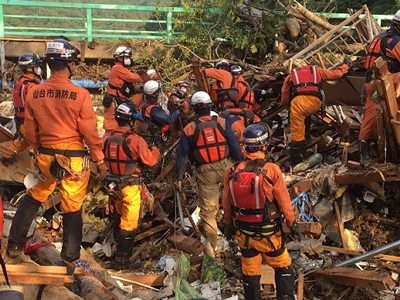
A thousand Naruto shadow-clones just got deployed. I'm not being cute, these guys are heroes and role-models to all.
I assume that movie is for Japanese civil servants like the show Silicon Valley is for programmers. Stuff like the repeated meeting-room changes for no apparent reason reads as too specific and weird to be made-up.
This character can clone himself hundreds times to help others, with art often mirroring the thousands of recovery workers seen in actual event footage.
My comment intended to link back the image of childhood heroes as corporeal selfless adults
The usage here by GP might just be because everyone looks/is-dressed the same and is working in unison, and since they're Japanese, anime comes to mind. In the show, Naruto often uses shadow clones to pull off more complex techniques, throwing himself, having them take turns punching/kicking, or in the case of the rasengan he divides the work of controlling the ball of chakra since he struggled to do it successfully by himself.
Care to explain the reference? Do people dress up like a character from the TV show and help out people or what's going on?
During disaster work, you see swarms of recovery workers and the joke/reference being made is that this looks like Naruto doing a "shadow clone" technique.
[0] https://i.redd.it/psseu93j62la1.jpg [1] https://sendai-resilience.jp/media/images/efforts/case31_ima...
If a tsunami affects me on a mountain something would be seriously wrong, so I’m not going to worry.
Edit: very, very quickly after the quake, which we felt, I might add. I got a notification via the 'Safety tips' app long after. I think I was on Airplane mode at the time.
It was rather interesting seeing things shift around leaving a permanent imprint that there was in-fact an earthquake and it wasn't some kind of illusion when earthquakes these size couple of decades ago would cause non zero amount of damage.
Although, I am scared for tokyo about the predicted earthquake that would push all these systems near the breaking point and even beyond it, but hopefully the past in not prediction of the feature and instead it'll just be a lot of smaller earthquakes.
The problem with earthquakes is when they start you know you're in one but you have no idea where you're headed, whether this is as bad as it gets or whether you're going to end up in a pile of collapsed rubble and what is the best decision greatly hinges on something you can't know ahead of time, which is the peak magnitude and the kind of earthquake you are experiencing.
Same for me. If you don’t grow up with a number of small regular quakes or live in high-rise building that sways with the wind, it’s pretty unsettling to feel, what you always know as stable hard ground, solid buildings all of the sudden bouncing around. Rationally you know what it is and how it works but it’s still scary.
Having a bugout bag and emergency supplies and water on hand is a reasonable idea everyone with the means ought to do; it's a good thing to not have to depend on gov't intervention (not because of a lack of trust, but because the general public will, and the potential for mob situations is high).
But what should I have read about to know what to do? Topological maps and flood planes?
So my solution would be to look at historical data for earth quakes in his area so he knows basically what to expect.. that way when it starts shaking, he doesn't think "omg how big will this be?" And instead can know "ok this will be between 2.9 and 3.5 like the last 500 quakes in this area for 50+ years. Thank God no one has ever died in this area from an earthquake"
And then he can also know that he is prepared for even a much bigger quake in his area before... Because he prepared something.
This is obvious stuff. In case the guy I wrote to didn't know, now he does. If he wants to dwell in his neuroticism he can.
Of course, just an anecdote, and those people could also have a general lack of fear of death, but the difference between the two of you made me think of the event again.
It is a transferable skill. Have tried ice skating twice, could just do it fine.
https://www.tsunami.gov/events/PAAQ/2025/12/08/t6yfla/1/WEAK...
WEAK53 PAAQ 081430 TIBAK1
Tsunami Information Statement Number 1
NWS National Tsunami Warning Center Palmer AK
630 AM PST Mon Dec 8 2025
...THIS IS A TSUNAMI INFORMATION STATEMENT FOR ALASKA, BRITISH COLUMBIA, WASHINGTON, OREGON AND CALIFORNIA...
EVALUATION
----------
* There is no tsunami danger for the U.S. West Coast, British Columbia, or Alaska.
* Based on earthquake information and historic tsunami records, the earthquake is not expected to generate a tsunami.
* An earthquake has occurred with parameters listed below.
PRELIMINARY EARTHQUAKE PARAMETERS
---------------------------------
* The following parameters are based on a rapid preliminary assessment of the earthquake and changes may occur.
* Magnitude 7.6
* Origin Time 0515 AKST Dec 08 2025 0615 PST Dec 08 2025 1415 UTC Dec 08 2025
* Coordinates 41.0 North 142.3 East
* Depth 32 miles
* Location in the Hokkaido, Japan region
ADDITIONAL INFORMATION AND NEXT UPDATE
--------------------------------------
* Refer to the internet site tsunami.gov for more information.
* Pacific coastal regions outside California, Oregon, Washington, British Columbia, and Alaska should refer to the Pacific Tsunami Warning Center messages at tsunami.gov.
* This will be the only U.S. National Tsunami Warning Center message issued for this event unless additional information becomes available.
$$
I guess we'll know, soon.
This all happens in geologic slow motion, of course.
https://www.livescience.com/37418-subduction-zone-forming-of...
https://www.alaskasnewssource.com/2025/11/01/state-seismolog...
My predictions:
Actual zombie president in 2044.
New COVID in 2061.
Dinosaurs come back in 2123, reveal they've been steadily populating hidden Nazi underground bunkers and have declared peace with the yeti.