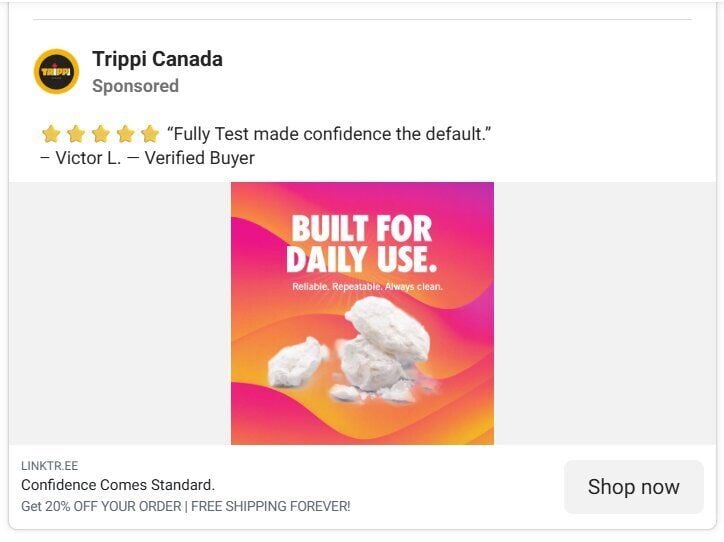
This is actually textbook monopoly stuff, well established in antitrust literature and well understood by regulators: when you see a firm institutionalizing how to defend criminal activity as a part of their business model, it's a big flag that said firm probably has some kind of immunity from how healthy, regulated markets operate. Why America has decided not to prosecute corporate criminals anymore (given that at various points in its history it was actually pretty good at this) is the really interesting question of our time.
I'm eagerly waiting for the day when the elderly people in my family swear off the internet entirely.
We're at the "hmm, I think smoking is probably bad for us" stage. Next up, serious attempts at quitting.
Not uncommon but they still use them, that's how monopolies work. I mean, people do hate monopolies but that changes absolutely nothing.
The network effect is real and cannot be broken without a concerted media push, which is another can of worms I'd rather not open this year.
There is also a cost to switching products, and that has nothing to do with monopolies. Unfortunately the M word is thrown around to describe basically any company with a significant market share and it totally dilutes the meaning of the term.
?
> monopoly: the exclusive possession or control of the supply of or trade in a commodity or service.
???
A monopoly in an economic sense is clearly defined. It is not "significant market share". The person who started this discussion claimed it was "textbook monopoly stuff".
"Near monopoly"
Why the dishonest misrepresentation?
I'm not gonna argue on New Years Eve. Hope you have a great 2026 <3
In the gilded age we had robber barons and trusts. That lead to trust-busting and anti-monopoly regulation. Eventually the history is forgotten and people see the current regulations as burdensome. Someone gets into power with a mandate to deregulate, and we eventually end up with monopolies again.
Private enterprise and free markets are good. Monopolies are not. It doesn't have to be one or the other but nobody can seem to take their hands off when we reach a happy middle ground.
The answer is corruption.
https://www.thestar.com/news/investigations/we-ordered-cocai...
https://bloximages.chicago2.vip.townnews.com/thestar.com/con...
While I can see how this could be "obviously" for drugs if you're specifically looking out for this sort of stuff, it's disguised well enough (eg. no overt references to drugs) that an automated algorithm would have a hard time detecting this without massive collateral damage.
The reasons for that utter lack of prosecution leading to massive corruption is a microcosm of the broader circumstance to which you've pointed out.
Having read the Knapp Commission report, I am no longer of the view I have anything original to say on this.
Maybe it does hurt the value of “normal” ads to be shown next to scams, but the scam ads are so valuable that it actually works out as a long term net positive
I think that I used to assume that if scams became prominent enough they would produce a backlash, either regulatory or otherwise, but maybe that’s just not the case.
They have to work hard to shut out critics as long as possible.
You end up with a few greedy asshats aware of the harms being done that just don't care, lots of money being made, and plausible deniability all around, with things never getting bad enough for an employee to feel like they have to take a stand or report wrongdoing.
The last thing they want is regulators forcing them to spend at least $X in resources to limit scam ads to some target and have it hurt their margins.
Even if X is 0, it would mean lost revenue from the scammers as well.
If something looks cool, I will search it instead of clicking through. I have been seen malvertising campaigns on FB (some not even requiring a click).
If the product seems legit and fair priced, I will buy it. Rarely do I find both are true when I learn about it via Facebook. My default is: scam, or at least scamm-y.
Are most people less careful? I wonder.
You are not the customer. The customers are the people paying for the ads, and they will keep using it as long as they think it’s better than not using them.
I have my history turned off so I get some really bottom of the barrel ads, questionable medical advice, gross out ads, borderline porn, weird conspiracy theory stuff (5G blocking hats), and straight scams "buy our product or AI will replace your job" and my recent favorite "if you're not buying our product people are manipulating you ... so give us your money so we can help you" (the irony is thick with those).
Youtube is scam / bad idea central when I turn it on.
I tried to report an ad that had literal nudity/porn in it. The report page was acting funky so I pulled it up manually in safari where I wasn’t logged in. and it made be log in to report the ad because the ad was age restricted. why is it running as an advertisement at all then? Clearly it got flagged somewhere to be age restricted.
YouTube has approximately zero incentive to fix this. They are a complete monopoly and there isn’t any consequence to any of the blatantly illegal products that I see advertised on their platform. I’ve seen ads for drugs and firearms. The firearm ad was claiming it was “easy to sneak past security” but the highest consequence is that the ad account gets nuked and another immediately takes its place.
I'm not against advertising, in fact many times I have seen something advertised, thought "I want that!" and bought it and sometimes that thing became my new favorite.
If I am a platform user (2) and don't like the ads I can "exit" the platform as a whole or I can "exit" by being unresponsive to ads and when it comes to ads on YouTube and Meta platforms at least, I'm not buying it!
People in market (1) are going to invest in advertising up to the point where it is profitable, and the less responsive market (2) people are the smaller the pool. Many advertisers are also sensitive to brand safety and part of that is the content you are against but another part is the other ads on the platform.
This happens. It matters to you and to the people paying for those ads … if they could really quantity it.
But it’s too tiny to matter to the media outlets. You’re talking about real clicks, which are already a small fraction. Real clicks on ads that actually offer anything desirable … that’s just too small a part of total clicks. Nobody can make much money on that 0.5% (?) of the traffic, no matter how idealistic they are. Fake clicks on misleading ads are the bread and butter of the market.
As a vendor, expecting online advertisers to get you customers efficiently is like expecting a real estate agent to get you the best sale price. They care about their own revenue, not yours.
Look at even Amazon's own site. They're hardly bothering to show you real stuff that you actually want. Either they're completely incompetent, or that's just not where the money is.
I actively skip over ads in search results, skip whenever possible in video, and pay to remove them completely if it's offered (subscribing to Kagi and YouTube Premium). If I do end up seeing an ad for something that looks interesting/useful, I don't click on it. I search for it separately. I treat ads the same way I would a random text claiming to be my bank. I don't click the link, I go there on my own so I know I'm in the right place free of any funny business. The side effect of this is the merchant loses context on how effective their ad was.
In contrast, when I see almost anyone else using Google, they actively look at the ads first. They treat the ads as if they were the top organic search results. If they search for "Microsoft" and Microsoft paid for a top ranked ad to their homepage, they will click on the ad link instead of the real organic result a few lines down. This makes these people very susceptible to advertisements posing at legitimate websites, yet their behavior never changes. I've said something to multiple people about skipping down to the actual results, and they claim to like the ads, or don't see a difference and just pick the first link that seems like what they want. Many of these people are otherwise tech savvy, some of whom spent decades working in the tech sector.
It seems we are the weird ones for avoiding the ads or losing trust. After watching MegaLag's 2 most recent videos on YouTube about Honey[0], I can start to see why the companies behind all this don't care. Policing these types of issues lowers their profits, which effectively incentivizes scams and fraud. The people hurt are the merchants and the consumers. You'd think they would be the only two who matter at the end of the day when it comes to advertising, but apparently not.
[0]
Part 1 (from 1 year ago): https://www.youtube.com/watch?v=vc4yL3YTwWk
You know that book/movie, "The Firm", in which the new law school graduate gets a surprisingly lucrative job offer? (spoilers) It turns out that the reason is Crime.
"Big law" firms are a good example of this too: they pay way more than some random family law practice.
But some companies have the choice of hiring, for example, one really great engineer for $500k, and one very solid one for $250k.
Another organization might want to hire three engineers for $250k.
A third, perhaps, wants to hire seven at $100k.
They're all spending the same amount of money, but not every company can "afford" that spend -- especially if they need several engineers working on unique feature sets.
I just think it's a leap to say that every company paying more than average market value is criminal.
What types of clients might those be?
But the context of the conversation is white collar crime, corruption, or unfair practices, and paying significantly above market rate.
Costco is a very egalitarian organization. They pay is flatter across the entire hierarchy. Lower rank people are paid more, higher ranked people are paid less. They are a super ethical organization, I'm a big fan (though they could do better at incentivizing innovation).
It's just not the same pattern as paying gigantic amounts of money to hoard up "CS grads" or lawyers.
At some point does complacency with scammers become racketeering or criminals conspiracy? Knowledge is an element of crime and they know people are being scammed yet look away from it.
To quote Randall Munroe, "Correlation doesn't imply causation, but it does waggle its eyebrows suggestively and gesture furtively while mouthing 'look over there'."
  Zuckerberg: Yeah so if you ever need info about anyone at Harvard
  Zuckerberg: Just ask
  Zuckerberg: I have over 4,000 emails, pictures, addresses, SNS
  [Redacted Friend's Name]: What? How'd you manage that one?
  Zuckerberg: People just submitted it.
  Zuckerberg: I don't know why.
  Zuckerberg: They "trust me"
Zuckerberg: Dumb fucksThe only thing I can do is delete all my Meta accounts. One of the riches companies in the world with some very smart people and its ruined by toxic leadership.
If this was my product, I’d feel ashamed by how trash it is. I really hope governments force stricter regulations on meta and ads in general. Meta should be liable if a user is scammed by an ad on their platform. Plane and simple.
The rank and file are complicit. There are people commenting on HN every day who are paid handsomely to work at Meta and to act willfully blind to the awful ethics their company has displayed for two decades.
"Meat eaters" and "grass eaters".
The meat eaters were the officers that actively pursued opportunities to be corrupt and spent a great deal of time on the job engaging in corrupt activities instead of police work. The grass eaters were essentially normal officers who would turn a blind eye or do things that had been normalized such as accepting or soliciting small bribes opportunistically.
In the words of the report, "the grass eaters are the heart of the problem".
Leadership can certainly be blamed, but I think it comes down to their hiring practices. When you prioritise leetcode-isk wrote memorisation and deprioritise intrinsics (like ethics, shocker), you end up with a company full of people who are willing to do anything to achieve their singular goal of making TC go up. Morality or product quality be damned.
It's a clear example here. Meta is wasting good customer's money by showing them alongside scams and just devaluing ads by decreasing user trust. But also we only have these regulatory agencies because of this type of selfish behavior in the first place.
It sucks that these regulatory agencies cost so much money. But why do we blame the government? It's completely a problem we create. If people and companies didn't act like shit we wouldn't need those expenses in the first place. Let's not blame the regulators (for existing, but do for being ineffective) and blame the "bad apples" that are spoiling the barrel.
But what I do appreciate is that other countries are stepping up and not just waiting for the US to fix things. Real progress is being made because of this even if it still has a long way to go.
Yes but if the government is ineffective at solving the issue with the vast amounts of money we give them, we now have two problems.
Your point basically boils down to "regulators are ineffective, but that's okay because the original problem isn't their fault". Sorry, but I actually care about throwing my hard earned money into the void because it's "ok" that the regulators suck.
Look up Republicans policy to 'starve the beast'. Republican's policy is to run up the government debt so high it can't function. They don't care about money/costs, they just do not want ANY government oversight. They EXPLICITLY demonstrate this with their 'starve the beast' policy. It's not about money/cost, it's about undercutting oversite.
Regulators are ineffective because half of the political environment, Republicans, do everything they can do to make them ineffective.
If producers have too much power in the market we see distortion, eg. When monopolies exist.
If consumers have too much power in the market we see exploitation.
If regulators have too much power in the market we see stagflation.
Markets don't operate efficiently without all three components.
But I think we often miss the messaging on regulators. In some way I agree with the right. It's a waste of money. But ones creating the waste isn't the government, it's those that need to be regulated
Do you just mean that you are trying to troll people into political arguments where you personally deem that only you know the truth?
https://www.austlii.edu.au/cgi-bin/viewdb/au/legis/cth/conso... (Part IVF)
Possible ways to kept Meta ad records honest and transparent:
- CCing archive.org
- Store on an append-only system with hashing, hello blockchain use-case ha ;D.. IPFS or even GitHub should do, no crypto payments required.
- Third-party government bodies could require copies.
Governments seem to be a step behind when it comes to protecting their citizens from unethical social media corporations. As in this case, any sensible regulations that are imposed will be circumvented in the most dishonest ways possible. Regulations often aren't imposed at all due to pressure from the U.S. government, whom Meta has considerable influence over. Could international cooperation to regulate social media solve some of these issues?
_____________
[1]https://systemicjustice.org/article/facebook-and-genocide-ho...
https://townhall.com/tipsheet/dmitri-bolt/2025/12/24/five-eu...
I guess we should count ourselves lucky..
Let's see how many people we have in poverty and poor, unaffordable medical conditions in the US in 10 years due to government destruction/stagnation and a lack of controls on the impacts of AI.
Any day now.
She told me that she saw an ad on Facebook to double her money and asked her daughter if it was a legitimate opportunity. Her daughter said to her "If you ever think about calling me to ask that question, you can put down the phone because it's a scam."
Consider the TV industry in the USA: it makes huge amounts of money from political ads, which are for the most part scams. The same people who make money from those scam ads also control the news. So guess what? No pressure to not scam the population with false advertising.
Perhaps it helps to have not grown up in the US. If you've been here your entire life there's a frog boiling syndrome where none of the weirdness seems weird. This is why JD and co witter on about how terrible Europe is -- they need to keep up the delusion that scammers should get to scam and there's no hope to stop them. The recent moves to sanction European campaigners against big tech disinformation is really: the scammers got the root password to the country and are using it to fight back.
And even the companies and industries that used to be pretty benign have realized that all the growth is in scams, so they've added whole divisions of their business to try to get you onto recurring payments for stuff you probably don't want, which can all be signed up for with like 1 click, but cancelling needs a phone call during Eastern Time business hours and a 25 minute wait on hold.
Eh - some other countries I've lived are way scammier. The difference in the US is the distinction between legal and illegal scams, and because of better enforcement, most of the "scams" in the US are legal. They can be more sophisticated because the bar is higher here.
It's interesting that Facebook was trying NOT to uncover identities, they're famous for insisting on real names.
>As a result, Meta decided to take the tactic global, performing similar analyses to assess “scam discoverability” in other countries. “We have built a vast keyword list by country that is meant to mimic what regulators may search for,” one document states. Another described the work as changing the “prevalence perception” of scams on Facebook and Instagram.
Well, more just the ads that matched the specific queries the regulators were using. So yes, they removed some scam ads, but there are probably many more that people are still seeing just because those didn't match the search queries the regulators were searching for.
> It's interesting that Facebook was trying NOT to uncover identities, they're famous for insisting on real names.
It isn't really surprising. If they required real identities, they wouldn't be able to make money from scammers using throw-away accounts, or from entities subject to US sanctions, so there is a monetary incentive not to know the identity of the ad customers.
If this method actually removed a significant percentage of scam ads, rather than just heading off scrutiny, then a) doing proper verification wouldn't cost them $2b a year like they claim it would, and b) their quarterly revenues would be taking a meaningful (single digits %) hit and the share price would suffer.
The real problem as I understand it is that they didn't stop the ads from entering the system, but rather identified the words used by regulators and only deleted those ads (after an unspecified amount of time online) from the system.