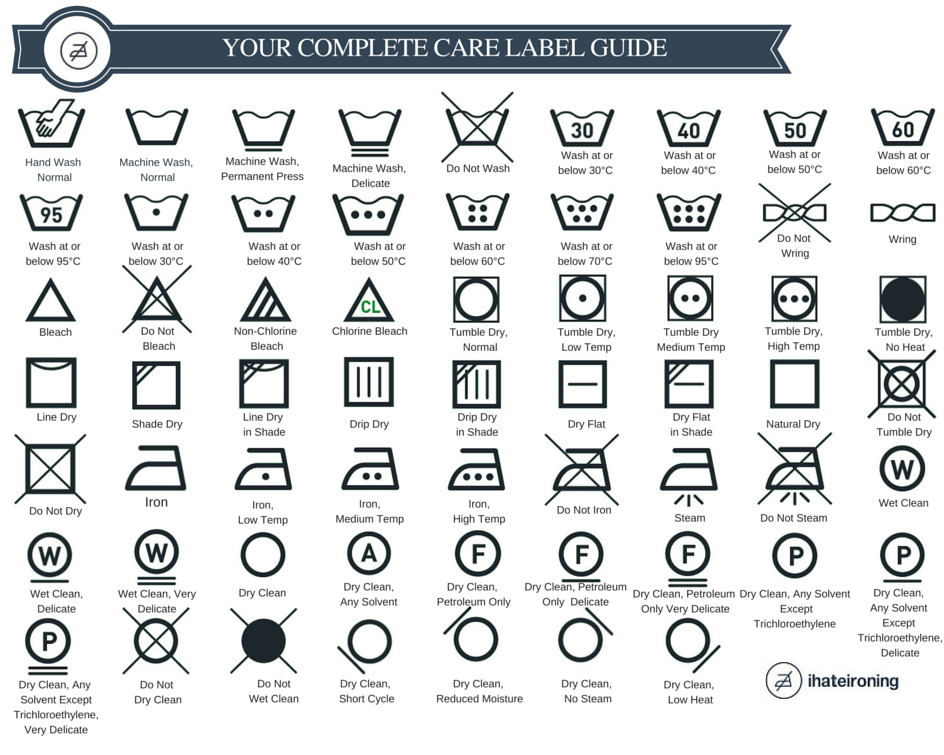
Is anyone else freaked out about cleaning their dryer's lint filter given all the new fabric materials? I'm putting together a dryer-vac system to keep it from billowing into the air of our small laundry room.
A year and a half ago I developed symptoms of what was some form of bronchitis. Lots of mucus, constantly coughing, etc. I was pretty freaking sick. I tend to wait some things like this out, but it wasn't going away so I went to a doctor and got some medications including albuterol and some kind of steroid (prednisone, I think). It got a little more manageable, but didn't seem to be getting any better.
One day, I realized how much of a dumbass I was the whole time.
The apartment I was living in had a laundry room, but it was tiny and I got tired of both hauling laundry up and down multiple flights of stairs and having to fight for time with the few machines that were there. I bought a small washer and dryer pair from Black & Decker which were designed for apartment living. Kinda off topic, but there were no hookups in my unit, so I had to jerryrig a water connection using some collapsible garden hoses that connected to my shower and its drain. Was kinda hilarious but worked great.
I made the mistake of thinking that I could just allow the dryer to blow through two sets of lint traps and have a fan blow air out of the window to manage moisture and remaining lint making it through. What I didn't realize was how inadequate the traps were. Because I worked from home, I spent a lot of time in that bedroom, including when the dryer was running. I was breathing in all sorts of stuff without knowing it.
Once I stopped hanging out in that room while the dryer was running, bought an air purifier, and made sure to frequently clean my apartment of dust, my symptoms rapidly started to go away.
If I had to do all of that again, and I couldn't just have the dryer blow directly out the window, I would find some way to have it do a second pass through a HEPA filter, perhaps after drying the air with something like calcium chloride.
I shudder to think of all the microplastic fibers that remain somewhere in my body.
- American Giant is pretty good for their pullover hoodies. They'll wear out at the cuffs first, but I've kept a single hoody in use for like five years with some repair stitching.
- Standard Issue makes good waffle knit shirts. They'll last a few years depending on how often you wash them.
- Duluth Trading makes some good cotton shirts and boxers. Quality has declined slightly, but they're the best plain cotton shirts and boxers I've found so far.
- Big John makes denim jeans on old Levi looms. They even use cotton stitching.
- Carhartt makes some okay dressy dungarees. Their work pants are worthless these days though (in my experience). They've been pivoting to lifestyle for a few years now.
- Filson in my opinion has declined, but they're still pretty good. The socks are great, but they're overpriced.
(Only posting this because I've struggled finding decent clothes myself and it's hard to tell what's good when you're shopping online)
While looking at the brand might be a good heuristic to rely on in the short term, the temptation is too high for vendors to take advantage of their brand power to offload cheaper fabrics for higher margins, I'm looking at you H&M and UNIQLO ...
As you've said, you really can't judge by the brand.
my own recommendation is spend some money, and look at tags. I shop at JCrew and higher end fashion companies, but still check material and care labels.
Not all cotton is created equally. "Egyptian cotton" was long prized because of the long fiber lengths. Cotton fibers are very smooth and slick, and only stay together in thread because of friction along their length as they lay with neighbor fibers (often twisted, where friction becomes exponential instead of linear). Short-fiber cotton is cheaper and easier to source; ergo, cheaper clothing tends to be made of it. Short fibers are also much more likely to slip within the thread under heat, lubrication, and motion (washing and drying). Obviously, they are also more likely to completely fall out of the thread, creating lint.
This is really only true for cotton and very similar fibers. Linen fibers are generally all multiple inches long, so there's less of a quality issue (they are made from rotting away everything but the longitudinal support fibers of the plant stalks).
Wool varies greatly in surface texture, especially after modern chemical processing, and fiber length isn't an issue because the fibers are also inch-long or better. It shrinks, however, because its friction is SO HIGH that it won't give up (stretch back) once it gets bound up.
Silk fibers super slick, but are several yards/meters long; a single cocoon is made from a single thread. They are much slicker than cotton (and therefore harder to hand-spin), but by the time they are made into thread they have plenty of surface friction maintaining their position in the thread.
Artificial fibers are as long as the production shift lasts, so effectively infinite.
or have any cracks for air to enter the door or doorjam,
that 90% relative humidity should be no problem!
Unfortunately, the line dried clothes are not soft, so I end up fluffing them in the drier using the air dry setting. Still cheaper than running the heating element, but hasn't eliminated the drier for me.
I spend much more upfront for clothes, but I gain a lot long term. Clothes don't look terrible after few washings and they tend to last forever.
For example, Patagonia tends to have high quality polyesters and has since the 70s. My experience with their fleece is that I can abuse it and it'll come out unaffected on the other end. Pilling now and then that I take down with a pill remover.
Nylon is also a fantastic material, when used appropriately, like for the shell of a jacket.
And don't get me wrong, cotton, wool, and hemp are all fantastic as well. Most of my clothing is those fabrics and they do a damn fine job at what they're good at.
When I travel, I love my merino + nylon shirts because I can wear them for days without washing and they fairly durable.
Next question...how do I empty the Dyson container. Ha!
I used to be. So I spent quite a lot of time researching the issue. Not just google searches, but actually speaking with biologists.
I think that the current microplastic scare is overblown. The "credit card worth of plastic in brain" articles are just ridiculous. Biologically, the body has defenses against microscopic contaminants in blood. There are special immune cells that "eat" insoluble particles and then get excreted (typically in bile).
It looks like I'm not alone in my bafflement: https://www.motherjones.com/politics/2026/01/scary-research-... or https://www.vox.com/climate/475004/microplastics-research-fa...
This is a solvable problem, though. Polyethylene doesn't need plasticizers.
Edit: Quickly searching, this appears to be the case? Specifically modern moisture sensing dryers that stop appropriately goes a long way to never having something shrink on you.
As a pale guy whose wife likes the beach, they have been very helpful.
EDIT: I'm sure they are nowhere near the only brand to use that particular mix of fibers (mostly a variety of polyester/Spandex mixes depending on the shirt), just the one whose shirts I own. And the "fishing" bit is about the designs - very heavy on the fishing/hunting designs.
Similar improvements have been made to improve colorfastness. Mixing new reds and whites used to consistently produce pink. Not anymore.
Same reason why any furniture you order online seems to always have all the tools necessary to assemble it. They never require power tools and always include screwdriver(s) and/or Allen wrenches. They need to design away every possible reason someone might just return it.
I have some semi-recent pinkified cloths.
That said, washing everything on cold water and low temps in the dryer works pretty well at extending the life of cloths.
I wear a lot of 100% cotton (including 100% linen) shirts that still look and fit almost like new, since I'm a stickler about laundering them this way. Towels, on the other hand, get maximum heat for both washing and drying, and you can really see the difference. I use a lot of 100% cotton washcloths from those Target multipacks, and recently bought a set identical to one I'd bought a year or two prior; the new one was larger, a little softer, and a much brighter color. The old one had shrunk to a pale, slightly scratchy ghost of its former self!
On exactly one occasion, I accidentally threw a 100% cotton shirt in the towel hamper and didn't catch it before starting the load. It's not a shirt so much as a crop top now :)
Once we figured out the problem and stopped using all of the smart features it started working fine. Unfortunately the interface really wants you to use the fancy modes and requires an annoying amount of steps to manually set a drying run. Easily the worst dryer UX I've ever had. I doubt I'll buy another LG appliance, although there are probably plenty of other offenders these days.
My parents' modern dryer is awful, just like yours. The craziest part is that it starts a countdown timer when there's tens of minutes left, as though the designers new the sensor was awful and decided to add some extra drying time to cover it up.
You just have to figure with all that dryer lint after every single load that your items certainly aren't getting any bigger after giving off all those grams of fiber.
You can only imagine whether or not more or less fiber than that is being lost down the drain with your wash water each time.
Note that I fully understand it for the anecdotal weight that it has. That is, basically none. Is fun for conversation, but isn't intended to prove anything.
Might have been our new hangers.
On that last, I almost forgot I had direct evidence. We visited a place that shrank some of our clothes that we had washed many times back home.
dryer settings,
local environment in the laundry room.
Probably in that order.
I am not using a dryer, only a washing machine.
Can UV do that?
Those sensors, across brands, are absolute garbage.
https://www.ihateironing.com/blog/wp-content/uploads/2016/07...
Unless it's a particularly expensive or dry clean only, I just wash at 40 degrees "daily" programme, except for underwear, towels and bedding which go in at 60.
Most stuff is fine. On the rare occasion something gets ruined, I don't get that brand again.
In general it's just smart to wash and (air)dry things inside out. Keep the wear and tear on the inside.
And if you have decent suit jackets, pants or dress shirts, please just steam or hand clean them.
I've heard reports that the newer heat pump clothes dryers are less prone to cause shrinking. In their default mode they act more like a dehumidifier than a heater. In theory you can wash more delicate dry-clean only garments as well.
It's very gentle on clothes, but it does take a bit longer to dry.
The big difference in day to day use for us actually comes by way of the lint trap. Not only do you have to clean the lint trap every time (as normal) you also have to clean the heat exchanger every few loads. This process is a pain in the butt, you have to lie on the ground and gently brush away wet lint off the fins while avoiding bending them. The more lint that is left on the fins the less efficient the dryer is and the longer it takes to dry a load.
This will ultimately end up causing an issue long term (know idea how long) as more and more lint makes its way past the accessible portions of the exchanger and the dryer will take longer and longer. You can in theory take these apart and power wash them but it is not user friendly in the least and probably not worth the effort of a technician.
All together we like the dryer though.
(I've been tempted to just yolo buy one to try it out but installing it in my house is a pain in the rear because of the location.)
We have a lot of "shrinkage" in our house, that I am convinced is more due to both of us uhh "growing" rather than the clothes shrinking ;)
You can imagine, it's a delicate subject
Low temperature washes and avoiding tumble dryers works. I've also noticed thicker material t-shirts seem to definitely shrink a lot less! Much thinner cottton t-shirts seem to shrink a lot more, my mental model is that there's less material so when it bunches together to it's "happy place", it ends up a lot smaller. I have no evidence for this though.
Any other tips from people here? Also, has anyone actually tried stretching with hair conditioner?
Now I just wash on cold and hang dry all my cotton shirts, tees and button-ups. Just use a folding drying rack as simple as this:
https://www.ikea.com/us/en/p/mulig-drying-rack-indoor-outdoo...
It's a little annoying to have to leave the rack out in the middle of some room to dry overnight, but zero shrinkage ever. The way it fit in the store is the way it still fits three years later.
And no, stretching with conditioner/shampoo doesn't work, because there's no easy way to stretch it the "right" way -- as you tug on spots at the neck and the waist to pull them apart, they stretch but in weird, inconsistent, lumpy ways. The final result just looks like you've had small kids trying to hang from different spots on your shirt and it's all out of shape. Maybe in theory if you had some kind of stretching system with long clamps or something it could work, but who has that? Doing it by hand, it's definitely not a solution.
And frankly, this seems like less effort than trying to apply some hack to unshrink them after the damage is done.
https://www.landsend.com/shop/mens-tall-t-shirts-tops-tees/S...
I can't help but be curious now; is this something that other people my age (born in the early 90s) had heard when they were kids? Did people who grew up earlier than that hear it when they were kids, or did this idea maybe not reach mainstream status until a bit later (maybe my parents were relatively early in repeating this wisdom)? Or maybe it's something that used to be common knowledge that's been "lost" to newer generations for some reason? I'm genuinely a bit surprised to see that this article was published just last summer, since I assumed that the basic premise would be have something the average person would have learned before then from existing sources. Maybe I'm assuming too much about whether this article was intended to be about the "what" rather than the "why", but the language seems intended to be approachable to those from a non-scientific background (e.g. "on a chemical level, there are also links between the chains called hydrogen bonds"; I would expect someone talking to another scientist to be more direct and say something like "there are hydrogen bonds" with the expectation that they understood what they were already).
You don't need to wash Hot. Detergents work in cold water now.
Cotton is often pre-shrunk but YMMV.
Personally I do not use any of these chemical additives for clothes. The best wash is unscented detergent with vinegar in the pre-wash (where liquid fabric softner goes). Vinegar does the job of deodorizing, getting rid of static, and fabric softening. You don't need a dryer sheet. I'll use spray and wash still for stains. Dish detergent for oil stains.
I stopped wearing plastic so I'm not sure what modern polyester shirts are like.
Washing cold and drying low means you'll rarely shrink something. My favorite shirts I'll hang dry.
<https://cmosshoptalk.com/2020/06/09/en-dashes-the-editors-ma...> quotes the relevant section here.
I can't find another source for the CMOS.
BTW Rayon is also made from cellulose, cellulose II. While Cellulose I(natural) is metastable it can be converted by disolving in lye to a stable form (beta-gllocouse molecolue chain goes from being parallel to being anti parllel which increases the # of hydrogen bonds as well as helping create a more stable 3d structure) which again improve tensile strength and resist wrinkles on a different scale.
Cotton tees would stretch like that too if you wore them as tight as jeans are worn around the waist. But we don't wear them that way.
The answer is literally, with great difficulty. Anything tight that needs to be broken in is reaaally tight at first. But when there's a will, there's a way.
As an aside, skinny jeans haven’t been fashionable in years.
Shockingly, after hand washing them for the first time in cold water, the sleeves have shrunk so dramatically that I cannot wear them any longer, except to roll up the sleeves Up to beyond the elbow.
They just lost customer for life. Enshittification strikes again.
Did you put it in the dryer afterwards or something? Like I know that sounds dumb but I'm struggling to imagine what could have possibly caused what you describe.
There's zero "enshittification" of the cotton at a brand like Banana Republic.
Indoor hang drying is easy. Get a box fan, and a de-humidifier. Both are about 20$ USD. Now you don't even need to open the windows or worry about what's going on outside.
I went from zero to hero with clothes when I realized I should care about them, and seeing the night and day difference in how long my clothes last has been jarring. Shrinkage is a thing of the past.