• kokey
  • ·
  • 1 day ago
  • ·
  • [ - ]
Every time, over the years, that there has been some kind of headline saying renewables have overtaken fossil fuels, when you look at it a bit more closely there is always a big 'but'. For example, it was compared to coal (not taking into account electricity from gas), or it was for one day, or it was a percentage of new installations, or it excludes winter, includes nuclear etc.

This time, however, it looks like it's actually true and that's just for wind and solar. This is incredible, and done through slowly compounding gains that didn't cause massive economic hardships along the way.

The only asterisk this time is that this is electricity, not energy. Still impressive, but electricity is only 22% of total energy use, so they are at about 12% of the total for the EU and 7.8% for Europe.

For that, you want this graph: https://ourworldindata.org/grapher/energy-consumption-by-sou...

Fun to play around with, you can also change the selection to view the world, US, China, individual EU countries etc.

You can see that this the gain in renewables in the EU has been mainly at the expense of coal (down >50% as a share of total energy use in 10 years), gas (down 4%), and nuclear (down 20%.) Oil use as a share of the total is up by 5%.

It can be rather misleading to to talk about renewable energy generation versus total energy usage.

Most uses of fossil fuels are very inefficient. For instance, when you step on the accelerator in your car, only around 30% of the energy in the fuel you use actually is being used to propel you forward. The majority of the energy is wasted as heat. In a power plant that's more like 70% being captured and going towards the goal (electricity generation).

Another large quantity of energy-usage is heating, and electrical heat-pumps can be around 3-5x more energy efficient at heating an enclosed space than combustion or resistive heating.

So while things like heating an transportation use a very large amount of energy, conquering them with renewables actually won't require that Europe installs 10x or whatever more wind and solar, since electrification also brings significant new efficiencies.

______

If you want to compare renewables against the amount of fossil fuels being burnt, then it'd be a lot more representative if you calculate the amount of wind energy impacting a wind turbine blade, or the amount of energy in solar radiation incident on a solar panel. That's an easy way to inflate the renewable numbers by ~5x or whatever

I mostly agree. Certainly transportation is an obvious one. But of course there are still some losses; when you include all the losses in the system and cold weather you can easily get ~80% for EVs vs. ~30% for ICE cars. Heat pumps can be very efficient, but 5x more efficient than combustion/resistive heating (which is near 100%...) is not common in practice. 3x, sure, plenty of installations that get that or better in mild climates.

That said, those are two pretty large items. If we reached 90% electrification on both it would be a pretty big win: Road transport represents ~26% of global energy use and all heating/cooling (industry, building, agriculture) represents ~50%.

Resistive heating is indeed almost 100% efficient, but combustion is only about 90% efficient and that's using modern technology to scrape almost everything we can, which has a cost in terms of the product upfront cost and maintenance. The reason it's not much higher is that we must vent the exhaust gases. If you were OK with the burned gas vapours in your home you could get close to 100%, but they're poisonous and so they must be vented to the atmosphere where they only cause global warming. Venting those gases means losing heat, so that's inefficient.

For the EVs in particular, because motion <=> electrical energy is almost the same either direction (a dynamo and an electric motor are almost identical) we get regenerative braking in most applications. This isn't anywhere close to 100% effective, and of course we net losses from resistance which gets much worse as speed increases - but it's not nothing.

The big win is that global warming problem. Electrifying consumption means fungibility. In my lifetime the UK went from mostly coal electricity, to no coal at all. But few cared because to the end users it's the same electricity regardless of how it was made, and most people probably didn't even notice. So if you move consumption to electricity then the generation problem is de-coupled and can be addressed separately.

Anywhere you use resistive heating you're better off with a heatpump which is far more efficient than that.
This is not true in all circumstances.

Where you need process heat for industrial applications, you’re almost always better off with resistive heat or fossil fuels, typically gas.

Depends, industrial heat is a rather large category. The vast majority of industrial heat in e.g. food production or textiles needs modest temperatures that can easily be handled with heat pumps.

For the rest, there are many ways to heat electrically. Including resistive, plasma, arc, induction, etc. Mostly, gas based heating is convenient because it is rather simple technology that is easy to use and we know how to do it at scale. But there is a lot of wasted heat in industry. Mostly that just blows out the chimneys or is radiated to the universe.

Cooling is as big of a problem as heating is in industry. Cooling is the process of expending more energy in order to get rid of the already wasted energy you can't use. Very little of that energy is recovered. Though some places run e.g. district heating on this type of energy.

There are examples of steel producers that are using electric heat now. Still a bit niche. But it works. A lot of this stuff is inertia. Building and designing new factories from scratch is expensive and disruptive. Gas isn't expensive/wasteful enough to consider that for a lot of existing industries. However, new companies would be well advised to see if they can undercut the competition by going electric. Especially in places where gas now has to be imported in LNG form at great cost.

Unless you live somewhere that (air, e.g. in an EV) heat pumps can't function at high efficiency. Tonight and tomorrow night will be -20F/-28C. Always good to have a backup plan, no matter what your primary heat source is.
My Vaillant air to water heat pump is "effective" down to -28C, and has a resistive heater element as a backup in case the COP value flatlines (as in if COP is 1, it doesn't matter).

My cheap air to air heat pump in the summerhouse (Panasonic HZ25ZKE) is effective down to -25C and has a COP of 2.22 there. Even at -25C it still delivers twice as much heat energy as the electricity consumed.

https://www.aircon.panasonic.eu/DK_da/product/panasonic-hz25...

The bigger issue may be the heat rate of the heat pump at low temperature, not the efficiency.
  • ben_w
  • ·
  • 3 hours ago
  • ·
  • [ - ]
My area doesn't get that cold, but the insulation is so good that last year we accidentally turned the heat off for a week without noticing despite it snowing outside; our "backup" was our own body heat plus the waste heat from our normal electricity consumption (which also isn't high).
I've seen a demo house in Canada that had a bucket standing in the middle of a room with -20 outside. The bucket had been there all winter and it never froze, a single, huge candle warmed the house. It was most impressive. I never did figure out how enough oxygen made it in to keep that candle burning!

But it really made me realize that even though I'm used to brick houses and stone everywhere that that is a terrible thing efficiency wise. A properly insulated wooden house can indeed be heated almost by body heat and waste heat alone. The big loss is windows so triple insulated and properly mounted windows are a must for such a setup.

Almost no one lives in a location where heat pumps are never (or even usually) inappropriate. Yes, it might get to -20 F, but how often does that happen over a winter, never mind over a year?
Yeah, over here in Finland we have pretty cold winters, but heat pumps are still very popular and deliver value most of the year.
Modern air-to-air heatpumps heat at over 100% efficiency even at those temperatures, they are very widely deplyoed in the Nordics for heating. And even where it is sometimes that cold, most of the year it is warmer than that. Still yes, you should have another source of heat just in case.
That's true.
> But few cared

Few cared that electricity price increases out passed general inflation.

I don’t think so.

While I'm sure that it suits some people to connect "Electricity got more expensive" with "The primary generation sources changed" as a primitive post hoc ergo propter hoc argument that doesn't really work out.
Without disagreeing, I think it's worth acknowledging that vehicle weight will be a confounding issue for long range EVs.
in cold weather an ice is not close to 30%, that's an achievable warm weather figure when everything's working efficiently. Many ice journeys are so short in cold weather that efficiency never peaks above 10%
Well, EVs also lose a lot of efficiency in cold weather as well. You'll also note that the 70% figure I gave for power plants is more or less a best case scenario for modern, well designed plants. A lot of currently existing power plants do much worse than 70%
True, system thermal efficiency for the UK's CCGT generation is about 50%. Obviously that's with a varying throttle (the UK goes from say 5GW of CCGT to 25GW of CCGT in an hour if the wind drops just as everybody wakes up) and you'd do better than 50% if you were baseload running 24/7 at peak performance - but that's not a realistic place for CCGT to be when nuclear fuel is basically free and the two new big sources (solar and wind) aren't even running on actual fuel anyway.
> Road transport represents ~26% of global energy use

Does that 26% include the energy that's involved to ship the fuel in tankers?

Something like 50% of marine fuel usage is shipping fossil fuels around the world

> Something like 50% of marine fuel usage is shipping fossil fuels around the world

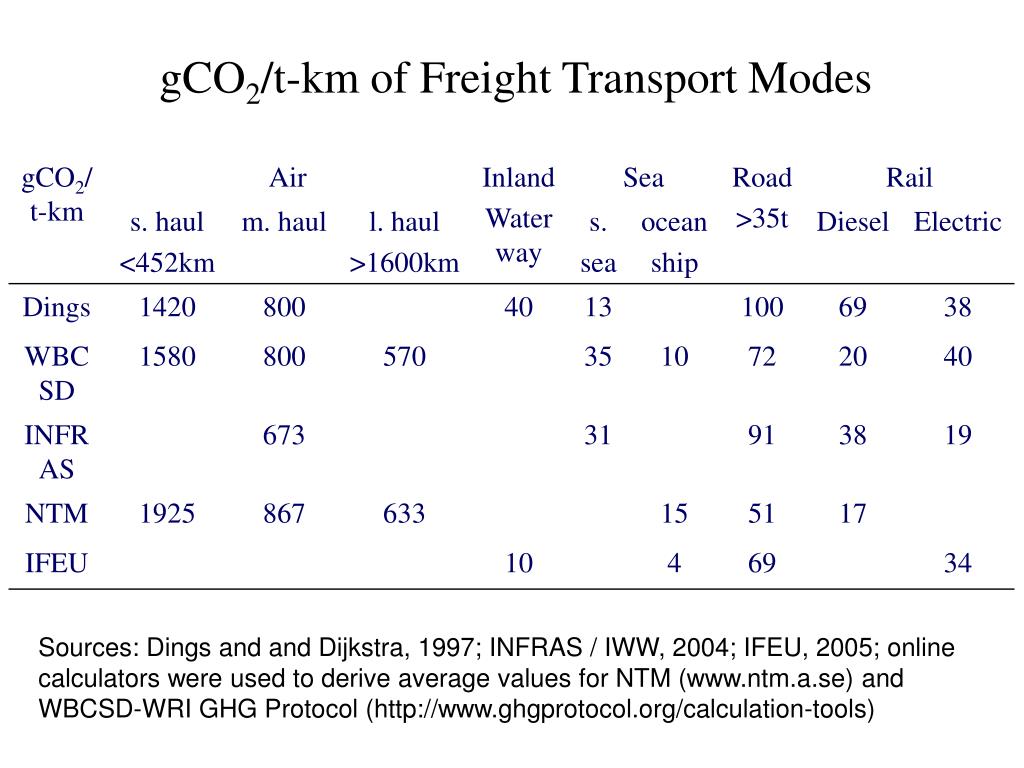
Note that marine shipping is extraordinarily fuel efficient (from a gCO2/(t*km) basis), so I doubt that it adds a lot on a per ton of fuel basis. We just ship a lot of fossil fuels.

This [1] graph looks to be in the right ballpark from what i remember in school 15 years ago, i didn't verify it in depth but +- an order of magnitude better than the next best method is roughly right

https://image2.slideserve.com/4166134/gco-2-t-km-of-freight-...

Even though petroleum product shipping accounts for almost 40% of shipping, the surprising efficiency of ocean transport still means that it's not that big an energy cost; a single-digit percentage of the energy content of the shipped oil/gasoline.

But even that is still worth saving - it's a few percent more benefit for electrification.

You also need to extract and refine the oil before you can put it into a car.
Marine transport is stupidly efficient and probably won’t influence those numbers much. For the same reasons it’s absolutely okay to eat avocados from overseas. I believe the processing of oil to gas is quite energy intense tho.
> Most uses of fossil fuels are very inefficient. For instance, when you step on the accelerator in your car, only around 30% of the energy in the fuel you use actually is being used to propel you forward. The majority of the energy is wasted as heat. In a power plant that's more like 70% being captured and going towards the goal (electricity generation).

Yes, but there are also future inefficient uses of renewables. E.g. when making iron, you heat the ore (iron oxides) with coke (refined sulfurless coal). The coke will provide extra heat and act as a reduction agent, separating the oxygen atoms from the iron oxides. Now you can do the same thing with hydrogen as the reduction agent to avoid producing CO2 and to avoid using fossil fuels. However, creating renewable hydrogen is atm only 30% efficient, storing and transporting it has losses. Even with possible improvements, that hydrogen will be a very inefficient and costly use of electricity, and at least half of it will always be wasted.

So in terms of total energy usage, making those kinds of industrial processes use hydrogen, we will have to at least double our electricity output. And a lot of that doubling will be wasted because of the inefficiency of electrolysis, as opposed to directly using coal or natural gas.

  • Borg3
  • ·
  • 7 hours ago
  • ·
  • [ - ]
Uh, can you provide any scientific papers that H2 can be used for Iron smelting? CO2 is very stable, even at high temperatures. Its hard to strip O2 from it (except photosintesis). Now, H2 itself is very violatile gas. When burn, it creates water. Water is not stable high temperatures. It become vapor and when temperature rise it can even break bond between H2 and O.

So, papers or are you hallucinating?

They are already building such plants. So I would assume they have a plan

But here is a paper - only the title is German the main part is English https://pure.unileoben.ac.at/files/1851525/AC06514880n01vt.p...

Are you suggesting burning H2 will create water and enough energy to split the water in H2 and oxygen again, afterwards? That would be amazing news!

https://en.wikipedia.org/wiki/Steelmaking#Hydrogen_direct_re...

No, not at all. Coke or hydrogen always only provide additional heat, they are never the main source of heat. The main heat source can either be coal or an electric arc furnace. The coke or hydrogen are just necessary for the chemical reaction, and providing some heat is a side-effect.
Sorry, in face of OP’s tone I allowed myself some sarcasm. Obviously there needs to be additional energy. You’d have some equilibrium with those reactions and OP didn’t make any argument why that can’t be controlled in favor of reducing Fe2O3.

It’s also borderline unbelievable OP never heard of hydrogen in future steelmaking, if they are at all invested in the topic. You’d need a special kind of ignorance to think people are hugely throwing money at this, when the basic chemistry is infeasible.

  • Borg3
  • ·
  • 4 hours ago
  • ·
  • [ - ]
Yeah, I did not thats why I asked. Water and Steel doesnt like each other. But thanks for the info.. It seems it can be done in controlled way.

Now I wonder how cost effective it is :)

Well, actually, thermolysis for water occurs at 2200°C. Thermolysis of CO₂ starts at 1400°C, of CO at 3700°C. The melting point of iron is around 1500°C, similarly its oxides.

So water as a product is actually more stable than CO₂, and doesn't undergo thermolysis at the relevant temperatures for smelting iron. Whereas when going the CO₂ route, there is the risk of producing relevant amounts of CO, which is not as desirable and less efficient because it only absorbs half the oxygen.

Cost is a big question, but it will for sure be more expensive to use hydrogen. Back of the envelop calculation (250$/t coal price, need 1/3t of H_2 for the same effect, so H₂ may cost up to 750$/t, need 40kWh/kg for H₂ electrolysis at 100% efficiency) gives a breakeven electricity price of 1.875ct/kWh. While this happens from time to time due to overproduction, those prices will even out as soon as there is a market for that excess electricity through batteries, storage and electrolysis. Which means that cost-wise, the H₂ route will never be more effective than coal. To make it viable, coal use needs to be made more expensive through taxes and tariffs.

  • Borg3
  • ·
  • 1 hour ago
  • ·
  • [ - ]
Can you provide some citation about CO2 themolysis? I found just one paper from China....
[dead]
Exactly. It is in general (much) more efficient to burn natural gas in a power plant and use the electricity for heatpumps compared to simply burning gas at home for heating.
Yeah, in combined cycle plants you burn the natural gas first in a gas turbine first, use the waste heat from that to boil water and run steam turbine. Then condense the steam using your district heating circuit.

You can say this is 100% efficient as you make some electricity and the rest does house heating.

The thing is that your home's heatpump has an efficiency of 300%-500%. So even if your power plant and power delivery only has say 50% gas-to-electricity-at-home, you are still looking at 150%-250% gas-to-heat-your-house efficiency.
100% efficient assuming a perfectly spherical combined cycle gas turbine with district heating circuit operating in a vacuum.
Let say all the loses provide heating for the power plant building itself. ;-)
Definitely not 100% efficient, but it can still hit a much higher efficiency than without the heat recovery
Most power plants are less than 50% efficient.
A gas-fired CC plant built today will have a LHV efficiency > 60%.
That is true, but I believe that most power plants are not modern combined cycle gas plants.
Yeah, 70% is more or less a best-case scenario (unless you count systems for recovering and distributing waste heat, then it goes higher)
Nice link, thanks! Still, the renewables (I'm not counting nuclear and biofuels, but counting hydro and "other renewables") make up 21.1% of the total energy consumption as well, up from 13.3% in 2015. That's still quite marked.

Also after clicking the "settings" button to show absolute values, I was surprised to see that total energy consumption peaked in 2006 (hey, that's 20 years ago!) at ~18,900TWh, and is now at ~15,700TWh.

I'd guess that demand for Oil is so inflexible mostly due to its use in transportation? If that's the case, we should see this value drop as the adoption of EVs progresses, but clearly so far they haven't made a dent.

Edit: after clicking around a bit more, it seems that the EU energy use reduction might be mostly due to off-shoring energy intensive industries... ayayay. XD

Do not underestimate the impact of transitioning from incandescent to LED lighting. An average home could be consuming 1Kw for lighting alone at busy times.
  • Tor3
  • ·
  • 3 hours ago
  • ·
  • [ - ]
Where heating is needed, and where heating is done by electricity, changing to LED lighting indoors don't make any difference whatsoever. Unless your main heating source is a heat pump. In my home there's a heat pump upstairs, but not downstairs. All the lights downstairs are now LED, but the only effect that has is monetary - LED lights are way more expensive, and contrary to claims, don't last longer either. But these days LED is the only option available when buying.

Heat pumps though.. they really save a lot of electricity. Very visible on my electricity bill.

Is this really a lot of people that use resistive heating?

Also at least it saves electricity during summer when you don't want to dump even more heat into the room.

As a side, from my experience LEDs last significantly longer than incadescant LEDs. Maybe it's something to do with the power grid fluctuating more in certain areas?

  • Tor3
  • ·
  • 2 hours ago
  • ·
  • [ - ]
I haven't been able to find reliable LED lighting, except when compared to particularly low-quality incadecent lights. Cost-wise it's a no-brainer, LEDs are more expensive. They are, however, getting better. They used to be totally terrible, at least that's changing. However, they're still advertising "N hours", where the "N" counts only 3 or 4 hours (typically) per day, so (and get this) the calculation is something like this: "20000 hours = 833 days, if you use them 3 hours only, of those days". Whereas the incadecent light bulbs "1200 hours" is 1200 hours of actual use.

As for your question, living in a country where 100% of domestic power is electric (save the occasional wood heater which is more for decoration but can be useful in certain very cold areas during winter), yes there's indeed a ton of resistive heating. All the heating in my home is resistive, except for the heat pump in the living room. And the living room is upstairs. The house is very well insulated though, even for a house many decades old, so it's not that expensive to heat.

In the summer? Well, this far north it doesn't get that hot, and we don't actually need to use electric lighting at all during the better part of summer, unless the room is windowless. 24 hour daylight.

Or the EU's push for more energy efficient appliances
Just transitioning from coal to gas for electricity production has a big impact.

The graph is adjusted to compensate for the efficiency of the power plants, but it's an average and one they need to update every so often as plants get more efficient.

But we're phasing out the oldest and least efficient coal plants and replacing them with gas plants that are twice as efficient (33% vs 64%).

The graph under discussion assumes 40% as discussed here:

https://ourworldindata.org/energy-substitution-method

Overall renewables (including the "bad" ones like biogas, and the finite ones like hydro) are at around 27% of TFC in EU today (25.2% in 2024 and growing at around 1% per year). Not bad. But far from replacement.

Renewables plus nuclear is now at around 70% of all energy (by final consumption) that is produced in EU though, it's just that the rest is imported.

> Renewables plus nuclear is now at around 70% of all energy (by final consumption) that is produced in EU

I'm probably misunderstanding because:

https://ourworldindata.org/grapher/per-capita-energy-source-...

https://ourworldindata.org/grapher/per-capita-energy-stacked...

That's the consumption numbers. 55% of total final consumption of energy in EU comes from imported sources.
And nuclear fuel is also imported (but refined locally), so not sure it should be counted as 'local' in this case.
Nuclear fuel is around 2-3% of electricity cost, and there is too much worldwide supply for it to be of any concern, so it doesn't really matter where it comes from. For energy balance calculations it is accepted that nuclear energy is counted as produced where the reactor itself is.
Strategically, if nuclear power experiences a resurgence, procuring uranium could become difficult because the superpowers (Russia, China, and the US) will want to reserve it for themselves, and corresponding efforts have already begun.

The majority of nuclear-producing nations (Australia, Canada, Kazakhstan, Uzbekistan, etc.) will immediately comply.

Wind and sun, however, cannot be confiscated or withheld by blockade or embargo.

You're forgetting about the supply chain. Who manufactures all the solar panels and wind turbines? Honest question - are we increasing the risks of becoming energy dependent on China? Or does Europe have the ability to manufacture its own?
AFAIK all the raw materials (maybe not all top-notch, especially from the get go, but usable) and all the know-how exist in Europe (at worst currently working abroad), where many nations want to reindustrialize and gain autonomy.

In France numerous projects appear. Some may be too ambitious, some with a Chinese partner. In any case we will re-learn, and it will be less difficult than creating usable uranium without any adequate ore here!

There is so much uranium in the ground (in the west too) that it doesn’t make sense to ”keep it” for yourself. Why would Russia wanna keep a supply for the next one million years instead of selling it and get money today? Same with all other countries with uranium.
Regarding known and exploited or rapidly exploitable deposits, we are very, very far from millions of years: "As of 2017, identified uranium reserves recoverable at US$130/kg were 6.14 million tons (compared to 5.72 million tons in 2015). At the rate of consumption in 2017, these reserves are sufficient for slightly over 130 years of supply"

Source: https://en.wikipedia.org/wiki/Uranium_mining#Peak_uranium

Nuclear power resurgence is bullshit and it will always remain a drop in the bucket, especially for large countries. US has too much natural gas, China too much renewables, Russia well, it's of virtually no economic impact worldwide and whatever they might do is irrelevant (unless they nuke us).

Any country that starts a new nuclear power plant construction today won't finish it before electricity will be comprehensively solved by renewables. It pertains even to dictatorship where public opinion does not exist and there's no red tape (Belarus: 14 years from decision to first reactor start) let alone not in free countries. It puts them into 2040+. In EU let's say there will be certainly no fossil fuel electricity at all, maybe apart from few percents of natgas for prolonged quiet periods in winter, and whatever nuclear power remains will be easy to replace. China? go figure, they have a problem of removing coal generation and that's essentially same as nuclear from standpoint of its behaviour on the grid, and there is so much more coal, nuclear will be squashed simply as a byproduct of whatever solution (which will likely be solar+batteries) they come up with.

> The only asterisk this time is that this is electricity, not energy. … and 7.8% for Europe.

Yes, the _!ONLY!_ thing is, this won’t move the needle at all on climate change.

Wind and solar for electric is the lowest of low hanging fruit.

No one has even proposed that they have maybe even possibly have perhaps thought of an idea to address transport and agriculture related emissions.

Lithium ion batteries, or a solid state alternative aren’t it. Not without being some orders of magnitude more energy dense and lighter. And you still need to electrify those sectors to be able to charge the batteries.

Confident talk, but that's not at all the reality that I'm seeing.

Public transport is almost completely electric powered where I live (ferries still haven't changed to electric, but it's coming.)

Trucking is electrified, as in, the operators have realzed that they're cheaper to run, so they are changing over when possible. (Sidenote: with some of the heaviest loads worldwide)

Very many agricultural buildings in active use either have, or are installing solar. Their energy usage is so high, that any offset to it is "free" money. Many have installed batteries also, so if there is an interruption in power delivery, there isn't an immediate need to start up a generator.

Electric tractors are also something I've heard them want. Less maintenance means less time spent not being able to work.

Sure, fertilizer and animal husbandry have other emissions which aren't tackled by this, but why exclude improvement just because some other area isn't affected.

> not at all the reality that I'm seeing.

You’re not looking hard enough, past the greenwash.

  • Tor3
  • ·
  • 3 hours ago
  • ·
  • [ - ]
What was listed by the poster you replied to are genuine real facts, so the one who should look harder is you, in this case.
> No one has even proposed that they have maybe even possibly have perhaps thought of an idea to address transport and agriculture related emissions.

That's weird. In europe trains, trucks, light trucks busses and cars are bascially solved with EVs. There are even some early beginnings for heavy construction and agriculture machinery but it doesn't seem to be mass market yet. Electric ferries also start to pop up for smaller distances.

The biggest issues seem to be ships and planes. Not sure there are any good solutions there.

  • dmix
  • ·
  • 14 hours ago
  • ·
  • [ - ]
> compounding gains that didn't cause massive economic hardships along the way.

I’ve read multiple stories of European manufacturers saying they are struggling with high operating costs, with energy being a major factor making it difficult to compete with China who has invested in every sort of energy broadly. China doesn’t just compete on labour costs like people think, they figured out ways to make every part of operating there cheaper.

Just keeping the prices baseline to something else that’s already relatively expensive shouldn’t be the only goal. But it’s progress I guess.

This is an important observation. For years these headlines came with asterisks - one sunny/windy day, excludes gas, new capacity only, etc. This being actual annual generation for wind+solar combined vs all fossil fuels is genuinely significant. The compounding nature of it is key too - solar capacity is now large enough that even modest percentage growth adds enormous absolute capacity each year.
  • jl6
  • ·
  • 23 hours ago
  • ·
  • [ - ]
The “but” this time is that we are talking about electricity demand, not total energy demand. Electrification of heating is the next big milestone.

It’s still a great trend.

In my opinion, the "but" is still the "hellbrise" considerations brought up in the Decouple podcast. Renewable energy is fantastic but, at grid scale, has to be coupled with sufficient storage: https://www.decouple.media/p/hellbrise
You can get pretty far with negligible storage. There is a cost tradeoff between storage, peaker plants (those could burn hydrogen, not just natgas) and grid size. 70% renewable with no storage is rather easy.
Not sure if you read the podcast but the whole point is that over-reliance on renewables without a sufficient means to handle oversupply can cause grid instability specific to the Spain/Portugal grid outage.
The reports on the Iberian outage point out that, if solar/wind had been allowed to help, the outage could have been prevented.

The outage was never about renewables, it was caused by bad dispatch of reactive power.

  • b3orn
  • ·
  • 8 hours ago
  • ·
  • [ - ]
The largest "but" is that they only look at electricity generation, not energy in general. There's a lot of heating with natural gas and of course most cars still have internal combustion engines which burn petrol or diesel.
  • samus
  • ·
  • 7 hours ago
  • ·
  • [ - ]
Heating with gas is difficult to phase out since it's a major investment. It would require large-scale build out of remote heating.

Replacing IC engines is a whole different story, and it's not clear whether electric cars are a complete replacement yet.

This of what Germany needed to do and not go nuclear… on nuclear.
If you take a look at the All Time view on https://grid.iamkate.com you'll see wind overtook gas a few years ago in the UK
How much did Russia's recent invasion of Ukraine and nat gas price and supply changes accelerate things?
Sadly we got a warning in 2014 with Crimea being seized and fossil apologists like Bjorn Lomborg argued against rolling out wind and solar faster in response.

Because he's so "reasonable" and "pragmatic", he didn't say we shouldn't phase out Russian gas, he just said solar and wind don't work and so we should invent some totally new type of energy for this purpose.

It's only with a few years hindsight that he's obviously a shill. You had to be paying close attention at the time to notice.

And sadly that kind of engineered delay is widespread.

This is just a conspiracy theory of mine, but how credible is the notion that in Germany, the Greens who campaigned (successfully) for nuclear shutdown were in fact funded by Russia?
Very unlikely.

- The greens opposed the Nord Stream pipelines for years. And have been opposed to relying on natural gas for a long time.

-Nuclear power is generally a contentious subject in German society. Probably because of Chernobyl and how a lot of the radioactive cloud blew into Germany. Whoever lived through this will have some dramatic memories of those weeks (kids not allowed to playgrounds/outside etc.). It was actually the CDU and FDP that finally decided the phase out of nuclear power after the Fukushima disaster. (The Greens also voted for it)

- The Greens are very strong supporters of Ukraine.

I personally believe the nuclear phase out was a mistake, but it had broad support in the German parliament and society. The phase out would have happened even if the greens hadn’t voted for it.

In Germany, it's worth mentioning that being against nuclear power is (unfortunately) part of the identity and founding myth of the Greens. One of the precursors of the party is the anti-nuclear movement of the late 70s / early 80s.
Whether true or not, it is almost entirely Greenpeace, and your local Greens party, who are to blame for us being in this mess.

Without them raising panic about nuclear we could all be paying something closer to $40 - $80 a month for all the electricity we could reasonably consume, much like mobile phone plans / prepaid service.

That would still leave transport and agriculture emissions to deal with, but they’d be easier to solve if we had virtually unlimited process heat to generate hydrogen > synth fuels.

> if we had virtually unlimited

That's outdated: https://en.wikipedia.org/wiki/Too_cheap_to_meter

In 2010 A. Merkel decreed a 12-year delay of the nuclear phase-out schedule ( https://en.wikipedia.org/wiki/Nuclear_power_in_Germany#Chang... ), then the Fukushima accident happened (2011), then public opinion did demand a quick nuclear phase-out and no government could resist.

Hanno Klausmeier wrote what follows: CDU / CSU : Center right parties, Christian democrats FDP: Right wing liberals, moving to libertarians (Koch line) SPD: Social democrats, oldest party in Germany, old fashioned, a certain proximity to Unions. Greens: Rather left wing liberals, ecologic positions.

Who is in the government right now?

SPD the Greens and the FDP. Do they like each other? No they hate each other but they are forced to work together.

In the current political discussion the CDU/CSU (especially the CSU from Bavaria) are complaining the current government switched off the last remaining nuclear plants in Germany. The FDP which is part of the government is also criticizing the switch off of the last nuclear plants albeit being in the same government.

Now lets take a look which parties switched most of the nuclear plants off since Fukushima?

CDU/CSU: 14 FDP: 11 SPD: 9 Greens: 3

It was the conservative CDU with the economic liberal FDP which decided in 2011 to stop using nuclear power in Germany.

At the time when the Greens were in power a decade later, it was already way to late to build out nuclear infrastructure again (not to mention the lack of fuel).

So yes, you've metioned a conspiracy theory without any substance.

The Greens continually pushed for renewables, which the (conservative) government largely ignored in favour of building gas pipelines to Russia.

  • samus
  • ·
  • 7 hours ago
  • ·
  • [ - ]
You are giving them too much credit.
  • 7952
  • ·
  • 16 hours ago
  • ·
  • [ - ]
The problem is that it lead to investment on the expectation of high electricity prices in the future. Oil companies went and overspent on offshore wind concessions. When the prices dropped they were back to relying on strike prices that didn't offer enough profit and cancelled schemes. At least in the UK offshore wind has been somewhat stalled by that and by delay to grid connections.
Ember Energy: European electricity prices and costs - https://ember-energy.org/data/european-electricity-prices-an... (updated daily)
We must take into account the public money spent to build and maintain the electricity system. In France, for example, electricity is cheaper than in most similar countries, but nuclear power costs taxpayers a huge amount of money.
  • cies
  • ·
  • 1 day ago
  • ·
  • [ - ]
[flagged]
If the US did the attack wouldn't it be on the US?
  • cies
  • ·
  • 14 hours ago
  • ·
  • [ - ]
Yes. First that, now Greenland. But brrrr, Putin/Gadaffi/Sadam/Khomeni/Kim bad... (they never attacked Europe like this)
The most underreported part of this story is the battery piece at the end. Batteries are beginning to displace natural gas in evening peak hours - that's the exact window where solar critics have long argued renewables fall short. If this trend accelerates (and battery prices are dropping faster than most models predicted), the "intermittency problem" starts looking more like a solvable engineering challenge than a fundamental barrier.

The next milestone to watch: when battery-backed solar becomes cheaper than gas peakers for evening demand across most of Europe. We might be closer than people think.

Intermittence really has always had the flavor of an engineering problem instead of a physics problem (it is about putting the energy when/where humans want it, rather than having enough of it). IMO load shifting seems like a cleverer and more engineer-y solution. Imagine a giant smart system where all of our appliances talk to each-other and can optimize the timings of their workloads. It’s a magnificent society-wide scheduling problem! The papers we could write!

Throwing batteries at it is a kind of blunt and uninteresting solution (I guess the market will prefer that one!).

I ain't gonna use the dishwasher when the system wants me to, but when I can or want.

I pay low energy prices during night than day, that's normal, but I'm still not gonna do laundry at 9 pm, I'd rather pay the 10/20 cents more during the day.

I do time my dishwasher and washing machine to align with peak solar where I live.

I'd like to appeal to you to evolve that frame of mind. To help avoid first world problems (I can't wash a dish by hand, I need it now) devolving into third-world ones (power cuts, crop failures, torrid tropical nights on mid latitudes, mountains disintegrated).

Sometimes its important to remind we're on a generational mission, and it's not maximising Netflix time.

> Sometimes its important to remind we're on a generational mission, and it's not maximising Netflix time.

Get that into the society's rules and then we'll talk.

I like to think I'm modest and sensible but I'm not bending over backwards while my neighbours get to do what I perceive as ridiculous things.

I used to live in a two bedroom unit, conserving things for the environment and next generation. But next door the neighbour in his huge house, 5 SUV's, heated pool streaming heat into the air all winter can just pay for it with money.

My actions are shaped to societies rules and monetary incentives. I'm not going out of my way to "roll coal" or anything stupid. But I'm not wasting my time either.

This whole thread (up and down) is why a lot of people like me don't do any of this mental gymnastics to 'lower my footprint'. It's exhausting, I mean if I bike to work today, that offsets that steak I ate. Just no (just an example).

When we are serious about this issue, we'll price it all in. The only way to affect change for most humans is incentive based decisions right in your face.

You should bike to work every day so you’ll be fit for the Climate Wars.
I don't like your feedback, it's condescending and you know nothing about me.

1. In my area 96% of energy is gas-based. I live in Rome, Italy. It's written in my energy bill. I ain't got no solar. Night or day it's mostly a matter of relatively small changes of demand.

2. If you want to do something real for the environment change your diet! I'm sick of this neverending focus on energy when the biggest impact you can have is by eating way less meat, cattle in particular. On that I am very sensitive. And me deciding to have less burgers and steaks across an year has magnitude of order more impact than your silly dishwasher. Do the math. As I am on transport where instead of pretending to be green by buying 3 tonnes electric SUVs on a lease from US lunatics I use public transport and use my old beaten car sparely in the weekends.

Spare me your nonsense because I ain't gonna be thinking about running a noisy dishwasher in my living room at 9 pm, the only moment of relax and peace for my family because of negligible-to-nonexistent impact on the environment.

And just to add, I don't even own AC, and I can assure you it gets 40C/100+ Fahrenheit, with high humidity in Rome at summer. That's how sensitive I am to the topic.

You know nothing about the people you interact with.

  • ordu
  • ·
  • 11 hours ago
  • ·
  • [ - ]
> And just to add, I don't even own AC, and I can assure you it gets 40C/100+ Fahrenheit, with high humidity in Rome at summer. That's how sensitive I am to the topic.

This addition doesn't really add anything. Your tone says it much clearly. You don't like advice, do you? I'm sorry, but I can't help myself. I'd recommend you to try to lower your sensitivity.

But really I can't understand you. You've said:

> I ain't gonna use the dishwasher when the system wants me to, but when I can or want.

I need a bit of a guesswork to understand what you are implying, but still... I think you are sure that system will do no better than you from an effectiveness standpoint, while making things less comfortable to you. So you are enraged from mere proposition of such a system. It seems to me like a hyper sensitivity.

You see, if such a system would work as proposed and your allocation of resources is close to an optimum, then the system will do the same or something close to it. Nothing to be enraged of.

Also, I like how you combined:

> If you want to do something real for the environment change your diet!

with

> You know nothing about the people you interact with.

There was nothing about their diet but you kinda guessed it just by looking at their writing?

  • ericd
  • ·
  • 15 hours ago
  • ·
  • [ - ]
Pretty sure your diet is a relatively small part of your carbon footprint.
I think you’re wrong, especially if you consider more the just carbon (eg land use, deforestation, …) https://woods.stanford.edu/news/meats-environmental-impact
Like everything else, it depends. In the extreme case, if you eat beef every day but use a bicycle for transportation, live in a mild climate with little need for heating and cooling, and rarely fly in an airplane, your diet could be a significant part of your carbon footprint in percentage terms.
  • crote
  • ·
  • 9 hours ago
  • ·
  • [ - ]
I couldn't care less when it runs, as long as it's done when I want to unload it.

The diswasher will by full after dinner, so I close it and press "start". It has to be done at the latest by next dinner. Does it run immediately, during the night, or during the day? Irrelevant, let the damn thing pick the best (cheapest) time.

Same with laundry. On average I run less than one load a day, so I'm happy if it finishes either when I wake up, when I get home from work, or when I am about to go to bed.

Laundry and dishwashing are completely different though?

Recent dishwashers can open by themselves and dry the dishes, washing machines need a (awaken) human to remove the wet clothes when they finish their cycle.

But it's not you, it's everyone. And some people will be swayed even by that 10 to 20 cents. Put them all together, and you have a substantial "virtual battery" capacity, and all you need to do it is to make sure people have price awareness.

Don't knock small gains like this. Even a couple of percentage difference is worth having; all the marginal gains add up to make large scale gains.

If I had a combined washer/dryer and could just load the clothes up and say “do it whenever” I’d go for that. But that’s very dependent on only needing to do one load per day.
Yeah, but your dishwasher or washing machine isn't the big electricity eater.

Your car is. And honestly, you'd rather charge the car at night so that you don't blow a fuse when you're running the dishwasher, microwave, dryer, oven, induction stove and charging your car :)

I have never blown a fuse being getting an EV, and so far still only once.

But charging at night is preferable for that reason, and I couldn't care so long as it's ready by 7am.

Load shifting EVs is easy, and this moves a lot of load. It was never about moving all load.

[dead]
A typical dishwasher load requires 1-3kWh, so you'll just use your home battery and do it whenever you want.
a lot of that energy could have been recuperated with a heat exchanger when the water is refreshed, also in laundry machines.
But you will charge your car when it’s cheaper. And add a cheap home battery to remove expensive peak usage.
It's a great idea, but I feel like that way ends up with the nightmare scenario of each of us managing an AWS-style admin console for washing the dishes, etc.

That way lies madness, although I suppose there might be one or two family members I would want to lock out of the dishwasher.

In engineering the simple solution is often the best solution. Creating a demand-side network of devices is not that.

Plus, such a system would provide even more ways for nefarious actors to sabotage the grid, by influencing the demand side. For example, setting every appliance to run its load at the same time. The grid would be fucked.

I don't disagree with your broad comment but it's not hard to fix by slightly dispersing the control/responsibility.

1. Electricity moves for 5/10 min clearing intervals with defined caps at either end (currently in Western Australia it's simply 2 intervals, peak & off-peak). 2. Expose the pricing/market data via API 3. Develop existing home automation frameworks/tools/device IOTs/routers to access that. 4. End user grants permission/configures it on their smart phone when they set their dishwasher and washing machine on set up ("would you like to enable this smart-go button by connecting to Wi-Fi? It could save you $150 per year").

No control ceded to third parties to turn on equipment whenever they want, just allows the end user to cue jobs for when the PowerCo anticipates lowest prices.

PowerCo not any more of a honeypot for attack, at least not more than they are now with control over critical generation/tx/dx infra.

If the devices are accessing a 3rd party API over the Internet to get this info, that control is still ceded, and attackers can still exploit vulnerabilities in all of these devices to attack large swaths of the network at once.
This is already happening with market pricing of electricity energy demands that can be shifted. Our car charges, and our dishwasher/clothes washer run when pricing is low. The price differential is not big enough yet between high and low demand times for us to invest in a battery to soak up cheap power. If battery prices continue to go down, or if the price differential goes up that equation will change. The other main expensive energy user is HVAC and we don't have a way of moving that demand to a different time of day other than a batterv. :(
  • ·
  • 12 hours ago
  • ·
  • [ - ]
I looked into sodium-ion batteries for which factories are coming online in China. The theoretical manufacturing cost of those is very very low, which will make solar + batteries very cheap. I suspect China will reach those costs ahead of schedule.
IMO this is a classic case of underestimating how far manufacturing improvements can get you on the cost scale. You see a promising technology in the lab and it’s hard to imagine a 1 million x reduction in price, yet we see that time and time again as tech gets scaled out.

What’s wild to me is how the US is leaving itself in the dust. How the GOP imagines we’ll be competitive when the rest of the world can produce electricity 10x cheaper than we can is a wonder in itself

  • crote
  • ·
  • 9 hours ago
  • ·
  • [ - ]
Easy: the GOP doesn't care about future competitiveness.

They are currently getting lobbied by oil executives, who are trying to maximize short-term profit while they still can. The wider industry doesn't have the long-term vision to preemptively outlobby them, so the GOP is doing what oil wants.

Dealing with competition in a post-oil world is a problem left for the next generation: the current GOP will be long-dead by then and will have enjoyed the fruits of accepting decades of oil bribes.

Not true, energy is cheap in the US. Politicians rise and fall with energy prices, fossils fuels are still cheaper. America (outside of California which is not governed by the GOP) has some of the cheapest energy costs of competitive countries.
And the Grand Old Pedophile party will ensure that fossil fuels remain the cheapest by killing all alternatives before they reach scale.
  • toyg
  • ·
  • 23 hours ago
  • ·
  • [ - ]
> ow the GOP imagines we’ll be competitive when the rest of the world can produce electricity 10x cheaper

By forcing oil prices to get 10x cheaper, at the barrel of a gun. See: Venezuela and Iran. Will it work? I would not bet on it.

Seems unlikely that we'll be selling oil for $5, unless fossil fuels are completely replaced and it becomes a side-of-the-road novelty.
Then it loses economies of scale and capital wasted so price won’t go down
>What’s wild to me is how the US is leaving itself in the dust. How the GOP imagines we’ll be competitive when the rest of the world can produce electricity 10x cheaper than we can is a wonder in itself

I almost paid < $1USD/gal gas a couple months ago ($1.20 89 octane). My electric is ~ $.12USD/kwh. Gas is just as inexpensive.

Where in the EU can I get energy for 10x cheaper?

I mean where are all the factories making batteries in Europe? It’s not like the US is purposefully preventing battery tech. It’s why all of the government-funded solar companies imploded as well. The manufacturers do not compete
They're in Europe and they produce a lot of batteries. The caveat is that 80% of the investment money came from LG, a South Korean company.

https://www.bruegel.org/analysis/europe-has-solid-basis-batt...

There’s the former darling Northvolt. Took a lot of state money and then imploded https://www.theguardian.com/business/2025/mar/12/ev-battery-...
The comments on Reddit from folks who claim to have worked for Northvolt are pretty wild. I would take them with a grain of salt, but they're interesting to read. https://www.reddit.com/r/electricvehicles/comments/1fl8d4y/c...
US has Gigafactory Texas and Lithium Refinery now too.
Those are two thresholds: cheaper than peakers using piped gas from Russia, and cheaper than peakers using LNG shipped via tanker ship. I imagine the latter threshold has already been met, only depending on the amortization period you choose for the battery purchase.
The problem with solar isn't the night. Getting enough batteries to cover that is totally doable. The issue is the winter. And not even because of fewer daylight hours - on sunny winter days there is usually still a good amount of solar.

The problem is its often very cloudy in the winter. In the UK in winter we regularly have periods of 5 cloudy days in a row where solar output is virtually zero.

I don't know what the answer to that is. In a calm cloudy winter week all renewables and battery storage are totally screwed. Space based solar is a scam. Maybe we just have to live with it until fusion works (if it ever does).

(But it's still academic at the moment because we're still far from the point where building more renewables is a bad idea.)

It's unfair you're being down voted, you're right. I used to think that we could get by with just solar wind and batteries, but then after collaborating with people on an ideal energy mix the numbers were obvious: there is a (small) fraction that cannot be covered. Not with storage (the discharge cycles are so few that the cost is prohibitive. How can a battery pay for itself with 10-20 discharges a year? And this applies to any kind of battery that needs to be built, including hydro). Likely there will need to be some baseload nuclear (which then increases average prices, since to make it economical you need to buy all the electricity it produces, and so it partially displaces renewables). The alternative is overbuilding solar+wind+battery something like 5/8 times the average need. Maybe if the prices drop enough that could be feasible.. The big win would be if there is some way to get predictable power at a lower cost than nuclear (e.g. tidal), which could be used to smooth the troughts, or alternatively a low capex but potentially high opex solution which is turned on only when needed (gas is an option, but not co2 free. And sizing the power needed is not super cheap, although now it's not a problem since we have enough gas capacity which is going to be displaced, so it won't be needed to be built)
Yeah but we are nowhere near the end of the scaling curve. For now, we can use the natgas plants during the unexpected outages while solving for green hydrogen / whatever backup plants. Like when a household has one EV and one gas car, they can always just take the gas car when they have range anxiety and don't know about chargers. NBD.
Falling back on gas 10-20 times per year sounds very reasonable.

It's not net zero, but nearly zero will probably do fine?

Politicians like to say net zero, but when we are 90% there will we maybe not stop caring and find other more pressing problems?

Net zero is barely enough to help with climate goals, given how late we are. It's not a huge goal, it is the absolute bare minimum to avoid >2 degrees of warming.
Achievable near-future net-nearly-zero in the near future is a lot better than waiting longer until we can achieve full net zero. Don't let the perfect be the enemy of the good.

The real issue is the cost of keeping gas peaker stations around that are mostly idle and fire up only a few days a year, but that's an economic issue, not an engineering one.

In the longer term, you could even run them off net-zero renewable syngas that you make the rest of the year using low-cost electrical power at peak solar generation times; you only need to store a relatively small amount of it, and old fossil fuel reservoirs are ideal for this.

> Likely there will need to be some baseload nuclear

Baseload nuclear is entirely feckless as a backup for a renewable grid. You either go with a long term storage technology (and then don't need nuclear), or you go to an entirely nuclear grid. Wind/solar and nuclear don't mix well.

Forget tidal, it’s dead in the water.

Everyone who’s tried it suddenly realises that anything you put in the ocean is almost immediately covered in marine growth, or destroyed by the ocean itself.

And that wave / tidal energy is very diffuse, or that where it isn’t diffuse it’s also extremely destructive.

Regarding long term storage keep an eye on the UK's Cap and Floor scheme which offers guaranteed revenues to long term storage technologies [1].

Page 7 of https://www.ofgem.gov.uk/sites/default/files/2025-09/LDES%20... lists the technology types of the project applications. The majority are Li-Ion BESS, but there are also other battery chemistries and Liquid/Compress Air Storage

1. https://www.ofgem.gov.uk/press-release/super-battery-project...

> offers guaranteed revenues

Government picking winners?

When did that ever work out well?

I think in this case it's because LDES can't compete in the UK energy market, but it's a capability that needs to be developed, so this scheme address that by providing a guaranteed revenue.

The floor is a minimum revenue guarantee, to protect investors at times when the wholesale price is low and the cap is a maximum revenue limit to protect consumers when the wholesasle price is high.

It seems like these limits haven't been set yet, so I don't know what the potential impacts on energy prices will be.

Airbus.
Space based solar is a scam

It's not a scam, it's a weapon. The same proliferation arguments that have been used against nuclear also apply to space-based solar.

Just over build the solar. Build out solar so demand in winter is met.

Use the excess power in summer for some kind of industrial use.

This can lead to a solution, but at high latitude it becomes infeasibly expensive. Insolation varies too much from summer to winter. Low round trip efficiency long term storage becomes much cheaper than doing (just) this.
This assumes prices for the solar panels and batteries continue to fall as this build-out happens. I don't think it should or could happen in a single year, but slowly over the next 5-10 years.
Syngas (infinitely better than hydrogen, which was always a stupid idea), or huge-scale Carnot batteries (the square-cube law is your friend) would do the trick nicely in both cases.
Syngas has the problem of where do you get the carbon. With hydrogen, the exhaust (water) just gets released to the atmosphere. Syngas would require capturing and storing the CO2 of combustion for reuse in making more syngas, which adds to the cost.

But yes, resistively heated ultra low capex thermal storage ("hot dirt") is very attractive.

You would have to overbuild by a factor of 20 at least. Not at all practical or economical.
Citation? We get 25 units in the sun and 5 in heavy rains.
I'm in the UK. I covered my whole roof with 6.5kW of panels (it's pretty ideal south facing etc.)

I just checked our stats. Average consumption 16kWh/day. Sunny summer day we get 30-40kWh. Sunny winter day 10-20kWh. Cloudy winter day it's 0.5-2kWh.

Also that's without a heat pump... Which you mainly use in the winter.

And without an electric car but I doubt they're as big of an issue because you can charge them from cheap overnight power anyway.

> In a calm cloudy winter week all renewables and battery storage are totally screwed. Hydro doesn’t really care about a calm cloudy winter week and is the reason my state was 100% renewable last year. So it’s definitely not a problem for ALL renewables.
Effectively all renewables.

When was the last time a new dam and hydro electric power plant was built in your country?

Either all of the favourable geography has already been dammed, or good luck getting environmental approval.

Alas, this is absolutely right. It's trivial to find places to put hydropower using global elevation data and GIS tools, but almost all of the good ones are already either being exploited, or in the process of being readied for use, or facing barriers such as the side-effect of destroying cities or heritage sites.
This just shows batteries shouldn't be the only storage technology, at least at high latitude. There needs to be a complementary long term storage technology with low capacity capex, even if its round trip efficiency is bad. Examples: green hydrogen, ultra low capex thermal storage.

To see the effect of including such, go to https://model.energy

Using a long term storage technology (in addition to wind/solar/batteries) can cut the cost in half at high latitudes.

The most sensible solution is synthesised natural gas. Then we can use the existing LNG storage and plant.

It’s a lot easier to store and transport than hydrogen and the capital items already exist.

Curtailment fees should be replaced with purchases of green LNG.

It's more expensive than hydrogen because you need to capture and store the CO2 of combustion. Extracting CO2 from the atmosphere as part of the cycle would be even more prohibitively expensive.
The problem with that is how dispersed carbon atoms are in the atmosphere.

Another option is ammonia, which is quite nasty to deal with.

We can start with non-dispersed carbon atoms coming off industrial processes. Green hydrogen and CO2 into methane
This is just one-time repackaging of the CO2 from fossil fuel combustion. It's not an answer.
> In the UK in winter we regularly have periods of 5 cloudy days

True, but then for the UK solar power isn't the right thing for winter, hence why we need a massive mix of other stuff.

Also we have the advantage that france isn't that far away.

In the UK battery is about grid stabilisation, as in making sure that it hums at 50hz rather than 49.

Battery revenues are shifting away from stabilisation now from https://cn-cob.com/info-detail/2026-uk-energy-storage-market...:

> the focus of energy storage has shifted from frequency services to energy arbitrage. Due to market saturation, the share of frequency services in the revenue stack has significantly declined, from 80% in 2022 to just 20% in 2024. Looking ahead to 2030, we expect energy arbitrage to dominate the revenue stack, with most revenue coming from participation in the balancing mechanism.

Indeed, in the same way that solar has now peaked in spain/portugal in its current config. They are moving to solar+battery to absorb solar mid day and replay that in the morning/evening. (that doesn't really apply in the UK because of the rain)

As more renewables come on stream and the grid gets more complex, batteries are going to plug holes.

Energy Arbitrage is usually a good thing, so long as its regulated to for the customer, not the battery people. the point is that battery capacity is being deployed to even out the 5-9pm peak, which means that we are much much less dependent on gas turbine generators (which means less price pressure linked to LNG prices, if you're not into the co2 aspect)

> (which means less price pressure linked to LNG prices, if you're not into the co2 aspect)

No it doesn’t.

The arbitration is only possible because the battery storage providers can ever so slightly undercut the gas peakers.

The price pressure is still linked to the LNG price.

Your answer to renewables being intermittent is: France!.

Good, we agree the solution is: Nuclear!.

Keep some of the existing natural gas plants around as an emergency reserve. Run them on hydrogen or hydrogen derivatives for zero carbon fuel, if the emissions are large enough to matter.
that costs a lot of money
Not really. That is how the grid works today. Especially open cycle turbines, which are essentially stationary aircraft engines.

Lowest possible fixed costs, high operating costs.

  • ·
  • 4 hours ago
  • ·
  • [ - ]
Try 2 weeks of seemingly endless cloud up this way lol. This winter has been seriously depressing so far
Remarkably, even most cloudy weather still lets a suprising amount of sun in. And it doesn't stop the wind from blowing. The threat is when the wind stops blowing at the same time it's very, very cloudy and in the middle of winter (short days). This happens, but it's very intermittent.

However, as seen above, there are lots and lots of ways to store (or equivalent) power over long periods, it's just the economic incentive to build them that is needed - and is now on the way. Renewable-gas low-duty-cycle gas peakers, Carnot batteries, and sodium-ion batteries are top candidates, with the first being the low-hanging fruit because they already exist.

A huge part of this calculus though is that the gas we buy since Russia disappeared as a provider is insanely high.

Our economics may not match Canadian or US ones.

For an example one can look at California. Batteries deleted the duck curve.
Meanwhile European chemical manufacturing is collapsing under weight of record energy costs.[1][2] Most of other manufacturing is somehow tied to chemicals, you can't build things without material after all. So this will feed ongoing industrial collapse, which now affects even Germany.[3]

Meanwhile, low income households are running into financial issues if they want to turn up the heat.[4]

The whole process has been mismanaged at best.

[1] https://cen.acs.org/business/economy/Europes-specialty-chemi...

[2] https://www.reuters.com/business/energy/europes-chemical-ind...

[3] https://en.wikipedia.org/wiki/German_economic_crisis_(2022%E...

[4]https://www.independent.co.uk/voices/heating-eating-energy-b...

And the reason for that? Fossil fuels. Cited from one of your articles:

> “Our industry continues to face difficult market dynamics and challenging energy costs, with European gas prices around three times higher than the US,” Arnaud Valenduc, business director for Ineos Inovyn, the Ineos business that makes chloromethane, says in the press release.

  • padjo
  • ·
  • 7 hours ago
  • ·
  • [ - ]
Gas prices are high at least in part because of reduced exploitation of resources. For example here in Ireland we have stopped extracting our own gas and now import.

I'm I'm favour of increased renewables, but we need to be truthful about the costs. A fully renewable energy system is probably always going to be more expensive per unit than a fossil fuel based one.

  • jahnu
  • ·
  • 4 hours ago
  • ·
  • [ - ]
> A fully renewable energy system is probably always going to be more expensive per unit than a fossil fuel based one.

No probably not at all unless you mean in the short term. The fossil industry gets way way way more financial support. The externalities of fossils are costing us incredible amounts of money, health and lives and will do for many many decades if not centuries to come. Renewables are now cheaper than nearly anything despite decades of suppression by the fossil industry.

https://www.imf.org/en/blogs/articles/2023/08/24/fossil-fuel...

https://ourworldindata.org/how-much-subsidies-fossil-fuels

https://www.eesi.org/files/FactSheet_Fossil_Fuel_Externaliti...

https://www.irena.org/News/pressreleases/2025/Jul/91-Percent...

https://sps.columbia.edu/news/fossil-fuel-industrys-ceaseles...

  • padjo
  • ·
  • 1 hour ago
  • ·
  • [ - ]
If you ignore the increased grid complexity and need to over provision then sure.
That quote mentions gas only. What about coal, oil, and biofuel?

Record energy costs are a thing. If solar and wind are 'free', why have European energy prices risen so much?

The real-world contra-indicators are the USA, China and pretty much any country outside the groupthink of the G20.

Whilst state interference is a factor, more tellingly they haven't slavishly followed the suicidal empathy of being 'green' and shutting down nuclear and fossil fuel power plants before a sufficient replacement was available.

China installed more renewables in 2025 than the rest of the world combined.
Netherlands is sitting on a massive, massive natural gas reserve. Off limits due to earthquakes.

https://en.wikipedia.org/wiki/Groningen_gas_field

  • hvb2
  • ·
  • 7 hours ago
  • ·
  • [ - ]
Sat, past tense. Yes there's still quite a bit in there but the Netherlands is VERY densely populated. And public opinion has swayed towards letting it sit there.

The real reason it's off limits is simply because of externalities. The NAM just doesn't want to pony up the the money to pay for repairs of houses. It's rare for that to backfire like this in the fossil fuel industry.

Might not be a bad call to leave it. I'm sure we'll find a novel use for natural gas decades down the line which might be way more valuable than just burning it.

Well you need fossil fuels for feedstock in the chemical industry. It's one place they can't be replaced.

The real reason is because Europe cut itself off from cheaper Russian gas.

It was Putin that cut off gas supply to Europe almost completely in autumn 2021 in preparation of the invasion and then completely shut it off during 2022. That was before the pipelines were blown up.
That's not true. Russia continued to supply gas after 2021.
They unilaterally cut supply through NS1 though and before the invasion deliberately kept gas storage in Germany empty.

It's not all of europe but maybe this is what the the other person is referring to.

Not sure about that. If you plot energy cost and % of wind power by country, it is highly correlated.
Not if you compare states with similar levels of economic development, like US states or EU countries.

Iowa, South Dakota, Kansas, Oklahoma have around 50% wind and 10 cent electricity.

When comparing EU states, the correlation is more about who taxes electricity and who builds wind. Comparing pre-tax prices has a very slight downward trend as the country has more wind.

You see a lot of propaganda graphs online that have the EU states clustered in the top right and a cluster of unlabelled Petro states and dictatorships who subsidize electricity in the other quadrant.

The intended implication is that you should emulate the countries they are afraid to name because it would make their graph ridiculous.

The causation is the other way. High energy prices have made wind and solar more viable.
There's absolutely mismanagement, and politicians could do an awful lot to change this. Ironically, in the UK at least, most of the reasons why they don't are due to historic regulations designed to protect either the fossil fuel industry or an initially weak green energy industry, which no longer serves any purpose except to push both households and businesses into decline.
Ed Conway (of Sky) did a nice piece on this recently covering the UK's chemical industry decline: https://www.youtube.com/watch?v=PQ3hT8tqZgo

My takeaway was that it's not really high energy costs (though for sure that doesn't help) but, in the UK's case at least, much more caused by political and policy ignorance over decades. Industrial, polluting industries were simply not vote winners and none of the politicians understood or cared about the strategic implications of letting these industries collapse.

I suspect this is now changing.

There's a recent case of Wacker. They tried to build their own windpark in Germany but this got shot down by residents. Now they are moving to a chinese industrial area that is connected to windparks and battery storage providing cheap energy.
Why "abundant cheap energy is a key requirement to survive in today's globalized markets" has not made it into the EU leaderships' mindset is beyond comprehension.
Because it's reductive bullshit.

Energy price is just one of many inputs for the viability of industry.

Availability of (educated) labor, wage level, infrastructure, political stability and a ton of other factors are at least as if not more important.

Why should we keep tolerating irreversible damage to planet/climate just to keep costs/prices low? If you can't produce some shit sustainably because that makes it too expensive, then maybe it should not get produced in the first place?

If you don't propose what you think is a better alternative we don't know what we are agreeing with by upvoting. Is it:

1. Let Russia take most of eastern Europe in exchange for gas

2. Make Europe Great Again i.e. complain loudly about current politicians then do everything even worse with no plan or logic

3. Fully automated Luxury Communism

4. Ask Harry Potter to make chemical inputs with his magic wand.

5. Nuclear, just because we think it's neat.

Better management?? Easier processing for residential solar panels? How about government subsidies on solar panels for lower income homes?

Hell, maybe create a unified portal when companies buy energy - show the cost difference side by side.

The poster is implying that solar+wind are somehow making it worse for the industry, so they're probably not thinking of "more solar" as a solution.

As an other commenter said, we don't know what they think has been mismanaged.

  • Dig1t
  • ·
  • 7 hours ago
  • ·
  • [ - ]
>Let Russia take most of eastern Europe in exchange for gas

Do people seriously think this is a possibility? Or is that hyperbole?

Russia can barely manage to hold the eastern half of Ukraine, I genuinely don’t see how they could take the eastern half of all of Europe..

  • jahnu
  • ·
  • 4 hours ago
  • ·
  • [ - ]
> Russia can barely manage to hold the eastern half of Ukraine

Not even half, just a fifth.

  • padjo
  • ·
  • 7 hours ago
  • ·
  • [ - ]
I mean there's precedent in living memory...
The problems of the chemical companies are related to natural gas prices, not electricity. This is because gas is used in the production. It even says so in one of the links you posted:

“Our industry continues to face difficult market dynamics and challenging energy costs, with European gas prices around three times higher than the US,” Arnaud Valenduc, business director for Ineos Inovyn, the Ineos business that makes chloromethane, says in the press release

[flagged]
There is always so much grumbling and nitpicking about this topic, which I don't understand.

The production of renewable electricity is skyrocketing everywhere, far better than predicted. And that's not because of clever politics, but because the technology is good and cheap.

This has only advantages for everyone. Except for a few fossil fuel investors whose profits are marginally reduced. We may even be able to limit global warming to three degrees, giving us a better window of opportunity to come up with solutions for large-scale carbon capture in the 22nd century.

What's more, photovoltaics is super interesting and great to tinker with—it's huge nerd fun.

Can't we all just be happy when we see headlines like this?

It used to be the big worry among climate activists that you'd never get every country organize and move in one direction. Like you'd need some global body to clean everything up.

That's very fragile.

Luckily, we're moving to a world where a disjoint, self-interested response can be an advantage. Countries decide, for their own selfish reasons, to adopt green energy. For energy independence, affordability, clean air, etc.

So when one country politically rotates out for dumb reasons, other countries pick up the slack and make a bit of progress.

There's also the case in Australia where, despite successive governments that were (likely monetarily* ) opposed to solar and wind, people power kinda took over to get the unexpectedly high penetration of home solar panel installations, going back beyond a decade, and currently home battery installations.

Both were due to government incentives, I'm not sure if both parties may have initiated parts of these incentives, but only one party significantly and constantly talked down solar and renewables (and still would, although they don't currently have the platform)

* I have to assume the reason is money (read: lobbying) for any political party to downplay Australia's potential to lead the world in solar power generation given our natural massive, otherwise mostly useless land mass and beyond plentiful sunshine. Also, Australia's dependence on petrol / oil from overseas should be treated as a national security issue. Australia does have plentiful coal reserves, however, which is where I believe the lobbyists (and therefore unimaginable amounts of money) come from.

> despite successive governments that were (likely monetarily* ) opposed to solar and wind,

What are you talking about?

> Both were due to government incentives,

How can the government be opposed to it, while also providing rebates to rooftop solar?

Anyway, it was all a big bait and switch manoeuvre, as the solar feed in tariff per kWh is only a fraction of what you pay, but it didn’t start out that way.

That continued existence of any incentive to add rooftop solar is dependent on continued electricity price hikes that out pace general inflation.

That’s how intelligent Australian voters are.

We have the world’s largest known uranium deposit, which we’re happy for others to use, but instead we voted for this shit.

Rooftop solar is a scam.

What it does is shifts the long term maintenance costs from the industrial sector, or government if you’re a socialist, to the owner of the roof owner, the residential / business customer. All the while leaving the affordability of the entire fiasco up to whichever bunch of wankers are in Canberra this week deciding the feed-in tariff.

Why would anyone think any of that is a good idea.

And I say that as someone who recently installed solar.

> What are you talking about?

The (now twice dissolved) Coalition of the Liberal Party and the National Party

> How can the government be opposed to it, while also providing rebates to rooftop solar?

I'm pretty sure one government put the incentives in place, whilst another didn't roll them back, but also significantly talked down anything renewable, whilst pulling stunts like bringing a lump of coal into parliament. (from memory, not entirely sure of facts).

> Rooftop solar is a scam.

I beg to differ. I beg to differ even further when rooftop solar is coupled with a battery.

Where I may agree with you, is that solar should have been a much earlier priority for any Australian government due to Australia's abundance of space and sunshine and (confusingly, since we have so much coal) our globally quite high-priced electricity. A better strategy should have been in place for Australia's overall electrification.

I think rooftop solar is great because it's saved me a lot of money in electricity that would have otherwise been sourced from an expensive grid.

I think rooftop solar overall could be considered a scam because it advantages those who already have enough money to afford it and the ownership of their dwelling to be allowed to install it, and disadvantages those who are not in the overlap between those two venn diagrams.

Self Fact check: Australia is around the global average for electricity costs, not as expensive as I thought.

Oil the west doesn't use isn't magically staying in the ground.

Middle and low income countries (most notably China) increased consumption is more than offsetting reductions from high income countries.

More than 50% of cars sold in China now come with a plug, on top of the most of the buses and 2 wheelers. Most analysts say they have plateaued and will begin declining in the next few years. They also are beginning to ramp up EV exports to other developing economies.
Although it looks like bad news in the short term, China is building even more renewables than they are coal stations, with the result that the fraction of fossil power consumption in China is actually decreasing: https://www.carbonbrief.org/analysis-coal-power-drops-in-chi...
Your just lying with statistics.

Fraction goes down but total fossil fuel consumption is at an all time high in China.

They now use more fossil fuels than the entire western world combined.

> They now use more fossil fuels than the entire western world combined.

No idea what "more fossil fuels" is because how do you compare a bag of coal to a barrel of oil.

Also what about all the years that they didn't? Which is nearly all of the years before the Industrial Revolution.

And if they continue electrifying at their current pace, soon they'll be emitting less carbon than everyone else. What'll you talk about then?

Middle and low income countries can't print dollars to buy oil. They'll happily take free energy from the sky.
Free*

* Conditions apply, nothing if free

  • usrnm
  • ·
  • 1 day ago
  • ·
  • [ - ]
The article uses the words "more power" and "overtaking fossil fuels", but the graph is actually about electricity generation. They are not the same thing, at least, in my head, because not all energy consumed in Europe comes in the form of electricity. If I heat my home with natural gas and drive an ICE car, this is me using fossil fuels in a way that has nothing to do with electricity and it won't be reflected in that graph. This is an important stepping stone, but it is not "solar and wind overtaking fossil fuels in Europe"
Good catch. Electricity is maybe 20-25% of final energy consumption in most EU countries. The real test is whether cheap renewable electricity can pull heating (heat pumps) and transport (EVs) onto the grid fast enough. The encouraging sign is that both are happening - heat pump sales have surged in several EU countries, and EV adoption is well ahead of most forecasts from 5 years ago. But you're right that "overtaking fossil fuels" in total energy is still years away.
"Power" usually means electricity when used colloquially.
Is anyone accurately predicting solar and renewable adoption? Year after year I see terrible predictions that fall way short of the reality in the world. If so, when do those models predict the death of fossil fuel based power plants? There is generally some moment where keeping the infrastructure going becomes so expensive that things just shut down. Are we close? I wonder what the graphs of fossil fuel plan construction and upgrades looks like. Are they near 0 yet?
I don't understand why it always has to be one or the other? Why can't we have both? More sources of energy means more reliable energy distribution, multiple fail-safes, in summer there is more solar, in fall there is more wind, in winter we probably need power plants to uphold the need for energy so everyone can stay warm. But this polarization of things, just like with politics, is so stupid. They all have pro's and con's. We should be investing in all of them, maintaining as much different sources of energy as possible and reassess the situation over time. Or am I missing something in your comment?
>I don't understand why it always has to be one or the other? Why can't we have both?

I basically agree with you but I think the other point here is valid too. Solar (and some other renewables) are so cheap they basically make it impossible to operate expensive powerplants, and then it kinda becomes a "one thing or the other".

To me it seems that this is a problem with the current business model, which should be adjusted. We should not expect to make money from producing electricity, but instead from consuming electricity.

Basically electricity should eventually be free, since we are in fact being sent orders of magnitude more energy than we need every day.

We have recently discovered how to harness this free energy very cheaply, but are stuck in business models from the time when producing energy was expensive.

I am a huge fan of the diversity argument. I think though that the proven negatives of fossil fuels and the massive difference in cost compared to renewables + batteries will end up making fossil fuels a niche at best in the not so near future. The goal is diversity, not maintaining every possible system. Wind, solar, geothermal, hydro, nuclear and batteries give us a pretty diverse system compared to oil+coal+natural gas that has dominated so far. My point was that fossil fuels are likely heading towards a tipping point where the already massive subsidies keeping them going won't be enough and they will likely collapse suddenly. I, for one, am not willing to continue to subsidize them just to maintain more diversity especially considering how much we subsidize them already.
> they will likely collapse suddenly

In Europe it seems that instead of sudden collapse (1-2 years), they are phasing out (10-20 years). The mix in Spain was nuclear, gas, coal, hidro and fuel a couple of decades ago. Coal was phased out, plants closed by the producers. Fuel almost gone. Gas still important, but nuclear is static and thus has less % of the mix as total output is higher. A lot of new sources are now present in the grid: solar FV, thermal solar, eolic, batteries, reverse pumping and residue burning.

5 years ago (notice the brown band at 5%, coal): https://demanda.ree.es/visiona/peninsula/nacionalau/acumulad...

Today (coal is gone): https://demanda.ree.es/visiona/peninsula/nacionalau/acumulad...

  • baxtr
  • ·
  • 23 hours ago
  • ·
  • [ - ]
If you’re interested in this topic I highly recommend Tony Seba’s analyses.

He argues that because solar and wind are now the cheapest forms of new energy generation, they are on an unstoppable exponential "S-curve" that will make coal, gas, and nuclear power obsolete by 2030.

Look up his videos on YT, for example this one: https://www.youtube.com/watch?v=Kj96nxtHdTU

  • frm88
  • ·
  • 11 hours ago
  • ·
  • [ - ]
Thank you for that link. His vision of SWB as a global disruptor is spot on. Currently we're seeing massive delays worldwide on that S-curve with subsidies cancelled and political movements calling for a stop to green energy not only in the US, so his time line to transportation as a service might not come as soon as predicted. Off topic but I really can't see precision fermentation replace dairy by 2030. There would be a cheese lover revolt all over Europe :)
[dead]
Curious if this will eventually change China's calculus with regards to Russia. If Europe is a big customer for Chinese exports, and Russia is antagonizing, it seems like China would have an incentive to put pressure on Russia.

It already seems like Russia is positioned to be completely subservient to China in the future.

China is happy as a clam that Russia is self-isolating and destroying their internal economy. The natural resources of Russia are vast and if China is the only one exploiting them and funneling them into the Chinese economy it'd be an excellent outcome. I don't think China is opposed to strong economies as trade partners but dependent economies are much easier to control and monopolize.
  • pydry
  • ·
  • 1 day ago
  • ·
  • [ - ]
Russia is only isolated from the west (e.g. exports to India are booming) and its internal economy is growing faster than Europe's.

Russia holds leverage over China because China is incredibly resource dependent and very susceptible to the threat of blockade through the first island chain by the US. Only Russia can bypass such a blockade with fertilizer, grain, oil and gas.

The US is driving these countries into each other's arms.

  • qaq
  • ·
  • 23 hours ago
  • ·
  • [ - ]
Russia holds leverage over China is probably the funniest statement I've read on HN in a long time ...
If Europe were a big customer for Russia energy, it seems like Russia would have an incentive to not antagonize it.

Oh, see how well it went.

  • arrrg
  • ·
  • 1 day ago
  • ·
  • [ - ]
It worked until it didn’t. That’s how it goes. Peace is always hard work and irrational actors (in terms of: well being of people, not necessarily aspirations of empire) can muck everything up.

Economical co-dependency is a good tool for increasing the price of going to war and making it irrational. It’s also not a zero sum game and tends to profit both sides. However, it can suck if you do it with non-democratic regimes and autocratic rulers who trample human rights.

So between France, Germany, Poland and all the other EU members it‘s keeping the continent at peace and generally does not suck because it‘s between broadly democratic nations. It also benefits each one massively and makes things possible like a common electric grid that increases reliability in general. So nearly all upside.

I do think economic cooperation with the Soviet Union and later Russia - much, much more limited than between EU members - was helpful in cooling tensions and making the world a bit safer, sure, but Russia has clearly behaved in a way that makes that no longer a good idea.

It also works the other way around and I am pretty sure that was what Russia was betting on - with Europe's dependence on Russian energy, Europe would not react strongly to Russia's invasion.

That did not go as expected for Russia either.

China is usually seen (I think broadly correctly) as more of a rational actor than Russia. Russia is much more run for the benefit of a weird dictator than run as a country.
Europe was a bit customer for Russia energy, and Russia invaded an EU neighbor nonetheless. After which it stopped being the customer. So it seems like that incentive didn't really work.
I think that was raincole's point. I guess we can't account for Russia or the US making decisions that are completely counter to the benefit of their people.
Had Russia indeed invaded Ukraine in three days, I don't think the EU today would have been any less dependent on Russians energy than in 2022.
Wasn't it the sabotage of the pipeline that was the immediate cause of the switch?

A practical demonstration of how reliant Europe was on Russian gas, by switching it off.

The EU hasn’t stopping being a customer of Russian gas.
Russia did have a big incentive to not antagonize Europe.

But sadly they have a political system that doesn't reflect what is best for the ordinary person. So those incentives can be ignored by those making the decisions.

See also, Trump invading Greenland.

> If Europe is a big customer for Chinese exports, and Russia is antagonizing, it seems like China would have an incentive to put pressure on Russia.

China wants Russia to at least keep the Ukraine war going, if not eventually win the darn thing. Russia winning (or getting away with an armistice that lets them keep Crimea and Donbas) means a precedence China has for a land-grab of its own - obviously Taiwan, but other countries in its "sphere of influence" have seen hostilities for years, from land grabs [1] to overfishing [2], not to mention the border dispute with India.

And as long as we are distracted with Israel/Palestine or Ukraine/Russia, China has free rein to do whatever they want.

[1] https://en.wikipedia.org/wiki/Territorial_disputes_in_the_So...

[2] https://nationalinterest.org/blog/energy-world/chinas-overfi...

Donbas is mostly wheat fields, Taiwan is mostly SOTA semiconductor fabs that currently are the sole pillar holding up the AI (and compute in general) zeitgeist.

The global response would not be the same, even remotely. And what would China get from it? A tiny island of rubble and an ego boost, while losing enormous global favor? The cost of that island may well be a few trillion for China, just so they can say they defeated the nationalists.

China has a far larger military advantage over Taiwan than Russia had over Ukraine. The sea is a barrier, but that cuts both ways as it means China can blockade Taiwan.
The semiconductors are propping up the AI zietgeist in the US, but is that true globally? Why would Canada/Brazil/Europe care about Taiwan? China will still sell them the chips.

The only one who would really care is the US. So by taking Taiwan, China blows up the US stock market and takes control of the chips.

Every country on Earth benefits from the chips that come from Taiwan, and not just the governments, the people using pretty much anything that does computation. That includes China.
Yes I am aware. Which means that if China takes over political control of Taiwan and says, "We will still sell chips just like normal to everyone except the US".

Would the rest of the world decide to go to war with China for the political freedom of Taiwan?

Taiwan will burn (explosive demolition) the fabs before China gets them. This is baked into their defense plan and made known to China.
  • ben_w
  • ·
  • 3 hours ago
  • ·
  • [ - ]
While I do know this is the plan in the event of an invasion, I don't know what to expect in the event of a blockade.

"Let the food and oil in or we will burn to the ground the only bargaining chip we have"… I just don't know how to model how credible a threat this is to either party.

Or the US would :)
What makes you think the Taiwanese will hand over the chip producing facitilies to the invader?
China is playing the long game. They can go spend a trillion bucks and hire/steal the tech and they could destroy Taiwan's competitive advantage, and they could just economically crush them.
I think you need to define what global means. Does it mean the global media opinion of the "major" media news outlets? Yes. Does it mean the world's global population of 8 billion? No. Most of these 8Bn don't know what TSMC is, don't understand the Taiwan issue, don't care and could live happier without AI.
> Donbas is mostly wheat fields

... which nevertheless are very important worldwide. Early in the war, there was a lot of effort to make sure grain exports could run smoothly because otherwise Africa would have been in serious trouble.

> The global response would not be the same, even remotely.

We're already at a stage where Trump doesn't give a single fuck about NATO and some of his advisors would rather have it disbanded yesterday in favor of isolationism, or even outright march into territory to annex it. I have absolutely zero faith that Trump would intervene on Taiwan's favor - an intervention does not fit into Trump's and especially Miller's world view wherein the world is to be divided into areas of influence for the super powers to act with impunity.

> And what would China get from it? A tiny island of rubble and an ego boost, while losing enormous global favor?

Never underestimate nationalist idiocy. Putin invaded Ukraine because of his dream to restore "Great Russia", it is entirely possible that the CCP wants the same for the ego of their leadership to be the ones "bringing the lost areas home". They already did so with Hongkong, and not reacting to China violating the treaty with the UK was the biggest mistake the Western nations have ever done.

Yes, who needs food. /s
USA already set the precedent with Venezuela. The rest also follows from Donroe Doctrine.
That makes sense, but if that's the case, why aren't they invading Taiwan now? Wouldn't now be the perfect time?
The consensus among Western defense and foreign policy types is that China will most likely invade Taiwan in 2027, relative to any other single year, conditional on them doing it at all.
This 2027 date is based off a misread from a speech from Xi that he himself has since distanced himself from. 2027 is just used by war mongers and natsec folks to bang the war drums to siphon more money into the US military industrial complex. Unlike Russia, China isn't stupid and they don't need a full scale invasion to take over Taiwan.
Yep, a time when anyone can say to an ally "Greenland must be mine" and more or less get away with it...
It seems like the timing gets more perfect every day. China is just watching the US self-destruct while Western Europe gets bogged down in its own issues. If the US continues to destabilize and Europe becomes vulnerable as a result, China could get Taiwan without firing a shot. No need to fight a war for it. TSMC would come out unharmed as a bonus.
Because that would be way more destabilizing globally before the precedent is set and China doesn't want instability.

Which is also, coincidentally why they seem like a better trade partner to me as European at this point.

Chinese Foreign Minister Wang Yi visted Europe and openly said to Kaja Kallas, the European Union's foreign-policy chief and other EU ministers: the Chinese Communist Party (CCP) does not want to see Russia defeated in Ukraine, fearing that the U.S. would then shift its full attention toward Beijing.

https://www.economist.com/international/2025/10/28/china-is-... https://www.bbc.com/news/articles/clyxk4ywppzo

I don't think that mainland China needs any sort of precedent over Taiwan should they decide on military action. The situation is completely different from Ukraine. The South China Sea is also on long-running dispute that predates the PRC (and dates from a time where all the neighbouring countries were Western colonies...) and what has been happening is more a policy of "fait accompli" by occupying unoccupied disputed islands first rather than an "invasion".

I don't know what is the thinking on Ukraine now in Beijing, but they were massively pissed off when Russia invaded because it has caused a lot of disruption to belt and road and to East-West relations in general.

Your geopolitical views are so naive it's hard to take seriously.

EU is now an unwilling dumping ground for China, hostility and paranoia are growing by the day now that China is no longer a lucrative market itself and is pursuing its interests outside commerce, the cordial days are numbered.

Russia would never be subservient to China, once the war ends Russia would be back being a geopolitical player because of its vast natural resources, and they are already import substituting even Chinese products.

Russia can turn to the west to be a real western country whenever they see fit, the eternal fear for China.

This is why China is going as far as it can to accommodate Putin, even souring it's relations with the EU which isolated itself.

In this sense, it is China being "subservient" to Russia.

  • Tade0
  • ·
  • 19 hours ago
  • ·
  • [ - ]
Russia recovering from this invasion they started is the naive take.

It's currently selling its resources at a steep discount and that is unlikely to change because its customers are only in it for the bargain they're getting.

Russia has always been selling it's oil and gas at a discount, that's why it had so much clout in the EU and CIS, nothing new, it's literally its geopolitical strategy since the Soviet Union.

All these talk of cutting off Russia won't last more than a year after the war, nobody refuses cheap energy, certainly not the cash strapped Europeans.

They'll probably be the world leader in critical metals and rare earth deposits if they invested more on prospecting and the ice melts.

  • Tade0
  • ·
  • 8 hours ago
  • ·
  • [ - ]
> Russia has always been selling it's oil and gas at a discount

No. Urals blend used to closely track Brent, now it's $10-20 below that. Chart here details the discount over time:

https://energyandcleanair.org/wp/wp-content/uploads/2026/01/...

Overall there's a clear trend of Russia's fossil fuel revenue declining:

https://www.russiafossiltracker.com/

> nobody refuses cheap energy

Only Russian gas was really cheap. The EU found other suppliers who don't pose such a geopolitical risk.

I am certainly not an expert. What resources or military capability does Russia have that China could not eclipse, replace, or source from a partner?

What would it mean for Russia to become a "real" western country? Why would China fear that?

Whatever happens, Russia needs to sell resources to stay afloat. I have a hard believing that if it came down to it, China couldn't just seize Vladivostok.

You sound like a middle schooler from China. Maybe read some real news instead of Reddit fantasy?
Could you enlighten me instead of belittling and name-calling?
Ah, yes, Russia can become a "real western country", "geopolitical player", strong economy "substituting even Chinese products" any time it wants! Just like an alcoholic can quit any time he wants.
Solar prices in the US are criminal, protecting oil and gas who bought all the politicians.

Canada here. 7.6kw on our roof for $0 out of pocket thanks to $5k grant and $8k interest free loan.

It makes 7.72Mwh per year, worth $1000. Tight valley, tons of snow. We put that on the loan for 8 years, then get $1000 per year free money for 20 years or so. Biggest no brainer of all time.

Dad in Victoria Australia just got 10.6kw fully installed and operational for $4000 AUD. ($2,700 USD)

Australia has so much electricity during the day they’re talking about making I free for everyone in the middle of the day.

https://www.abc.net.au/news/2025-11-03/energy-retailers-offe...

> Solar prices in the US are criminal, protecting oil and gas who bought all the politicians.

It would be worth including control of the people who vote for the politicians by direct investment such as when the oil producing Saudis bought the second largest stake in NewCorps which controls FoxNews controlling the content that influences voters. And, less than ethical control using bots on social media by Russia.

A lot of what influences "solar prices in the US" is controlled by foreign oil producing countries like Saudi Arabia and Russia controlling content and media consumed by American voters.

Here in California, they drastically cut back on the price that you get for solar powered electricity from homeowners. It used to be around $0.30/kWh at any time of day and now it's can drop to $0.00-$0.05/kWh during the day when the state is sunny. If you can afford to have a battery installed, the rates are far better as you can either run off the battery when rates are the highest in the evening, or you can export it back to the grid when prices are much higher.
The price is signaling that additional solar power production during the day isn't very useful; and additonal solar power production in the early evening when demand is high and the sun isn't shining and you need a battery system to have already been accumulating energy during the day is useful, albeit more expensive and complicated to build and run.
With falling battery prices this should be an addressable problem. Soak up the locally generated excess energy and sell it later in the day when the need is there. Electrical arbitrage seems like a win/win solution for the utilities their customers.
That’s because net metering is a transfer from people who can’t afford solar to the rich people who can. https://energyathaas.wordpress.com/2024/04/22/californias-ex...
Which is true. But it's a rug pull for people who spent money on their panels expecting an RoI. Were existing installations grandfathered in?
Yes, existing installations get 20 years of grandfathered rates [1].

Which makes it more of a ladder pull than a rug pull...

[1] https://www.sce.com/clean-energy-efficiency/solar-generating...

That's fine. If we have enough X then stop paying people to build more X.
Late thought: we continue to reward those who built more X when we needed more X, and that's fine too.
The first round of people paid way more for their solar panels though, and those higher prices helped bootstrap the industry. Should people who paid much less for panels get the same reward? I'm having trouble getting outraged about this, it seems to be incentives working exactly as they should.
I agree, and maybe my "ladder pull" comment comes off as too negative. Most early solar buyers were either in it for environmental reasons or for a modest return on investment. I don't think many were expecting a windfall.
  • pkaye
  • ·
  • 20 hours ago
  • ·
  • [ - ]
Solar has become all about ROI these days just like home ownership has become an investment.
Residential solar is completely counter-productive right now in california. Just take a look at the CAISO price maps during the day when the sun is shining. There's so much power they are paying people to consume it. It's a negative force for grid stability. Getting paid for making the grid less stable is ridiculous. Until there is widespread battery storage or massively improved transmission and distribution systems grid-tied residential solar is a solution in search of a problem.
I'm kinda tired of the argument where we only focus on some bad actors when it comes to online influencing.

Our countries absolutely do the same if not more to influence voters both here and in these other countries, especially online.

  • ·
  • 21 hours ago
  • ·
  • [ - ]
What could western nations possibly do to propagandise voters in Russia and Saudi Arabia?
The list of the oil producers listed and omitted on a given forum in these contexts is always interesting. On HN it is often SA or Russia, and almost never Qatar or Iran.
I agree wholeheartedly, and the technocrats are complicit with the GOP here.

It's funny how “free markets” keep producing the most expensive solar prices in the developed world. Don't get me started on Healthcare (I just moved back to the U.S. a couple years ago after 18 years in Canada, what a cluster*ck).

Oil and gas buy politicians, foreign oil money buys media influence, and social-media bots keep voters angry at the wrong targets.

Saudi capital helps shape the messaging, Russia helps amplify the noise, and Americans get stuck paying more for clean energy while being told it’s patriotic.

But hey, Make America Great Again, right?

If even a Democratically-led California is doing this, how can you point fingers at just the GOP? It's endemic to the system, and not restricted to just one party.
Republicans are always trying to increase and protect oil subsidizes, cheer "drill baby drill", and have social media tools peddling their bs who are funded by foreign influence campaigns. The Democats may not be perfect, but they are much more likely to cut oil subsidies or at least subsidize solar and other renewables to balance. This is especially true as the next generation takes over by primarying the tepid fossils currently in office. Meanwhile, dear leader Dumpty likes to suggest windmills cause cancer because he doesn't like what they look like on the horizon of his golf dumps. Saying this is a "both sides" problem is laughable.
Fly over Texas and the California and compare the number of solar and wind installations you see.
Yup. 46.8 GW photovoltaic in California and 22.8 GW photovoltaic in Texas. Over twice as much PV in California even though they have higher standards for new construction in general than Texas does.
[dead]
The US doesn't have a free market in either health care or electricity generation. An actual free market in solar power would probably result in more or less what we are seeing with the actual highly regulated market in electricity, namely extremely cheap prices for additonal solar energy in the middle of the day when the sun is shining, higher prices for additonal solar energy in the evening when demand is high and the sun has gone down, and some fixed cost to pay for physical electric grid infrastructure that needs maintenance regardless of whether it is being used at any particular moment.

Oil and gas don't buy polticians more than any other industry does, but voters do get particularly angry at politicians when the price they pay for energy suddenly spikes.

When you can influence the citizens of Rome for dimes on the dollar, why not steer the empire in the direction that benefits you?
>Solar prices in the US are criminal, protecting oil and gas who bought all the politicians. >Canada here. 7.6kw on our roof for $0 out of pocket thanks to $5k grant and $8k interest free loan.

This very well may be true, but taken at face value Canada seems to be paying you around $7k to install solar panels on your roof (that's 8k interest free loan is losing out to inflation + any interest it would have earned).

Definitely a great deal if you own a home, if I was a renter/condo owner I'd be annoyed that everyone is subsidizing your free solar however.

> Definitely a great deal if you own a home, if I was a renter/condo owner I'd be annoyed that everyone is subsidizing your free solar however.

What kind of selfish point of view is this? Don't you want people to use energy sources that are better for our entire world, even if it costs you like $10 more in taxes per year? Seems like a no brainer deal if you like "the outside" and you want it to still be there.

I'm a renter, been all my life, I'd be happy to pay more in taxes if it means more solar panels for everyone except me. But I also feel the same about elder care, health care and a bunch of other things, do you feel the same for those things too, or this is specifically about solar or owning vs renting?

>I'm a renter, been all my life, I'd be happy to pay more in taxes if it means more solar panels for everyone except me. But I also feel the same about elder care, health care and a bunch of other things, do you feel the same for those things too, or this is specifically about solar or owning vs renting?

There's an alternative, and almost certainly cheaper per watt with cost of scale, where your tax dollars go to a new solar farm instead, something everyone could take advantage of.

Everyone can take advantage of rooftop solar. The power goes into the grid. This isn’t a zero sum game. We need both.
It's not zero sum but different physical layouts of energy generation do have different captial and operating costs. Rooftop solar power goes into the grid but maybe not at the most ideal time and scale for the grid operators, which justifiably affects what price they're willing to pay for that power, which justifiably affects the ROI for homeowners with rooftop solar panels.
Rooftop solar has lower distribution costs. A solar farm needs new transmission and upgraded capacity distribution lines to get the power from far away to the users. Generating solar right next to your neighbors lets them access your surplus cheap power with existing slack capacity in the distribution lines. Our current monopoly utilities don’t have a mechanism to recognize that value created, and they would prefer to keep building more infrastructure as that’s what increases profits for them.
Why not both? One works better for people not living in cities, and the other one better for high-density areas.
Because you get far higher ROI for the large-scale installations. In case you weren't familiar, Canada has a lot of other things which need the money than paying 5x per watt to subsidize panels on your roof instead of on the ground.
> Because you get far higher ROI for the large-scale installations.

Right, but as always, ROI is hardly the most important thing in life, there is more considerations than just "makes more money". For example, as someone affected by a day long country-wide electricity outage where essentially the entire country was without electricity and internet for ~14 hours or something, decentralizing energy across the country seems much more important, than optimizing for the highest ROI.

But again, this is highly contextual and depends, I'm not as sure as you that there are absolute answers to these things.

Grid-tied solar is fragile. If the grid is not nearly-perfect, it won't generate. It will not help society as a whole.

If you personally have battery backup, that helps you personally and you should pay for it, just like you might pay extra to turn up the heat while I keep it lower to save money.

In Canada (or the US) the grid is reliable and so you can ignore when it isn't working. This doesn't apply everywhere in the world
Grid-scale solar installations can be much more decentralized than nuclear or natural gas power plants.

Decentralizing through subsidies at the homeowner level is maybe not the best use of money.

> Decentralizing through subsidies

Consider the lower production cost of renewable electricity: in the long run, it offsets the investment. Bonus: no risk of accidents, no hazardous waste, no dependence on a fuel source, no weapons proliferation...

I didn't say subsidize nuclear. I said subsidize grid-scale solar before rooftop solar.
Indeed, sorry.

Decentralizing solar power reduces electricity transmission costs and improves reliability. This doesn't offset the additional cost, but it's not negligible.

>One works better for people not living in cities

It's not as if homes outside of cities have their own diesel generators to power their house.

(Since I'm guessing from this line of comments you'll point out the less than 1% of people who actually do do this, maybe it's better to focus only the 99% here).

> It's not as if homes outside of cities have their own diesel generators to power their house.

Yeah, no true, I don't understand the point/argument though?

More people relying on renewables == long term better for everyone on the planet

That includes moving people outside of cities to renewables energy sources, is your point that this isn't so important because they're a small piece of the population usually?

What's the difference between a new solar farm and new solar panels on roofs (or the ground) ?
The solar farm produces more energy per dollar spent. Rooftop solar is expensive. It produces comparatively fewer kw to amortize the fixed costs over - permitting, getting up on the roof etc.

If a country has abundant land and expensive labor, the money is probably best spent improving grid transmission capacity and otherwise getting the f- out of the way of utility-scale renewables. Places like Pakistan, which is going through a rooftop solar boom, are arguably the opposite - scarce land in the cities, but cheap labor to get up on roofs.

Happy to hear any analyses to the contrary and update my knowledge accordingly.

OK, so rooftop solar is a higher <currency-unit>/kW solar farm. That's one argument against it.

On the other hand, it is also distributed which from some perspectives is a benefit, and is also do-able with very little planning and grid extension. So that's one argument for it.

How things come out on balance depends a bit on what you value and how you imagine the future.

The generation is distributed. That only benefits the people who have panels on their rooftops. If we want them to share the excess with others during a power outage it requires further grid investment.

I think homeowners should install solar panels and batteries where it makes economic sense. If there's money left over after funding utility-scale solar then it should be used for EV incentives and/or funding electrified mass transit. The whole point is to electrify everything rapidly and reduce carbon emissions.

You absolutely do not want them sharing the excess with neighbors during a power outage, this is how you get dead linemen.

Solar panel grid tied inverters generally will refuse to function if there's no external power coming in.

The benefit from the distributed generation means that if your local area has large loads added you don't necessarily need to upgrade the HVDC lines from the power plant to accommodate.

This is not as big a problem as it sounds - you cannot provides enough power for you neighbors and so your breakers (fuses) will cut power long before the lineman gets there.

though linemen are trained that they are working on a live line unless they have personally shorted it out. There are many other ways a seemingly dead line can be live so they don't take a chance.

That's not how that works. Your breakers are sized to support your panel size. If you have 10kW panels that can push 10kW onto the grid when the grid is live, they can push 10kW when the grid is down. The limiting factor is the power your panels produce which in this case is also...10kW.

You're probably right about linemen but there are a lot of other reasons not to feed power onto a dead grid.

Your main breaker isn't the only one. Your inverters have protection of some sort as well.
Yes, all of which is by definition specced high enough to handle the maximum amount of power your panels are able to produce.
> This is not as big a problem as it sounds - you cannot provides enough power for you neighbors and so your breakers (fuses) will cut power long before the lineman gets there.

The load side (your neighbors) cannot pull more power than is being generated. My 7kW array can generate 7kW and no more. No breakers will trip in a hypothetical scenario where my inverter fails to shut down during an outage, and my neighbors are trying to drawing 10kW.

Upvoted.
Solar farms don't work during power outages either. When the power isn't out, you get to use the power from your neighbor's solar panel.
> What kind of selfish point of view is this? Don't you want people to use energy sources that are better for our entire world, even if it costs you like $10 more in taxes per year?

Only if those who make the same or more than me are paying that same tax. After their subsidies of course.

Rich folks getting even richer off the backs of poor folks is bad. Even if it's dressed up as good for the environment or whatever justification you want to come up with.

As a homeowner, I would not take these subsidies as I find them to be immoral. Doesn't mean I won't be installing solar, but I'm doing it for far different reasons than saving money.

By your logic, shouldn't homeowners stop being selfish and just pay for these things themselves in order to make the world a better place? Why do they need renters, other taxpayers, and other ratepayers to subsidize them?

As a renter, I'm moderately more in favor of utility-scale solar subsidies rather than subsidizing private solar. It seems like another way to make the arrangement more "fair" is to subsidize private solar, but credit the grid up to the original grant's amount. In other words, in the GP's case, they would only get $1000/year in free money for 15 years instead of 20.

(This is very low on my list of things that I care about, to be clear.)

>I'm a renter, been all my life, I'd be happy to pay more in taxes if it means more solar panels for everyone except me.

That's because you're rich like most people on HN.

Environmental protection is a luxury good. This has been proven time and time again.

A great reason to prioritize growth and wealth creation. Poor countries don't make those tradeoffs, they're worried about survival not what percentage of their energy usage is renewable.

Solar hardware is so affordable now that it's booming even in poorer countries. The most remarkable recent example is Pakistan, which has seen explosive growth of rooftop solar power, most of it receiving no government subsidies:

Pakistan has imported almost 45 gigawatts worth of solar panels over the last five or six years, which is equal to the total capacity of its electricity grid. Almost 34 gigawatts have come in only in the last couple of years.

It’s a very bottom-up revolution. This is not government deciding this is the route to take. And it’s not being driven by climate concerns, it’s all about the economics. Renewables are out-competing the traditional sources of energy.

https://e360.yale.edu/features/pakistan-solar-boom

Right, so that implies there's no need for homeowner subsidies in wealthy, developed countries.
What's needed are Pigouvian CO2 taxes, but those aren't politically feasible.
  • zdp7
  • ·
  • 18 hours ago
  • ·
  • [ - ]
Not really, unless you are just guessing. A quick read shows that solar gained popularity because of an unreliable grid and a removal of subsidies on diesel. Solar ended up being the cheaper and more reliable option. Labor costs for installation are also lower. In remote areas you may not even have a grid option. Simple general assumptions don't hold across vastly different geopolitical circumstances.
Right, so there's still no need for subsidies.
Yes it's awesome to see solar adoption without subsidies. Wonderful technology. Decentralized energy production is powerful.
  • bojan
  • ·
  • 22 hours ago
  • ·
  • [ - ]
> Solar hardware is so affordable now that it's booming even in poorer countries.

Even in Gaza Strip you'll see sometimes solar panels next to the refugee camps, and broken ones on top of the ruins.

Great job of indirectly implying that there must be a tradeoff. Funny thing though: those poor countries? They're not building nuclear, or oil fired, or coal fired, or natural gas plants. They're installing solar. Not necessarily because they care about what percentage of their energy usage is renewable, but because there is no tradeoff.

Further, environmental protection is not a luxury good, it's a long term investment. Ask me more in another 30-50 years when the larger impacts of climate change are happening. Or ask someone else about how much we've spent on superfund cleanup sites.

Everything has a tradeoff. That's a foundational truth of economics.

Environmental protection is a luxury good in economic terms. The Environmental Kuznets Curve is compelling to me. It's extremely difficult to assess the ROI on long term investments, particularly when your country has unstable rule of law or conflict.

I'm pro-solar, it's amazing technology that empowers individuals and communities. I just don't agree that everything I love I must force other people to pay for.

How do you compensate your neighbors for the loss of garden view caused by your house?
Is that something you usually have to pay your neighbors where you live? If you put up some ugly thing in your garden you have to pay your neighbors?
Sam said he doesn't force other people to pay for things he loves, so I'm wondering how he doesn't force his neighbors to pay for his house with their view.
Environmental protection may be a long-term investment, but reducing CO2 emission is probably not. The results are too diffuse and you're at the mercy of other countries' energy policy. If you're a small country, you can invest in CO2 reduction all you want, but what actually happens will be up to the US, China, and India.
> That's because you're rich like most people on HN.

Probably, but I also haven't been rich all my life, I've also been broke and borderline homeless, and my point of view of paying taxes so others get helped, hasn't changed since then. In fact, probably the reason my perspective is what it is, is because money like that has helped me when I was poor, and I'd like to ensure we continue doing that for others.

And I agree, poor countries can't afford to think about "luxury problems" like the pollution in the world, but since we're talking about people living in such countries where we can afford about these problems, lets do that, so the ones who can't, don't have to. Eventually they'll catch up, and maybe at that point we can make it really easy for them to transition to something else?

Environmental protection IS about survival for poor countries. YOU can afford to not care and burn gas because you won't have your life completely and permanently destroyed by global warming. Poor people don't have that luxury.

Rethink your position because it's completely upside down

> Environmental protection is a luxury good. This has been proven time and time again.

I see this lie repeated in many places. Environmental protection is much, much cheaper than the alternative.

Yes, and it's wonderful to see. As the article itself explains, this isn't due to government led redistribution of wealth anymore:

> The 20th century infrastructure model was:

> Centralized generation

> Government-led

> Megaproject financing

> 30-year timelines

>Monopolistic utilities

> The 21st century infrastructure model is:

> Distributed/modular

> Private sector-led

> PAYG financing

> Deploy in days/weeks

> Competitive markets

  • hlk
  • ·
  • 23 hours ago
  • ·
  • [ - ]
Turkey is a poorer country and has more wind and solar capacity by percentage than US.
Canada isn't poor.
Agreed. But there are poor people in Canada, and forcing them to pay more money (and slightly lowering their own quality of life) so that wealthier Canadians can install solar panels is, at least, a debatable policy.
We have progressive tax rates in Canada which should offset this to some extent.

Also, you keep ignoring that the environment is a public good. Poor people in Canada will also be disproportionately impacted by bigger temperature extremes (heat waves, extreme cold), worse air quality, etc.)

Does Canada not have progressive taxation? How do poor people pay more than rich people?

To be clear, I don't think rooftop solar subsidies are the best use of government money either. Governments should subsidize utility-scale solar, EVs, efficient buildings, and mass transit. They should focus on cheaper and more efficient permitting, and better grids.

> Does Canada not have progressive taxation? How do poor people pay more than rich people?

It’s not that they’re paying more than rich people. It’s that even with progressive taxation, tax(everything the government currently spends money on) < tax(current spending + solar subsidies). That is to say… giving solar subsidies to rich people causes the tax paid by everyone to increase. Those making more money pay a larger fraction of the increase because of progressive taxation but everyone who is paying taxes pays incrementally more when the government spends more money.

Canada should invest in Nuclear. Solar is far less efficient in Canada than somewhere like California - whether rooftop or utility-scale. The short winter days, low angle of incidence, and snow means that panels are basically non-operative for 3-4 months a year. This is a huge problem if you also want people to switch to efficient electric-powered heating in the form of heat pumps.
Great, if the break ground today the first nuke will be online in absolute minimum 10 years (likely 20) and cost absolute minimum of $15 billion (likely closer to $30 billion)

Do you want to guess how cheap solar will be in 10-20 years, and how much power we could generate in the mean time.

This is not a discussion worth having.

Canada already has lots of nuclear: https://ember-energy.org/data/electricity-data-explorer/?ent...

The efficiency of solar does not matter in 2026. Panels are so cheap that just you don't have to think about it if you have abundant land. If solar is 4x less productive in the winter you just build 4x as many panels. Panels have to be angled more vertical the further north you go so the snow will just slide off. They are not "non-operative 3-4 months a year" - this is just Big Oil FUD.

Everything has tradeoffs - those panels themselves take energy and rare earth minerals to create, and getting both of those requires pollution, primarily in China where they have lower standards than western nations.

So filling Canada with panels because they're cheap isn't likely the best environmental choice, on net. Though I admit I haven't done the math here, it's just an intuition that "just build 4x panels" isn't the solution.

Your intuition is flat out wrong. Building new nuclear takes too long. "Just fix the nuclear regulations" is a vibes-based statement. Even China built 100x as much solar as nuclear in 2025. Wouldn't they "lower standards" to build more nuclear if it made any economic sense?

As for

> those panels themselves take energy and rare earth minerals to create

You've swallowed Big Oil propaganda and are choosing to parrot it without thinking. The actual truth?

"Every year, [ICE vehicles] consume over 17 times more tons of oil (2,150 million tons per year) than the amount of battery minerals we’d need to extract just once to run transportation forever. Even when including the weight of other raw materials in ore and brine, one-off mineral demand would still end up over 30% lighter than annual oil extraction for road transport. And unlike minerals, oil products are promptly burned in internal combustion engines and must be replaced each year, forever

Admittedly this is about minerals for batteries. But solar panels are also recyclable.

Source: https://rmi.org/wp-content/uploads/dlm_uploads/2024/07/the_b...

The reason Nuclear takes so long is that people are neurotic about it and so the regulations are totally excessive. If we had a standardised reactor, it wouldn't be that difficult to churn them out.
The nuclear industry rightly fears excessive standardization because the more units of a given reactor model are built, the more drastically production is reduced by the discovery of a serious bug that leads to their immediate shutdown.

This is one of the major design problems of SMRs (along with the abandonment of economies of scale).

Since you clearly didn't read past the second sentence in my post I'm going to repeat myself. Why doesn't China repeal "excessive" and "neurotic" regulations and build more nuclear instead of solar? Rather than the other way around?
Rich people are usually early adopters of new technology. That's how technology gets cheaper. It's fortunate and unfortunate at the same time.
the only reason environmental protection could conceivably be considered a luxury (and not a necessity) is because certain sectors of the capital class refuse to convert their means of production away from generating waste and pollution. that's it. time and time again we see direct action by Chevron, BP, Shell, Exxon, ARAMCO et al to stifle change, refuse scientific evidence of the nature of their pollution, and attack anyone who comes anywhere near impacting their bottom line. look at Steven Donzinger if you need proof of this.

this is not a matter of some fictional invisible hand. these are decisions made by real people who do not care about you, society, the health of the environment or the people who inhabit it. stop carrying their water.

> A great reason to prioritize growth and wealth creation. Poor countries don't make those tradeoffs, they're worried about survival not what percentage of their energy usage is renewable.

Tell that to places like Pakistan where solar is allowing people to have cheaper electricity without connecting to the grid

That's exactly my point. They're making decisions based on their economic reality not sacrificing for environmental principles like the above commenter.

Solar is great. It can stand on its own without subsidies.

Keep in mind the standard of living. If you’re in a country that experiences routine long power outages, having a solar panel that you can use to charge your phone during the day is pretty great. Having to get ahold of and burn diesel fuel is not so great. Doesn’t produce at night? Doesn’t matter much, it’s better than nothing.
There is line that connects gov't subsidies in wealthy countries for the last 50 years funding private R&D to poorer countries being able to afford it. Arguably the poorer countries don't get to make the "decisions based on economic reality" in favor of solar without the subsidies in wealthy countries happening first. There is also an argument to be made that the R&D isn't finished and it still makes sense to subsidize it to drive the cost down further.
> There is also an argument to be made that the R&D isn't finished and it still makes sense to subsidize it to drive the cost down further.

Maybe there is an argument to be made, but it sounds like a very poor one if poor countries are now putting up solar panels because it's the cheapest form of energy production. Sounds like subsidizing the same panels going up on houses is a bit silly now that the costs have shifted so much.

The argument can probably be made for direct subsidies of R&D for bleeding edge solar tech, and perhaps even battery installations to get volume up. Or maybe even subsidizing local production vs. buying everything from China.

The arguments for wealthy countries to subsidize their wealthiest citizens to install solar for personal gain seems rather weak at this point in the game. It certainly made sense 20 years ago, but in most areas where it makes economic sense to begin with solar penetration has hit a tipping point.

> They're making decisions based on their economic reality not sacrificing for environmental principles

You don't know this, and to some degree likely cannot know this.

At an individual level? Agreed.

But at a national level the data is compelling. I'm convinced by the Environmental Kuznets Curve.

> But at a national level the data is compelling. I'm convinced by the Environmental Kuznets Curve.

Which data do you find compelling?

For people who don't know the Environmental Kuznets Curve is basically the hypothesis that as economies grow past a certain they naturally start to cause less environmental damage.

As far as I can tell the main empirical evidence in favour of this is the fact that some western countries have managed to maintain economic growth whilst making reductions to their carbon emissions. This has, of course, partially been driven by offshoring especially polluting industries, but also as a result of technological developments like renewable energy, and BEVs.

On the other hand, taking a global sample it's still rather clear that there's a strong correlation between wealth and carbon emissions, both at the individual scale and at the level of countries.

It's also clear that a lot of the gains that have been made in, say, Europe have been low-hanging fruit that won't be easy to repeat. For example migrating off coal power has a huge impact, but going from there to a fully clean grid is a larger challenge.

We also know that there are a bunch of behaviours that come with wealth which have a disproportionately negative effect on the environment. For example, rich people (globally) consume more meat, and take more flights. Those are both problems without clear solutions.

(FWIW I agree that solar power is somewhat regressive, but just for the normal "Vimes Boots Theory" reasons that anyone who is able to install solar will save money in the medium term. That requires the capital for the equipment — which is rapidly getting cheaper — but also the ability to own land or a house to install the equipment on. The latter favours the already well off. There are similar problems with electric cars having higher upfront costs but lower running costs. The correct solution is not to discourage people from using things, but to take the cost of being poor into account in other areas of public policy).

Maybe I'd prefer to spend the same public money on building nuclear power plants, or gigantic solar panel arrays in the desert, rather than subsidizing individual roof-owners being able to save money on their electricity bill and not mine.
Also, more people having solar have the indirect effect to bringing energy prices down for everyone.
> I'd be happy to pay more in taxes

Giving money to politicians is like giving whiskey and car keys to teenage boys.

  • Tor3
  • ·
  • 2 hours ago
  • ·
  • [ - ]
Not sure how it is where you live, but when I pay taxes they don't go to politicians. The taxes go to health care facilities, infrastructure, education, etc. etc. Only a small percentage goes to pay politicians, and it's all in the open - we know exactly how much each of them is getting.
>Don't you want people to use energy sources that are better for our entire world, even if it costs you like $10 more in taxes per year?

If everyone gets the benefit it's either A) exactly the same cost but with additional government program or B) some form of wealth distribution and not necessarily in a direction you favor

Also large solar installations are significantly more cost efficient.

Mind you I am IN FAVOR of subsidized residential solar, but let's not pretend government money is free.

  • Tor3
  • ·
  • 2 hours ago
  • ·
  • [ - ]
In Japan, where we're currently getting rooftop solar (like nearly every single house everywhere) there are indeed some large solar installations, but the point of rooftop solar (which the government is encouraging) is that it reduces the pressure on the grid itself, and upgrading the grid in Japan to where it should ideally be is a huge, no, astronomical undertaking. For various reasons.
  • sneak
  • ·
  • 23 hours ago
  • ·
  • [ - ]
There is nothing more unjust than forcing someone to buy something they do not want simply because you think it would be good for them.

> Seems like a no brainer deal

This is opinion, not fact. I happen to share your opinion, but enshrining opinions in law is almost always going to violate someone’s consent.

> This is opinion, not fact

Not OP, but it wasn't presented as a fact. Literally used the word Seams.

> There is nothing more unjust than forcing someone to buy something they do not want simply because you think it would be good for them

Seatbelts? Circuit breakers? Literally any safety equipment. You're required to have them because it's not just good for you, but expensive to society if hospital beds are low or there's not enough firetrucks to go around.

Similarly, if you're polluting more than you have to be due to the source of your electricity, that's bad for everyone. I also rent, but I still understand that it's to the public's benefit that home owners (a class that is already above me in assets and wealth) be given motivation to consume cleaner energy if I don't want to have the climate get even worse. It's the same thing, just the effects feel less direct. That doesn't make them any less valid.

  • ·
  • 23 hours ago
  • ·
  • [ - ]
> There is nothing more unjust than forcing someone to buy something they do not want simply because you think it would be good for them.

Who said that? Taxes are what you pay to be a member of the society you live, and also to help those less fortunate, like your neighbors. You can skip paying those, if you stop living in society, many done that before, and it is still possible.You can't possibly see taxes as "forcing someone to buy something they do not want" right? Two completely different things.

And yes, this is all my opinion, like most comments on HN.

> You can skip paying those, if you stop living in society, many done that before, and it is still possible.

Actually, generally speaking this is almost certainly not possible for more than short periods of time.

It certainly is possible, people do it all the time, in various countries. Most of the time we call them "homeless", but also there are people who literally set up camp in the forest then stay there, it isn't unheard of.

The book "The Stranger in the Woods" is one such case, about a man who lived in the woods for 27 years by himself.

That said, it isn't easy, and it's harder in some countries than others, but I'd still say it's possible in many countries today, YMMV.

Nothing like the exception for proving the rule ...
And they still benefit from taxes.
I feel like it's worse to force someone to buy something they do not want, knowing full well it's going to materially harm them
  • sneak
  • ·
  • 23 hours ago
  • ·
  • [ - ]
We are in agreement.
This is a failure of imagination. There are plenty of things that are more unjust than that.
> if I was a renter/condo owner I'd be annoyed that everyone is subsidizing your free solar however.

You probably wouldn’t. I hear more people complaining about hypothetical government spending than actual government spending.

In Germany you are allowed to install solar to your balcony as a renter.
> if I was a renter/condo owner I'd be annoyed that everyone is subsidizing your free solar however.

As a non car owner are you annoyed everyone gets subsidized roads?

Are you annoyed corn farmers get subsidies for growing corn?

Would you be annoyed if people got subsidized life saving health care?

It feels like the US can’t have nice things because people are hell bent on others not having nice things.

What a shame.

> As a non car owner are you annoyed everyone gets subsidized roads?

Yes, and people should be annoyed by this given the underfunding, poor urban planning, and outright hostility by many local governments against anything that dares encroach on the sanctity of car culture.

"Car culture" and "public roads" are not the same thing.

I'm a militant cyclist and I'm extremely unhappy with the state of urban planning in the world. But... Roads are a really good thing and I'm glad my government builds them.

I just wish they'd built them a bit differently, at least in the city.

I am not trying to equate the two concepts. Just that in most of North America car culture is what dictate the roads we have and who they’re built for.
>Yes, and people should be annoyed by this

So you do not use busses,taxi or road travel? do you fly all the time? Do you have stuff delivered by truck/cars or only by air? What about shopping? do you think the items you buy or the things needed to make those items use roads ? In a perfect extremist capitalist word there would be a road tax included in the products and services so you would still pay the text for the roads.

No, in a perfect world, there would be a use tax, and those doing the delivery would pay the cost, and then pass that cost on to you. You might have meant it that way, but it sounded more like a gov. imposed tax based on the price of goods or something.
Trucks are responsible for 99% of road damage and only pay 38% of the costs.

https://truecostblog.com/2009/06/02/the-hidden-trucking-indu...

Yes, the costs should be apportioned to those who are making them. If the bus causes the most road damage, then it should be charged. Then it'll make financial sense to invest in rail. Financial incentives are how capitalism works and the purpose of governments under capitalism is to apply externalities to the source causing them.

  • rfrey
  • ·
  • 22 hours ago
  • ·
  • [ - ]
Should cyclists be charged a special tax for bike lane construction and maintenance? What about sidewalks, should you need a pedestrian pass?
1. As soon as the roads are all paying best-possible-use property tax for the space they take up and it's completely paid by automobiles, in addition to all maintenance, we should try to proportionally assign dedicated bicycle infrastructure costs toward bicycle users, now and anticipated.

2. Everyone is a pedestrian.

  • rfrey
  • ·
  • 20 hours ago
  • ·
  • [ - ]
People accuse communists of being unrealistic idealists, but they have nothing on the libertarians.
That's the first I've heard of a https://en.wikipedia.org/wiki/Land_value_tax (and, less directly, https://en.wikipedia.org/wiki/Georgism ) being libertarian!

fuck cars

  • rfrey
  • ·
  • 18 hours ago
  • ·
  • [ - ]
User pay formerly-public-infrastructure is what I identified as libertarian. Would you also advocate for residents of high crime areas to pay more taxes for police coverage?
"User pay" is typically associated with regressive per-use taxes. It's perfectly compatible with socialism to ensure the cost of the road system is applied to only automobile users in a progressive manner. Relatedly, Finland moving violation fines are not a fixed fee and are proportional to income: https://nri.today/wealthy-speedsters-beware-finlands-million... Stop thinking "cars=default", they are not.

Legally criminal actions are violations against the state, which is why a prosecutor decides whether to file charges and does not need the consent of the victim to do so. We already have what you suggest with civil law and private security.

  • rfrey
  • ·
  • 16 hours ago
  • ·
  • [ - ]
It's pure pedantry to distinguish between "user pay" and "progressive fees" based on usage. You're advocating for private payments on public infrastructure, it doesn't make it socialism just because it's infrastructure you disapprove of.
It'd be interesting to try charging vehicles relative to the road damage they do as it's proportional to around the fourth power of weight. It would likely change the nature of logistics as it could mean that large trucks would be more expensive that using two or three smaller trucks. Similarly, buses would benefit from being smaller and lighter.
Trucks already have lots of axles and wheels for this reason, because it's weight per wheel that matters.
I suspect the number of axles and wheels is to generally improve the strength/weight ratio rather than to minimise road surface damage.
> So you do not use busses,taxi or road travel? do you fly all the time? Do you have stuff delivered by truck/cars or only by air? What about shopping? do you think the items you buy or the things needed to make those items use roads ? In a perfect extremist capitalist word there would be a road tax included in the products and services so you would still pay the text for the roads.

"Yet you participate in society, curious!"

> In a perfect extremist capitalist word there would be a road tax included

There's nothing capitalist about that. Driving around and polluting the environment is currently done for free. That should be taxed. Highways and streets are by and large (in NA) used as a publicly subsidized private good at the expense of everyone else. Subsidized to the detriment of all because it pulls funding away from public transit that would move more people, prioritizing convenience of drivers over the safety of everyone else (to say nothing of it creating dead spaces with nothing but parking as far as the eye can see).

Public transport uses the roads too. In my country Romania there are road taxes included in the fuel prices and there are vehicle tax that is proportionalw itht eh engine size and vehicle age and how mych it pollutes. So people that drive more use more fuel and pay more tax. If you use your bike then you will not pay that taxes, now what should we tax for the bike lanes ? And how should we convert he fuel road tax for electric cars ?
> tax for the bike lanes

That already exists. In large parts of North America there isn’t a tax proportional to vehicle age, and the tax on gasoline doesn’t cover road wear (to say nothing about the unproved externality of pollution). So municipal property taxes and the like are used to cover the costs of road repair.

> electric cars.

The same way we pay for electricity and natural gas, report your kms and then have the odometer inspected on a semi regular basis and when you get rid of the car.

Why are you acting like subsidizing a homeowners free power is like any of these?

If I instead phrase it as "I'd rather subsidize someone's health care than pay for your free electricity", would that help you understand that there tends to be a priority system when spending tax dollars?

You don't have infinite tax dollars to spend after all.

> Are you annoyed corn farmers get subsidies for growing corn?

Yes we should immediately end these subsidies.

> It feels like the US can’t have nice things because people are hell bent on others not having nice things.

The US as a whole has lots of nice things. And sometimes the things the US has are not as nice as they could be because an unwise subsidy is paying for something inferior, and a small group of people who financially benefit from the subsidy advocate politically against changing it.

  • sneak
  • ·
  • 23 hours ago
  • ·
  • [ - ]
Yes, yes, and yes. Is it an intentional mischaracterization to conflate not wanting wealth redistribution with “others not having nice things”?

“others not having nice things” is a superset of “others not having unearned nice things”.

I don’t see where roads are unearned?
If you're a renter/condo then you're probably getting excess solar generation delivered to you from homeowners with nearby solar roofs. So presumably there is some benefit to you in terms of cheap generation.
Also... Fewer houses using fossil-fueled power on Earth. If you live on Earth that's pretty good.

The answer to this isn't "less subsidies" it's "find a way to make everyone benefit from the subsidies.

Your last argument could apply to anything really.

Why should I subsidize farmers if they can't compete?

Why do I have subsidize our own manufacturing companies if they can't compete so their workers have a job, at my expense?

Why do I need to subsidize car owners to have yet another lane but can't get a decent train instead?

Here in Poland suddenly all miners pretend to be subsidized by the state, even if they work for private companies.

Why do I need to subsidize them if the companies they work for can't turn a profit, or when they did for decades chose to pay dividends and do buybacks instead of investing? And now I pay the bill?

I mean, at some point you need to cope with the fact that money has to be spent and circulate in some fashion to promote economic activity and projects.

You could argue that subsidizing solar brings energy prices down in any case.

Yeah, truly awful. Unlimited electricity that barely contaminates, and at the lowest possible cost for everyone. Just terrible.
Be less annoyed because utility demand declines.
  • ·
  • 1 day ago
  • ·
  • [ - ]
Canada is blessed with cheap energy, the abundance of hydro surely helps to bridge any intermittency other renewables have. I lived there 10 years back, your energy is less than half the cost of mine in Scotland. In Scotland's case we're part of the UK and the rest of the UK is less blessed with the geography for hydro. The incumbent Scottish government also has an anti stance to nuclear.

I hope the incentives for cleaner energy continue to stack up. With the surge in demand from AI surely productivity will be more tightly coupled with energy usage and cost.

In Scotland one issue is that the UK electricity market is national (unlike in eg norway). So even if local supply is very high and interconnects are not large enough to export to england - we must pay the higher national rate. As octopus ceo suggested if the UK energy market has regional pricing then electricity in scotland would often be a lot cheaper and in some cases industrial demand would move there. But that would disadvantage the SE of England so will never happen.

Conversely, standing charges ARE regionalised - because that does advantage the SE of England. Oh well!

Related to UK energy I read this interesting article on transmission congestion between Scotland and England and how this is increasing energy costs due to curtailment of renewables.

https://ukerc.ac.uk/news/transmission-network-unavailability...

TL;DR - Until new interconnectors between Scotland and England are finished in 2029, there will be significant curtailment of Scottish wind power which increases costs.

This is also an interesting site for seeing curtailment per wind farm - https://windtable.co.uk/data?farm=Seagreen

It has been a long standing problem.

Ideas crop up like generating hydrogen with the curtailed energy or maybe at least in Winter, use it for heat generation. The problem would seem to be the capex and the inverse of intermittency being the problem for them in utilising that energy, i.e. waiting for curtailment.

At least with available hydro you can pump water back up hill using a reliable and cheap tech.

I find it fascinating that we have not identified a use for almost free intermittent electricity. You'd think there would be plenty of things to do, but it seems like with the capex investment things like smelting etc need to always be running. Maybe electric car charging can come to the rescue? But even there people need their cars charged usually at certain fixed moments.
EV smart charging is a solved problem in the UK IMO, at least for those with a parking space.

OVO[1] and Octopus[2] offer smart charging tariffs that give EV owners reduced electricity rates.

The usual caveat is you can only benefit if you can install a charger and park near that charger. Still, based on this 2021 article [3] 65% of UK homes have at least one off street space, so the potential for a majority of homes to smart charge is there.

To extend the benefit of cheap smart charging to more people, it would be good to see legislation that makes it easier for leaseholders and renters to require the installation of a smart charger where technically possible.

1. https://www.ovoenergy.com/electric-cars/charge-anytime 2. https://octopus.energy/ev-tariffs/ 3. https://www.racfoundation.org/media-centre/cars-parked-23-ho...

Agree. It seems to be a fairly unique problem that intermittent energy sources introduce.

Charging batteries definitely seems like part of the solution and electricity tariffs that adapt to wholesale costs on a shorter time basis help incentivise it. There are times over weekends/holidays where the wholesale price enters negative territory, essentially paying you to charge your battery.

Electrolysing hydrogen to burn is inefficient vs that kind of thing but at least acts as a battery itself, though there's costs/problems in storing it.

And the general problem of how long do you need to store energy vs what the weather forecast may be.

It seems like it's not a solved problem and it'd be exciting to move towards a point where it is. Hard to believe in the 50's they thought nuclear would solve everything and would be "too cheap to meter"

The UK will perpetually have "issues" that lead to higher pricing. We just put up and pay. It is unspoken energy policy to be expensive

Oh no we messed up nuclear oops sorry made it very expensive. Pay up

Oops sorry we messed up transmission pay up

Oops sorry we let people get into huge energy debt pls pay off their debt in your bill...

Everything that I learned about energy in Scotland comes from Still Game, so I must ask -- how many bars?
"One bar's plenty!"

"Victor, it's gratis, get the three bloody bars on."

https://www.youtube.com/watch?v=tUMCO8cFrPU

3 bars? gonnae no dae that.
Put the bulb on. That suggests warmth.
There is enough wind potential in Europe to power the world [1]. Combined with interconnects to Europe and battery storage, there is no reason power costs can't be driven down. To not do so is a lack of will. Scotland currently generates a surplus of renewables [2], exported. kieranmaine's sibling comment citations dives into the lack of will part.

[1] https://news.ycombinator.com/item?id=38722022 (citations)

[2] In Scotland, Renewable Power Has Outstripped Demand - https://e360.yale.edu/digest/scotland-renewable-energy-100-p... - January 30th, 2024

(at the rate it takes to deploy transmission, might as well start dropping TBMs in the ground and let them grind towards each other from interconnect landings, potentially faster than the approval grind, complaints from locals about land use and right of ways, etc)

The Greener Homes Grant and Greener Homes Loan you describe have ended, but the 160% tarrif on imported solar panels remains. Solar prices in Canada are still quite expensive, and regulations are needlessly strict. Solar fencing is illegal in many jurisdictions, balcony solar is illegal everywhere, and utility-scale solar is effectively prohibited in the regions with the most sunlight.

Solar production in Canada will continue to grow, but we're not doing nearly as much as Europe to encourage it.

I’m wondering out loud if you might be able to purchase what would essentially be the component parts of a solar panel but deconstructed (eg frame, cells, glass, wires; maybe the cells need further deconstructing) and do final assembly in Canada such that the final panel meets criteria to be “built locally”, potentially built of local and imported parts.

Surely local manufacturers don’t use 100% Canadian made parts.

Some provincial grants remain ($5k in BC last time I checked), but yes - Canada can and should do more. Balcony solar seems like such an easy win. Hopefully tariffs get dropped now that we’re talking to China again. And federal Liberals could force municipalities and provinces to reduce some of the red tape surrounding solar installations. Come on Canada, unlocking clean energy shouldn’t have to be a fight!
And that on-roof-solar helps (as it becomes widespread) mitigate the growing need for additional grid capacity. Canada is a big country and, outside the major cities, upgrading grid capacity is quite expensive per capita. It's a win-win in Canada, investing in self-sufficiency while reducing the maintenance burden of infrastructure.
It may slightly help with capacity, but it causes bigger problems financially. Even if a home uses next to no power, it still must be connected to the grid. The total number of such homes ends up meaning a lot of power lines, transformer stations, monitoring equipment, and people to do all the work.

If you have all of that expense, and suddenly people have solar panels so pay $0 for an energy bill - do you see the problem? The actual cost of fuel/generation is very small compared to the fixed costs.

The more people use solar, the more in the red the utility becomes. You can 'fix' this by making it so every home has a fixed 'connection cost' and then a smaller 'usage cost' on top, but that destroys the incentive for solar panels - they'd never break even for the average buyer.

Solar is great, fantastic even. But it should be done centrally, or people will have to get used to the idea that they will never pay themselves off and are just doing it for the environment.

Where I from, every utility bill has two parts: fixed cost and metered cost. You pay for installed capacity and by the meter for actually consumed kWh, GJ, m3.
The term you're circling is "grid defection".

> must be connected to the grid.

That's a legislative problem. If a home can prove it can produce enough electricity for itself, it should not be forced to be connected.

> You can 'fix' this by making it so every home has a fixed 'connection cost' and then a smaller 'usage cost' on top

A lot of places already do this.

It's not a legal problem. The reality is that the vast majority of homes with solar must be connected to the grid because that's how they're wired and designed. You can do a completely off-grid approach, but it's more expensive and requires large batteries. Most people just do the simple panels and don't have any intention of going off-grid.

Also: Even if half of a neighborhood doesn't need the connection, the work ends up being similar. It's more based on distance/area.

Even if you stay connected, many place already charge you a fixed cost every month regardless of usage, which presumably should be covering this
That is an interesting theory, but it doesn’t work like that in reality.

Australia is giving free power to everyone during the day because they have so much.

More solar is a great thing.

If there is no in-house storage to match, how does it help the grid? It is still needed for cold winter nights, where demand is high and solar panels produce nothing. Hydro can provide the power, but the grid will be running at full load.
Most houses in Canada are heated with natural gas. I'm not negating your overall comment, but in general, cold nights don't strain the grid because of heating needs.
Latest Data Shows the Rapid Growth of Heat Pumps in Canada - https://www.theenergymix.com/latest-data-shows-the-rapid-gro... - November 5th, 2025

(still good news, as most of Canada's electric generation is low carbon hydro, and the rest of fossil generation can be pushed out with storage and renewables, although I do not have a link handy by province how much fossil generation needs to be pushed out)

Depends on your system constraints.

As an example:

I live in New England. We do not have enough natural gas pipeline capacity to meet demand in long periods of very cold weather, and have very limited natural gas storage that can't buffer that for as long as a cold spell can last.

In these periods of time the grid traditionally keeps the lights on by switching over a significant portion of the grid to burning oil for power, and/or with the occasional LNG tanker load into Everett MA. These are both....pretty terrible and expensive solutions.

Burning less natural gas during the day still helps at night/at peak, because it means there's been less draw-down of our limited storage/more refill of it during the day, so we don't have to turn to worse options as heavily at night.

cold winters aren't as bad for the grid as you might expect because the cold keeps the power lines cold which lets you pump more power through them.
  • ezfe
  • ·
  • 1 day ago
  • ·
  • [ - ]
in-house storage helps, but net-metering and grid-storage also works
I think the inverse has proven to be largely true. If a home that uses effectively net-zero power is still connected the grid, it becomes a liability to grid stablity and expense.

There still needs to be enough power to supply to all those homes in the event of a protracted time where solar is unavailable. It gets less applicable as homes start to get multi-day battery banks installed, but those are incredibly rare since they are too expensive.

The whole "wealthy homeowners get subsidized solar and then effectively free backup power paid for by everyone else" needs to end.

Solar does basically nothing to help with grid capacity.
If solar is cheaper than the alternatives, then installing solar means more money for growing the grid capacity as well.
  • Tepix
  • ·
  • 1 day ago
  • ·
  • [ - ]
450W-500W solar panels are as low as 52€ here in Germany if you buy a couple of them. Batteries are also very affordable and I look forward to them getting a lot cheaper soon, thanks to Sodium-Ion.
The price of panels is falling so fast I don’t think anyone truly understands.

I paid nearly double that for our 450w panels 18 months ago.

People keep saying that prices of panels keep falling, and yet any time I look at getting panels on my roof the price is the same $3/W it has been for 10 years already.
Buying the panels yourself, or an install company supplying them?

What country?

In 10 years the price has fallen dramatically, you’re getting majorly ripped off.

The prices are falling at the source, but free trade was never real; and it's even less so today. By the time these panels reach your roof, all kinds of fees and taxes have been tacked on. You'll be paying the maximal extractable amount.
They are cheaper than fencing material, and will continue to decline in price.
And, credit where credit is due, it's all thanks to China.
The one country that still produces goods rather than switching to complete financialization!
Just to point out, but producing goods in exchange for pieced of paper is a weak system, especially if it's focus is export and not internal consumption, see Germany, Japan, Italy or China, all slowing down due to their reliance on exports.
To stay strong, you have to keep exercising your muscles or they will atrophy. To stay smart, you have to keep exercising your brain. To be able to produce stuff, you have to keep producing stuff no matter which country it goes to.
"How are you so successful?" "Oh, well, we build you know. It's a dying art. Have you tried it?"
  • lurk2
  • ·
  • 23 hours ago
  • ·
  • [ - ]
2022-11-28 - “About 2.6 million Uyghur and Kazakh people have been subjected to coercion, “re-education programs” and internment in the Xinjiang region of north-west China, which is the source of 40-45% of the world’s solar-grade polysilicon. A report by the United Nations office of the high commissioner for human rights three months ago found Xinjiang was home to “serious human rights violations”, and the US has listed polysilicon from China as a material likely to have been produced by child or forced labour.”

https://www.theguardian.com/environment/2022/nov/29/evidence...

2024-08-27 - Indian solar panels face US scrutiny for possible links to China forced labor

https://www.reuters.com/business/energy/indian-solar-panels-...

2025-04-30 - Human Rights in the Life Cycle of Renewable Energy and Critical Minerals

https://www.ohchr.org/sites/default/files/documents/issues/c...

It's convenient the Islamic countries don't seem to mind their coreligonists being persecuted here, especially as these people haven't launched military invasions of neighboring regions.
Islamic countries, especially the Arab ones barely said anything in face of the genocide in Gaza.

Hell, more journalists have died reporting in Gaza than in WW2, Vietnam, Iraq and Afganistan combined and nobody gives two damns.

Many Hamas members had day-jobs as “journalists”, meaning they worked on producing content for Hamas. Many of them took part in the invasion of Israel on Oct 7th taking selfies with and clips of the gruesome massacres as they were unfolding.
I mean I don't exactly have great news for you about the human rights situations in major oil-producing countries either. Not to do whataboutism, but if your energy source is going to implicate you in human rights abuses either way, you might as well take the clean renewable one.
The US has forced [1] and child [2] labor as well. It's certainly not welcome, but context is important when casting the first stone.

[1] Forced prison labor in the “Land of the Free” - https://www.epi.org/publication/rooted-racism-prison-labor/ - January 16th, 2025

[2] [US] Child labor law violations are at their highest in decades. - https://www.americamagazine.org/politics-society/2024/05/01/... - May 1st, 2024

(staunchly anti child and forced labor to be clear)

The panel price doesn't matter. It's the installation and the surroundings (electrical setup, converter, battery) that determine the price nowadays.
Figure out what you can do without a permit or inspections in your jurisdiction.

For example, in my jurisdiction it's: < 5 square meters of panels on your roof, <60V DC, AC on homeowner side of panel (as long as electrical work done by homeowner).

That's not a lot, but my primary purpose is as a generator replacement -- keep my fridge powered during a summer power outage or my furnace fan powered during a winter one. The other 364 days of the year it just slowly pays for itself.

Panels, battery, wiring and paying a roofer to install the flashings for the mounts all cost under $3000. A single one of the required inspections would have cost about that much.

> Dad in Victoria Australia just got 10.6kw fully installed and operational for $4000 AUD. ($2,700 USD)

How the heck are the panels even installed and connected for that price? That's about 25 panels, IIRC. What about the installation material and the ac/dc converter?

All covered in that price.

Government incentives. Spend tax dollars putting solar on literally every roof in the country instead of more coal or nuke plants.

>Australia has so much electricity during the day they’re talking about making I free for everyone in the middle of the day.

Not just talking about it, if you get a smart meter and sign up for a plan that matches the grid rates you can actually be paid to take electricity during the day right now.

If you're wondering "couldn't you just make bank with a battery" yes you can. In fact Australia dominates the world in grid connected storage (per capita) and this chart itself is actually out of date (it's growing even faster than shown).

https://elements.visualcapitalist.com/top-20-countries-by-ba...

I'll also point out that gas and oil generation has declined rapidly.

https://reneweconomy.com.au/the-rise-of-battery-storage-and-...

For anyone that thinks renewables can't phase out peaker plants it happens very naturally and rapidly once there's enough solar to set rates negative in the day.

How is it that people haven't turned to bitcoin mining (or similarly large energy dumps) during the daytime?
The cost of the rig and the few inconsistent hours a day its negative i’d guess.

It’s not in the negative enough to be worthwhile dumping max amps but it’s certainly worth storing to buffer against peak hour pricing.

Another impact on solar adoption in the United States is that many home insurance companies are refusing to pay on claims against roof damage from poor installs. And there are a lot of poor installs, which has led to this problem. So now the homeowners are taking all of the risk on a solar install that already has an 8-10 year ROI.
“Solar prices in the US are criminal, protecting oil and gas who bought all the politicians.”

I think a big part of why the US GDP is so high is that a lot of things are just f…ing expensive. Education, health care, solar, restaurants and so on. You have to actively resist the “usual” lifestyle or you end up in a sea of debt.

And that's $1000 per year at today's energy prices, which surely will go up over time.
One could hope with improving tech and decreasing regulations we could have decreasing (nominal) energy prices in the future. That would be progress.
We'll most likely see off-peak or dispatchable-demand energy prices become effectively negligible due to cheap intermittent sources, but the price for reliable 24/7 supply will if anything trend higher. Storage is not enough to bridge the gap in all cases, so you need either very expensive peaker plants or less expensive nuclear to provide a reliable baseload supply for those critical uses.
The baseload framing is increasingly outdated. What grids need isn't constant supply - it's flexible supply that matches variable demand. Solar + batteries handle daytime and evening peaks well. Wind fills different gaps. The remaining "firmness" problem (extended low-wind, low-sun periods) is real but smaller than baseload thinking suggests. Most studies show you can get to 80-90% renewables before you hit hard storage limits. The last 10-20% is the expensive part, but that's a different problem than needing baseload for everything.
And HVDC long haul offsets a lot of those problems as well and is more effective than storage.
Demand is rising very fast compared to supply, I don't think that will happen.

Energy is like RAM or clockspeed: you can't have enough of it.

> decreasing (nominal) energy prices in the future

Hasn't happened ever before, not sure why this time it would be different.

They’re already locked in approved to go up at least 6% a year here. It just went up 16% this year for people out of town.
What? No Canada isn't cheap solar power -- last I checked rooftop ballasted solar is a 12-14 year payback on avoided costs. Inverter will go beforehand and that excludes any op costs. 8k$ free loan doesn't really provide as much value as you would think.

FWIW - I am all for solar but selling rooftop solar in canada as cheap and no-brainer is false.

3-4 year payback would be a no brainer. 8-13 year payback with an inverter upgrade and op-costs is definitely a decision that needs to be thought out.

The grid you are offsetting is fairly green to begin with so the net benefit is marginal.

If you are going to be isolated and put backup power into the equation. You ROI tanks further but at least you have about a day or two worth of energy in the storage asset.

Anything under $2.25/watt would put it within under a 4 year payback period, Alberta has good rates for solar. Rooftop solar doesn't have operating costs that I can think of unless you want to clean them and clear snow which is optional. And inverters usually have a 20-25 year warranty.
Inverters are 5-10 year warranty.
Largely agree, with one big nitpick.

Canada is a massive exporter of electricity to the USA. The more clean energy CND produces the more there is to displace North East's coal.

Of course, solar on Canadians' roof is a joke. A proper regulatory regime would encourage solar in Arizona and encourage lettuce Canada; not vice versa.

I don't disagree but the major energy being exported is from hydro or nuclear. It isn't coming off rooftop even at the margins. Rooftop solar is purely residential play.

If you are trying to argue that in aggregate the demand for energy in canada drops because of high adoption of residential solar which then passes off clean energy to the US - its a reach. Also the amount of individual infra for each small residential asset is probably not particularly great return on investment - would be better to do as large deployments.

Don't get me wrong, I think solar in Canada is stupid. Given a limited supply of panels, they should be installed in Arizona.

"If you are trying to argue that in aggregate the demand for energy in canada drops because of high adoption of residential solar which then passes off clean energy to the US"

Well... ya. If on sunny day 10 000 homes in the GTA offset 1000W of energy, that'a 10MW more power that CND can export. Furthermore, the GTA has massive energy storage capacity from an artificial lake by the falls so the 10 MW doesn't become a rounding error.

.... but 10 MW is piss. Solar in CND is piss.

You know, when I was researching my system and if it would be worthwhile there were literally dozens and dozens of people who were adamant it couldn’t work here. Too much snow, too tight a valley, electricity already kinda cheap.

I went ahead anyway because I’m a “I’d rather have hard numbers than speculation“ person, and it was literally $0 of my money.

Here we are 18 months later. I have all the hard data, numbers and proof that this system will cost me $0 in the short term, make me over $20,000 in the long term, requires no maintenance and is great.

And yet there are still people like you telling me it can’t work.

I’m proving it does, very well. Panel prices are falling so fast your “last time I looked into it” is woefully out of date.

Why are you denying reality?

Talking about hard numbers without a real "hard number" in your comment. 0$ upfront - how much did you pay for the system / what is the size of the system / whats your azimuth and what are you paying for electricity currently. Its super easy to run the math on this stuff - not rocket science - theres even a free to use API that generates your monthly production estimates.

I run energy modeling - I ran the numbers last month with the new programs and newest panel prices. 12-14 years without any op costs and a 3% per year escalator on electricity. You can get it down to 8 years if you have a great spot without having to put on ballasts but it isn't braindead yes for everyone (especially if they have to watch their money).

Current price: 7.6 kW AC; Installed: 26,155.65 - 5,000 Grant = 21,155.65$. << Hard numbers.

The numbers are in my original post.

We got 7.6kw installed for $13,000 CAD. I ordered everything myself, had a local installer do it on his weekend, paid an electrician $180 to pull permits and actually wire it into the main house panel. All inspections complete and legal. $5000 grant $8000 interest free loan.

The system makes 7.76Mwh per calendar year. Electricity here is 0.13/kwh, and already pre-approved go up minimum 5% per year. It just went up 6% for 2026, 16% for those out of town.

So the system makes right on $1000 of power every year that I don’t have to buy. We’ll put that onto the loan for 7-8 years , then get at least $1000 a year for the 20 or so years remaining of the system life.

I’m nothing out of pocket, and I’m just putting the same into the loan for 7-8 years that I would have paid in electricity anyway, so no difference.

No brainer.

My house now uses net zero energy ( disconnected natural gas entirely)

I have no idea where you’re getting a quote for so high. Even the highest I got was ~$20k, and that was over 18 months ago.

Those numbers are pretty low for Canada (well done on getting a good deal) - though it sounds like you are doing all the work yourself so thats sweat equity and the difference is the margins / work that installers put into the equation.

I don't think what you are providing as an example is what most people are doing. Most people are going through residential installers and not doing all the effort you did to bring down costs.

I commend your effort but it isn't what most people would be doing or paying for and represent otherwise isn't quite honest for people looking to get numbers for their own install.

Friends got a near identical system just out of town after seeing the success of ours.

Fully hands off solar company, $16.5k fully installed, permitted, inspected for 7.6kw on the roof.

They also got the $5k rebate and $10k interest free loan. Their power price just went up 16% in 2026, so they’re extremely happy to have the solar to insulate them from that.

Of course the panels are now a good bit cheaper than when I bought them, and cheaper than when my friend did already.

  • jeorb
  • ·
  • 23 hours ago
  • ·
  • [ - ]
The quotes for solar on my home in the US ranged between $40,000 (local company) and $120,000 (Tesla). How did you get solar installed for only $13,000?
Those numbers are meaningless unless you specify what you get in return.

It is like saying that you pay $30,000 for a car. But the most important question is: For which car?

Also, if the installation services are so expensive, you can always install everything yourself.

Study how to do it, get the tools and materials, and then do it. It would be time-consuming, challenging and perhaps it would carry extra risks. Absolutely.

But it is not rocket science. It can be done. As long as there is a motivation to do it, i.e. a good value you will get out of it in return, it should be a valid approach to consider, in my opinion.

They are in Canada.
>Canada here. 7.6kw on our roof for $0 out of pocket thanks to $5k grant and $8k interest free loan.

€13.000 for this still seems expensive.

Are there tariffs on Chinese PV in Canada?

Most rooftop install costs are labor. The PV is now a minimal slice of it. Which is why mandating solar on new construction is such an important policy: don't make two sets of laborers clamber around the same roof.
13k CAD is €8.000
> Solar prices in the US are criminal, protecting oil and gas who bought all the politicians.

Are you saying that because you assert cost is driven up “artificially” by taxes or other structural headwinds? Or are you saying that fossils enjoy an advantage due to lopsided subsidies? Or something else?

US also tariffs Chinese EV makers out of the US market so they can keep peddling the fiction that EV sucks or China can't build anything we can't.

This has the same corrupt nexus with the anti-renewable mantra. Essentially subsidize oil and gas under the table and punish renewables then tell the electorate that the latter is worse than the former.

Instead of giving Americans free choice American automakers pay American politicians to prop up their uncompetitive prices and subpar offerings. All while they take in huge private profits. American workers could work on foreign automobiles, just as they do with other automakers not from China. It's not about workers, it's not about national security. You don't even have to go into all the environmental concerns that of course disproportionately affect poorer individuals.

It's corporate welfare. And yes, it should be criminal. At the very least, if the American people are going to inflate CEOs salaries they should have seats on the board.

This is actually not a wild idea. You might be surprised to find who one of the largest shareholders of the Volkswagen group is. It's not like that is an obviously mismanaged socialist hellhole company, it's a perfectly competitive and well regarded car company.

Americans need to start demanding more equity or oversight in operations their governments are already paying for. The fact most Americans think this amounts to communism just means more people have to call out the money is already flowing.

I’m really happy Canada just dropped the Chinese EV tariffs.
It's criminal to not hand huge subsidies to people like you who are already likely well-off, so you can generate passive income for the rest of your life?
  • rfrey
  • ·
  • 22 hours ago
  • ·
  • [ - ]
Oil and gas subsidies in Canada dwarf whatever pittance is tossed out to renewable energy. People getting an interest free loan for rooftop solar may be well off (they own houses), but I guarantee the CEO of TC Energy is doing even better.
A few things

If enough people adopt solar, it gets cheaper, and everyone get cheaper power, or even free like Australia.

Tax dollars could be spent on new coal or nuke plants, or to incentivize solar installs. Which one is the right future? Do new coal and nuke plants result in free power like Australia?

Almost identical array in the states (7.8kw) — $25K out of pocket, down to about $12K after state and federal tax incentives.

Still made sense financially, pays for itself after ~8 years and the panels are warrantied for 30... but we're seriously lagging.

There's a similar phenomenon with heat pump systems. Installation costs are absolutely absurd.

  • blell
  • ·
  • 22 hours ago
  • ·
  • [ - ]
OTOH, oil and gas prices in Europe are criminal, so there's that.
  • bojan
  • ·
  • 22 hours ago
  • ·
  • [ - ]
Europe has to import both, and the sellers tend to abuse Europe's dependency on it. Europe has what is becoming a survival interest to replace oil and gas as soon as possible.
> Canada here. 7.6kw on our roof for $0 out of pocket thanks to $5k grant and $8k interest free loan.

So solar only makes sense when it's nearly completely subsidized?

That's not the statement you think it is.

What is the underlying reason in the US though? You would think if they are artificially inflated prices the market would fix that. What I’ve found is that a large part of the cost is the actual labor for the installation, how are other developed countries getting around this?
It's mostly due to higher "soft costs" such as complicated/slow permitting and high customer acquisition costs. Australia has a higher minimum wage but much lower costs to get a rooftop system installed.

"How to cut U.S. residential solar costs in half"

https://pv-magazine-usa.com/2025/07/11/how-to-cut-u-s-reside...

Birch points to Australia, where he said the average 7 kW solar array with a 7 kW battery costs $14,000. That equates to $2.02 per W, with batteries included.

“You can sell it on Tuesday and install it on Wednesday, there’s no red tape, no permitting delays,” said Birch.

...

In the United States, that same solar and battery installation averages $36,000, said Birch. Permitting alone can take two to six months, and the cost per watt of a solar plus storage installation is up to 2.5 times the Australian price, landing at $5.18 per W.

Those numbers for Australia are very out of date.

My Dad in Australia just got 10.6kw fully installed and running for $4,000 AUD

Was this on his roof? Were there government subsidies?
Yes and yes

Australia is spending tax dollars to get solar on every roof in the country instead of building coal or nuke plants. Now people are getting free power as a result.

I wish we did that.
Mostly by giving people free money to install them so they go on the internet to say how cheap they are.
That might be cheaper than grid upgrades though. Even though some people might get upset that somebody else is getting something for free.
We have similar problem with prices being high despise renewable energy being cheap ;/
  • mrits
  • ·
  • 1 day ago
  • ·
  • [ - ]
It's not always a no-brainer. If you live in a good established neighborhood in a warmer climate you'd have to remove tree coverage. Even if you did that, it's the other guys not oil or gas that will make it a hassle.
New panels are much less impacted by shade. Friends out of town just installed the same setup as ours, didn’t want to cut down three monster Doug firs shading their roof in summer.

Made 6.9Mwh in 2025, only just less than ours with no shade at all.

I mean physics would dictate that shade impacts performance but if you are able to break the laws of physics I am impressed!
Shade on older solar systems would impact energy production disproportionally. You would typically see dramatic reductions like 50%-80% reduced output due to 10-20% shade. New shade-tolerant solar systems are closer to being proportional.
This is because a string of panels in series are limited by the weakest link — if one cell is fully shaded, it blocks electricity flow through it, and therefore through the whole string. Bypass diodes mitigate that to some extent. But with electronics costs still falling, it's now possible to use more smaller inverters to connect the solar array to the grid, each one with its own separate string, or even an individual panel (which is a series string of cells).
And bifacial panels with higher efficiency were invented to work around that physics.

Real numbers don’t lie.

No one works around physics. You work with physics or you don't work.

What you are describing is adding more solar capability to counter act the shade. Also the other part of it is that the panels work in parallel/not in series or alternatively don't dis activate as many conversion points as possible.

Physics never lies - they are the only laws that you cannot break.

  • Tepix
  • ·
  • 1 day ago
  • ·
  • [ - ]
Houses where the roof is completely in the shade from trees? That's not a very common sight.
  • treis
  • ·
  • 22 hours ago
  • ·
  • [ - ]
Depends on the city. Here in Atlanta we are a "city in a forest" and for older neighborhoods with mature trees it's more common than not.
Missing from your calculus is the cost of creating, cleaning, maintaining and eventually replacing the hardware. None of that is "free" - it is merely externalized to a vulnerable population or to your future self.
Missing from your calculus are the healthcare costs of every person in a country breathing in fumes from electricity plants that burn coal and fumes from cars that burn gasoline.

https://www.sciencedirect.com/science/article/pii/S266675922...

(And a gazillion other studies.)

Not supporting OP because I think hes backwards on the matter. However in Canada the electricity that is being burned isn't coal based - so you need to compare the actual grid not some hypothetical grid.
Canada's alternative energy source is very rarely coal (no where near me at least) but a lot of the grid capacity is coming from LNG outside of ON/QC. BC has a bunch of rivers and other water features but has been highly reluctant to build out hydro supply, as an example.
Unlike the UK (which mothballed and eventually tore down its coal power stations) there is still a whole bunch of coal power online in Canada.

Lingan Generating Station would be a typical example. Big thermal power station, built to burn local coal, realistically the transition for them is to non-coal thermal power, burning LNG or Oil, or trees or whatever else can be set on fire. If they burned trash (which isn't really a practical conversion, but it's a hypothetical) we could argue that's renewable because it's not like there won't be trash, but otherwise this is just never going to be a renewable power source.

Canada is a huge place, so I don't doubt that none those coal stations are near you (unless, I suppose, you literally live next to Lingan or a similar plant but just aren't very observant) but most of us aren't self-sufficient and so we do need to pay attention to the consequences far from us.

>there is still a whole bunch of coal power online in Canada.

Ontario, Quebec, BC and Alberta, the four largest provinces by population and a heady percentage of the land area, have zero coal power generation facilities.

Ontario is mostly nuclear supported by hydro, with an absolute fallback of natural gas. Quebec is overwhelmingly hydro + wind. BC is mostly hydro. Alberta is mostly non-renewables like natural gas, but phased out its last coal plants.

If someone is in Canada, odds are extremely high that there is no coal plant anywhere in their jurisdiction. I also wouldn't say that there is a whole bunch of coal power online -- they're an extreme exception now.

To me "a bunch" is when it'd be tedious to list them. For a few years the UK had few enough that you could list their names, then gradually four, three, two, one, none. Canada as a whole isn't in that place yet, though it doesn't have plans to build more of these plants and they will gradually reach end of life or transition to burning something else.

Coal isn't one of the "convenient" fossil fuels where you might choose to run electrical generation off this fuel rather than figure out how to deliver electricity to a remote site, coal is bulky and annoying. Amundsen Scott (the permanent base at the South Pole, IMO definition of remote) runs on JP-8 (ie basically kerosene, jet fuel), some places use gasoline or LNG. I don't expect hold outs in terms of practicality for coal, it's just about political will.

"For a few years the UK had few enough that you could list their names, then gradually four, three, two, one, none"

Sure, it's embarrassing that we still have any coal plants. But really, there are only eight small units remaining, located in the provinces of Nova Scotia (4), New Brunswick (1), and Saskatchewan (3). Every other jurisdiction abolished them.

Maybe small nuclear will be the solution for these holdouts. The fact that Alberta held onto coal for so long, and never built a nuclear plant, was outrageous.

Oh, OK, eight is fewer than I thought, my impression was a dozen or more. I take it back then.
That's a fair point, though I think OP's recommendation to switch to solar is also to people outside Canada and most of the world is still burning fossil fuels to generate electricity.
OP probably shouldn't have been replying to a Canada based question.
[flagged]
You are being very aggressive and confrontational in your comments and people are responding in kind.
Not really. People are angry because it is likely their first time hearing a contrarian narrative about solar energy, which likely challenges their own sunk-cost fallacy as solar panel owners.
Everything needs to be created, cleaned, maintained, and eventually replaced. You are acting like this is some sort of surprise.
I have roof top solar. I have never had to clean or maintain them in any way. Same with my friends who have roof top solar. The worst I’ve heard of is a microinverter failing, which was covered by warranty.

My gut response to your post was also aggression, not because you’re preaching uncomfortable truths, but because you’re repeating fossil fuel lobbyist talking points that I’m getting really tired of seeing all over social media.

How long have you had your system - biggest risk point is year 10-12 and then 20-24 on inverter failure replacement which is fixable but just stretches out your payback period.

Im with you I hate the people who preach fossil fuel talking points. I also don't like the shady solar sales people who say solar is a no brainer - they are just pushing product to install on your roof. It is a pretty good product but not 100%.

They're trolling and people keep feeding them so they keep posting.
  • jf22
  • ·
  • 1 day ago
  • ·
  • [ - ]
I'd disagree the fervor is religious.

I think it's more frustration. Pointing out there is a maintenance cost to infrastructure is silly and doesn't add to the discussion.

We all know materials have to be shaped into machines to extract energy.

Simply ask to quantify the cost of shaping those materials into machinery, respective to other means of energy production. You will be met with hostility and scorn, accused of all sorts of improprieties, and ejected from the tribe, without ever receiving a data-supported answer.
  • jf22
  • ·
  • 21 hours ago
  • ·
  • [ - ]
Because it's such a weasel "just asking questions" thing to do.

If you had a concern about the material costs of renewables you should know what they are and if you wanted to have a good faith discussion, you'd also be able to compare against legacy energy material costs.

You have received data from several people in this thread alone. Have you updated your opinion accordingly?
The vagueness of your statement makes it impossible to discern any actual point outside of some broad anger/frustration packaged as humor.
  • cmxch
  • ·
  • 23 hours ago
  • ·
  • [ - ]
Those costs can be safely deemed as 0, especially when you use Reed Elsevier.
Especially when they are offshored to China. https://www.nature.com/articles/s41561-023-01308-x
[flagged]
One should definitely think about the children when choosing coal/gasoline vs. full electric. In fact we did and we have an electric car, replaced our gas cooking top by induction, and our gas-based heating by a heat pump. Last time I boarded an airplane was in 2019 I think.
> In fact we did and we have an electric car, replaced our gas cooking top by induction, and our gas-based heating by a heat pump. Last time I boarded an airplane was in 2019 I think.

Fantastic virtue signaling. Of course totally devoid of any mention about the individuals picking raw materials for those electric car components though, since they're not "our" children.

> Of course totally devoid of any mention about the individuals picking raw materials for those electric car components

You think elves drill oil and mine coal?

  • ·
  • 1 day ago
  • ·
  • [ - ]
Strange that in your comment history you're all about the democratization of technology, but you seem to be against solar of all things? Talk about decentralized power!
The only thing strange is trolling comment history instead of rebutting the argument made on its own merit.
Roof maintenance is a need in Canada regardless of the presence of solar. Solar roofs do demand additional maintenance but the benefits over relying on natural gas for power (which is the alternative in Canada outside ON/QC) is worth it.

I will stand by your statement from the philosophical point of view that nothing in life is free and everything has its trade offs - but this is a pretty clear positive. In addition, Canada has pretty decent workplace safety enforcement for the sort of workers that'd be doing the maintenance - it certainly isn't perfect but it is something that Canadians seem to find important.

Panels have warranties of over twenty years now. They pay for themselves much earlier. You probably have to replace the inverter earlier, but that’s not a huge expense. I don’t know anybody who lives in a place where it rains who cleans the panels on their roof.
Oh, okay. Does a warranty cover sweeping snow off your panels and washing them many times throughout the years? I guess if one does not value time, then solar panels could be considered "free" - but this is a bizarre sacrifice.
Lies. I'm using solar panels since 2022, still producing same peak energy and not cleaned them once. Some companies/electricians will try to sell you a cleaning and maintenance service for ~80-100EUR/year here but it's basically throwing money.
I live in a fairly arid place (Bay Area) where it rains in winter but gets quite dry and dusty in the summer. I've had rooftop solar since 2016 and have noticed that generation decreases by as much as 8-10% when the panels are covered in summer dust.
Here it's not so dusty, but in spring there can be a ton of flying pollen and yet, our not so abundant rains (generally speaking, there are more and more stormy episodes lately once a year) are enough to clean it up.
I wonder if it's worth setting up a sort of sprinkler system so you can easily clean it by opening a valve. Maybe add a pipe with some holes in it to the top of the panel, and some flexible hose to hook it up to the next one.
  • zejn
  • ·
  • 6 hours ago
  • ·
  • [ - ]
Just spraying dust with water will not remove it. Detergent helps, but most of the cleaning effect is done by mechanical agitation, eg. wiping the glass.
Where are you getting this maintenance schedule from?

I haven’t touched ours, they are clean and have been going fine with zero maintenance, though admittedly it’s only been a year.

> I haven’t touched ours, they are clean and have been going fine with zero maintenance, though admittedly it’s only been a year.

> Where are you getting this maintenance schedule from?

The solar panel owner does not know the required maintenance they are now permanently responsible for. Ibid, your honor.

You’re being extremely argumentative all over the comments to this story. Do you yourself own any solar panels? Your ceaseless naysaying constantly contradicts people’s lived experience (including mine) as owners.

Focus on solutions, not trying to be right. It’s aggravating.

> Your ceaseless naysaying constantly contradicts people’s lived experience (including mine) as owners.

Also, like, every study on this matter. The efficiency drop from being dirty for vaguely modern solar panels is _tiny_; below 5% and potentially below 1%.

They are clean, I can see that and could wipe them if I needed to. The power output is the same.

Where are you getting this maintenance schedule of yours from?

> Where are you getting this maintenance schedule of yours from?

Their "Anti-Solar Talking Points" handbook from Big Oil.

As above, cleaning solar panels is generally close to pointless.
I got solar panels installed two years ago and I've washed them once. I'm still getting great production. Are you trying to convince yourself that maintaining solar panels is difficult? Because it isn't.
> I got solar panels installed two years ago

> I've washed them once.

> I'm still getting great production.

Thank you for reiterating my point.

So let me get this straight, I save hundreds of dollars a month, I drive my cars "for free", I get paid at the end of my net-metering year, and somehow this is a bad deal because I've wanted (not needed) to wash my panels once? It sounds like you optimize your life around not maintaining the things around you which is fine, but I'd much rather save thousands of dollars.
You don't bother with the snow. Winter is low production energy due to the suns positioning - it melts in the spring and your back to producing. Most solar power is between march - september anyways.
Washing solar panels _at all_ would be fairly unusual, and arguably pretty pointless, particularly given they're so cheap now; you're looking at, optimistically, a 5% efficiency improvement, but many studies say more like 1% in practice.

If you're in a place that gets significant snowfall such that they're often covered then production during winter is likely to be fairly marginal anyway, so may not be worth your while.

  • ·
  • 1 day ago
  • ·
  • [ - ]
Why do you think that level of maintenance is needed?
I’ve had the system 18 months now. I’ve never once cleared snow or washed them. We get tons of snow.

Zero maintenance.

Solar panels last practically forever. Despite the official lifetimes of 25-30 years, that was a conservative estimate for budgeting purposes, and they're still working after that time, with moderately reduced efficiency (around 70-80%).
I've had my system for 10 years and maintenance has literally been 0. Rain and snow clean the panels. Panels themselves warrantied for 30 years but will likely last longer.

Roof-based panels also take on some roof wear, increasing longevity of roofing as well.

Yeah of course solar is cheap if you get everyone else to pay for it.
Solar with a modern LFP battery system is a no-brainer solution for 21st century energy infrastructure. The safety record beats pretty much everything else, and as long as the sun is out, it just works.
Focusing on Solar+Battery is only effective when the solar is not accounting for a majority of electricity generation (at least in geographies significantly north of the tropics). The problem is that while the sun shines, solar will drive everyone else out of business, but then leaves you stranded in the winter, and no practical amount of electricity storage will save you.

Fortunately, wind energy generation also exists, and is a nearly ideal complement to solar power, because it's nearly as cheap as solar, and its energy peaks are mostly anti-correlated with solar energy peaks (typically the winter and sunset are the windiest parts of the year / day).

Wind's main problem is that it's more reliant on large scale projects (rather than solar which scales all the way from a pocket calculator to an installation the size of city), and wind is also more susceptible to regulatory / NIMBY sabotage than solar.

Especially with China currently flooding the market with cheap solar and batteries, I think it makes sense for governments to focus much more of their attention and efforts on promoting (or at least getting out of the way of) wind projects, and let the market drive solar adoption.

Don't forget wind.

For example in germany, wind is 31.4% of production, solar is 16.8%. For the EU it's 18.1% for wind and 11% for solar.

Wind is often producing more during the morning/night where solar falls short.

In the UK just having batteries already helps. There's a surplus of wind at night. Shifting it to 5pm peaks pays back the cost of the battery quicker than solar panels pay for themselves.
> In 2025, both Ireland and Finland joined the ranks of European countries that have shuttered their last remaining coal plants.

Interesting, they mentioned Finland. I wonder how Norway and Finland fair using solar since they have rigorous winters with polar nights.

  • Tor3
  • ·
  • 2 hours ago
  • ·
  • [ - ]
It's actually hydro+wind in Norway, not just hydro. Hydro has been able to cover nearly 100% of household needs, and most of industry, up till now. The wind, controversial as it is in some places, has managed to offset some of the problems with hydro (nowadays the inter-European deals in practice forces Norway to sell off electricity from hydro in the summer, where in the past that would be saved for the upcoming winter)
I'm curious as to how this will shift once the shift towards more electrification continues. This is only about electricity generation, not total power consumption.

Nowadays, for very energy intenive things like heating or driving a car, fossil fuels still are more prevalent than electric alternatives. Once demand shifts in favor of the electrified alternatives, electricity demand is continuing to raise (although not as steep as the drop in demand for the fossil fuels will be). Particularly in heating, where peak demand is in times with very little solar generation, it seems like this will be challenging.

While the prices of energy storage have come down significantly and are projected to continue to drop, there is still a noteable lack of cost effective long term storage solutions.

> Particularly in heating, where peak demand is in times with very little solar generation, it seems like this will be challenging.

Heating is actually likely to be one of the easier questions here, because heat is just fundamentally an easier problem to tackle than most other intensive uses of energy in the modern world.

1. Solar isn't the only incredibly cheap form of intermittant renwewable energy production. Wind is also great, tends to support local manufacturing economies more than solar, and is anti-correlated with peak-sunshine. The wind tends to blow hardest in the winter and around sunset.

2. Heatpumps can pretty comfortably achieve 300+% coefficients of performance, meaning that for every joule of energy you put into a heatpump, you'll get 3+ joules of heat pumped into your home, office, or city-scale heat thermos

3. Heat energy storage is cheap compared to batteries. You just store large quantities of water or sand and heat it up with a resistor or a heat pump. The scaling of surface area versus volume ensures that the bigger you make the heat-battery, the less energy you'll lose from it over time (percentage wise).

4. Heat is a waste product from many other forms of energy usage, and can be harnessed. For instance, gas peaker plants aren't going away any time soon, and cities which aren't harnessing the waste heat from those peaker plants and using it in a district heating system are wasting both money and carbon.

Just a couple kilometers from my home for instance is a gas power plant that stores waste heat in giant thermoses, and pumps hot water to my building to to be used for heating. They currently have the largest heat pump in europe under construction on the same site intended to supplement the gas plant, both to take up slack from the fact that it'll be running less often, and to expand the service to yet more households.

Regarding the affect of EV adoption on electricity consumption the site https://robbieandrew.github.io/EV/ has some interesting data. I'd recommend looking at the following graphs:

* Distance travelled by passenger cars in Norway

* EV electricity consumption and total power generation in Norway

EVs now make up approximately 1/3 of miles travelled, but the increase in total electrcity consumption is fairly small.

now that 98% of cars sold are BEV, i wonder how long its gunna take for that 1/3rd to get to 95%
the prerequisite for fast electrification is cheap electricity. Currently many EU countries have expensive electricity for households
This is just objectively untrue. Source: I live in Germany, a country with some of the highest electricity prices, I drive a BEV and I heat my home with a heatpump. My systems SCOP hovers around 3.5, which means that my kWh of heat made from my heatpump with electricity is cheaper than my current gas rate.

My heatpump electricty bill is significantly lower as compared to my apartment (Gas furnace), despite both buildings being roughly comparable late 80s construction.

I charge my car at my standard electrcity rate of 32ct/kWh, and I pay now about half for the same usage.

Electricity is expensive, yeah. But electrified stuff is also significantly more efficient than fossil tech

You pay less vs gas heating because of co2 tax. And it's just an individual case. Germany's electrification percent is lower vs China's amd the rate of changing is lower too. In other words Germany has more energy used indirectly instead of electricity and electrification percent increase per year is lower than China's too

Amd Germany isn't even the worst example in terms of electricity prices. UK is even worse which will slow it down even more

Imagine the powerhouse America would be (pun intended) if we subsidized nuclear energy to become the defacto producer of nuclear power plants world wide. Sometimes it is easier said than done but this really is as easy as said.
You have it backwards. At the current cost curve for renewables and storage, Nuclear will never again be able to compete.

See: the overly optimistic SMR plans being predictably scrapped in many places.

What you do have is ample land to build out solar and export eg. Ammonia (made out of Hydrogen) for "free" energy.

Correct me if I am wrong but the only reason nuclear is expensive is because of how costly the facilities are to build and maintain. If we were not setback during the anti-nuclear era, we would have gained economies of scale. The reason why solar is so cheap is for the exact same reason is it not? I am not an expert on this topic so take everything I say with a massive grain of salt as I am willing to be wrong on this.

Edit: After further reading it appears that solar will be the defacto affordable option in energy production, even with SMRs and streamlined construction in the picture. Perhaps a mix of renewables, better battery infra, and SMRs for stable sources of power is the future.

Power plants with high capex like nuclear have a hard time competing in a market where power is essentially free when it’s sunny or windy. Running something like a nuclear power plant only for a few hundred hours a year when it’s neither sunny nor windy is too expensive compared to (hydrogen) gas peakers (or other forms of storage)
SMR will always have worse economics than LMR's if both are streamlined
nuclear can compete if we re-learn to build on time and on budget. Japanese abwr did cost 3bn and done in <4y. China does the same now for cheaper. There's no such thing as free hydrogen, nor it will be
Even in China the case for nuclear isn't overwhelming. They are building a lot of nuclear relative to the rest of the world but its not that much compared to how much wind and solar they are deploying.
Yes. Mostly because of inland ban. Costwise their nuclear is extremely cheap, probably even cheaper than ren, but it's harder to scale (or unwillingness). But per capita they don't even match french deployments during messmer or swedish bwr units during peak
The US gave the nuclear industry a chance for a nuclear renaissance with the subsidies they asked for towards the AP1000. The industry whiffed big time. Looks like nuclear will get another chance with the increased subsidies begun under Biden, the deregulatory approach of Trump and the huge demand spike in electricity. Its an open question on whether they'll be able to deliver.
Judged historically, it will be a massive fiasco.
- Blow up our pipeline.

- Force us into sactioning our cheap energy supplier

- Make us buy your expensive LNG

- Watch our industry collapse

- Tell us it is because of our renewables obsession

WW3 called and said solar is harder to disrupt through bombing than massive power plants. Seems like a great deal even if it was more expensive.
disrupting the grid will still be easy. And cluster bombs can heavily impact land solar
It might be, but to disrupt the solar array on my rooftop you need to bomb it specifically. Times a hundred million, it becomes infeasible.
that's true, but hardly relevant for the grid, especially considering many ppl dont even have a battery and have grid following solar panels which shut down the moment grid is down
Encouraging. However, it isn't clear from the article at first glance (or the deeper analysis being referenced) how electricity consumption by power source is changing.

In other words, as an example, a 10% increase in solar power generation does not necessarily mean that there was a 10% increase in electricity consumption where that electricity was generated via solar.

i.e. It is entirely possible for a growing solar fleet to generate more power during the middle of the day than previously, and simultaneously for not all of that increased power to be used / usable.

What you're talking about is commonly called "curtailment", where power generators like wind and solar can be told to basically stop feeding into the grid, effectively wasting their energy.

From what I recall, curtailment of wind and solar at least in Germany amounts to about 3% wasted energy from those sources, so no, it's not a very significant worry. These renewable sources really are displacing fossil fuels.

A big part of this story is batteries. Especially during the summer, the wholesale electricity price in Germany can swing daily from -10 to +10 cents per kWh during the mid-day, up to 150+ cents per kWh at night, due to supply-and-demand.

This gradient in prices creates a huge incentive for people to build batteries that buy up cheap electricity during the day (sometimes literally getting paid to do so), so that they can sell it back later on in the day when prices rise. This incentive helps make sure energy does not get wasted, it encourages more batteries to be installed, and it encourages businesses to shift the their energy usage to times of the day that align with high renewable output.

Batteries are relatively cheap and ideal for shifting solar power generation from noon into the evening.
The UK has some of the highest energy costs in the world due to the stupid Net Zero taxes. Our economy and manufacturing is suffering.
This is a glib statement that disregards a massive amount of complexity.

Energy is not expensive because of Net Zero taxes. Here's a breakdown of the average UK electricity bill over time [1]. The Renewables Obligation, that subsidised wind and solar at a time when they were infeasible without subsidies, was a scheme that ran between 2002 and 2017. It was stopped once renewables became cheaper than the alternatives. We will continue to pay for the renewable plants set up back in the day, but this will gradually taper off. In this electricity bill estimate for 2030 [2], you'll find that the Renewables Obligation is much lower (£17 rather than £102) for two reasons: plants losing subsidies as they age out and a chunk of the subsidy being borne by the treasury from general taxation.

So why aren't electricity bills coming down? Because we're recognising the reality that we will need to be powered by a mix of nuclear, wind and solar. Check out this real time dashboard of electricity generation in the UK [3], which shows you how Wind has zoomed in the last 14 years. From 2GW to 14GW, wind is now the single largest source of energy generated in the UK.

Wind is only going to grow, because it is cheap compared to the alternatives. In the Jan 2026 auction for wind power, an 8.4GW contract was awarded for a price 40% lower than the cost of a gas power plant. And unlike gas you aren't at the vagaries of global gas prices, like we were in 2022.

And now you're thinking, if wind is so cheap and we're continuing to build more, why is the estimate for the 2030 electricity bill higher than 2025? The 2030 page explains this - the wind is being built in the North Sea, far from where it is needed - in the South of England. This means investing in the transmission network, which will cost £70B over the next 5 years. That cost will be passed onto consumers.

So no, bills aren't high because of renewables. The decision to double down on wind, solar, batteries and nuclear by the previous and current government are sound. We will be more energy independent than we were in 2022 and possibly paying a bit less in overall bills. The reduction in carbon emissions is a nice bonus.

[1] - https://www.electricitybills.uk

[2] - https://www.electricitybills.uk/2030

[3] - https://grid.iamkate.com

bills are higher because of co2 tax, cfd's paid through AR rounds, and transmission expansion
Have you considered that what you're paying for isn't just energy now, but energy security in the future?
I don't see any energy security for the future for the UK unfortunately. We sold ourselves short during the GW/Blair Neo-labour era. Scotland maybe, they have wind-farms but the UK likes to tax that. We've just started the era of paying for the cost of Brexit. It's hitting hard.

My weekly supermarket shop for the basic essentials (cheese, eggs, flour, vegetables) now come to around $60/80 a trip.

Parmesan Cheese is around ~£22-£45 ($30-$60) per kg compared to the US $7–$24+ per kg.

Why not? You've got abundant wind and solar. Once installed, even if for some reason you can't get new turbines or panels, you'll still have a decent amount of capacity.
Solar is hit & miss. The only capacity we really have is wind and those are only efficient to those near the sea or in the highlands. England, Scotland, Wales are governed by rain 80% of the year and with the sun we get, household solar rarely breaks even.

Just because we've got, if the government isn't supporting it's pretty much wasted. The renewable farms we do have are mostly funded by private investments firms. Scotland and Wales wants more renewable but the UK government says no.

> End 2024 installed electricity generating capacity was 105 GWe: 35.0 GWe natural gas; 32.8 GWe wind; 18.3 GWe solar; 7.4 GWe biofuels & waste; 5.9 GWe nuclear; 4.8 GWe hydro (including 2.9 GWe pumped storage) and 1.3 GWe oil.

https://world-nuclear.org/information-library/country-profil...

> household solar rarely breaks even.

mate, I dunno what your smoking, but it deffo does. I'm about 50% "paid off" and I had an expensive setup. Installed now the equivalent costs about 50% of what it did.

> Scotland and Wales wants more renewable but the UK government says no.

National grid say "holy shit I need to build more cables" then local people say "ewwww pylons" and shit gets more expensive. There is a bottleneck between england and scotland, which is partially being solved by https://www.nationalgrid.com/the-great-grid-upgrade

The whole boo england, poor scotland/wales thing gets tired super quick. its being solved, is it being solved fast enough? no, but thats because we have a raised a shit generation of empty politicians from across UK and NI. (and the co-dependent pundit class)

> The renewable farms we do have are mostly funded by private investments firms.

Mostly pension funds. but yes, private. However given the high turnover of (useless) polticians, and a civil service that has had all is expertise hollowed out and replaced by consultancy firms, I don't think public funding, without structural reform is a good idea (look at railways for example)

A quick search says the UK produced 18,314 GWh of solar last year. And this was mostly funded by private investment? It seems like for some infrastructure investment, the government is getting long-term renewable power. If the solar isn't making money, why is it growing 30% annually?

What is stupid about nuclear? It's a huge amount of clean, secure energy.

Would your preference be dependence on Russian/US oil natural gas? Would you feel the same if Russia invaded Finland/Baltics and US took over Greenland?

> What is stupid about nuclear? It's a huge amount of clean, secure energy.

It's not the stupidly of the reactor producing. I don't agree with it personally, but hey whatever, it's a thing. The stupidly of it is that we are small island.

Claim what you wish about how safe they are but like anything: errors and malfunctions. Cyber sabotage and all that.

If an reactor were to implode we're eff'd. We don't have landmass to facilitate the output waste in the UK and the waste we do currently produce has to be shipped elsewhere; sold for dark money.

> Would your preference be dependence on Russian/US oil natural gas? Would you feel the same if Russia invaded Finland/Baltics and US took over Greenland?

My preference would be my hand with a gun pointed at my temple and myself pulling the trigger. To dark?

Forgive me, but I don't think you're looking at UK energy policy with a pragmatic and realistic lens. The UK could always make a reactor safer and more secure. If you're dependent on gas, Russia or the US could just shut off the tap.
>We don't have landmass to facilitate the output waste in the UK

Yes, we do. It really doesn't make that much space to store the waste. The biggest problem is people being irrationally scared of it.

even accounting for fukushima/chernoble nuclear is between solar and wind in terms of human deaths. And new units are safer than both. EPR went 'just add one more thing' to be more expensive, AP1000 went passive safety way but westinghose imploded and they needed to ask Korea for help
An accident spreading hazardous substances over a large geographical area that are difficult to contain (or waste of this type) is unique to nuclear power; no renewable energy source poses such a threat.

Another problem is the urgency (due to the impacts) combined with the difficulty of modifying power plants as required by "lessons learned," in other words, bug fixes. Modifying or repairing solar panels or wind turbines is easier than working on a reactor and results in a smaller reduction in the plant's output. The effects of this are significant.

The number of victims (and more generally, the health impacts) of nuclear power depends on the method of analysis, which is controversial. This is true for Chernobyl and Fukushima, where the evacuation triggered by the nuclear accident officially caused 2,202 deaths (2019 count), and 2,313 according to the International Nuclear Association.

Even the maximum potential impact of an accident is debated.

The full impact of nuclear power will at best only be known after all dismantling is complete and the last cold waste is disposed of (before this deadline any mishap or stray waste can be costly), in a few thousand years.

renewables are still made from different substances, one of which is copper. One byproduct of copper is extremely toxic- arsenic, and it's spills are not that different in terms of dangers. That's the point. For nuclear at least, over time decay happens, esp for most dangerous isotopes, but for chemical waste - it's forever.

Nuclear still has higher capacity factor than any VRE.

Evacuation numbers for Fukushima are accounted in the stat. But it's also worth mentioning Japanese govt acknowledged most of the deaths are caused by extreme evacuation measures that werent needed, but govt ignored the data it had to enforce them. The panic against nuclear caused them, not radiation.

Why not? Few more of these (1) and you should be golden. One years auction will be 12% of all uk demand.

1 https://www.carbonbrief.org/qa-what-uks-record-auction-for-o... )

If either one of the two alternative government parties of the UK get in they will scrap all. Reform UK sets out plans to tax renewable energy, conservatives are all for the oil.

2030 is four years away & the next election is in 2029. The Labour party is unlikely to get in again, and if they do it'll be a miracle. Far-Right or Fascist Right.

Reform UK won't get enough seats to sit in parliament this election but if in the future, it's a dystopian vision I don't want to think about. Trump-XL, tax the EU, climate change doesn't exist, kick out asylum seekers, higher taxation to further screw Scotland and Wales. Heavily back pocketed by the US oil and tobacco industry, Nigel is foul MAGA of the UK.

Conservatives, sponsored by oil and pharmaceutical. Exxon, Esso, BP et cetera. They got their wish with Brexit, they made a bucket load of cash from that and they're the ones who scrapped the renewable industry in the first place. One of their aims is to scrap the NHS and make it privatised.

Similar to Trump and MAGA, Reform UK's popularity relies on Farage's cult of personality. Without him, they're significantly less of a threat. He's not a young man (not as old as some, but not young), and he smokes and drinks heavily; make of that what you will.
> A supermarket shop for the basic essentials (cheese, eggs, flour, vegetables) now come to around $60/80 a trip.

No it doesn't. Maybe if you are shopping at Waitrose. It is more expensive. But it isn't £45 for basics. I did an entire shop which will last me the week for £30 (in Aldi).

I shop at Sainsburys where I can. The main supermarkets for me are Morrison and kind of forced to use M&S.

Everyone has their super market preference. ASDA would be cheaper still. You can't disagree that prices have sky rocketed, shrunk in quantity and now lower quality.

I am not denying there is inflation and shrinkflation. However I kept my bill in check by doing the bulk of my shopping and cheaper stores e.g. Aldi (quality of most stuff is comparable to more expensive super markets) and only spending more when it makes sense.

The vast majority of the public doesn't understand what causes inflation or that there is a difference between monetary and price inflation and energy is part of that.

> Pamantasan Cheese

What cheese? A misspelling?

> compared to the US $7–$24+ per kg.

thats per pound (lb).

Given that you can't make parmesan in the UK AND its historically expensive (see samual peypes) it seems an odd choice to pin your argument on.

> We sold ourselves short during the GW/Blair Neo-labour era.

I mean we really didn't it was a period of great productivity and a massive boost in living standards almost universally.

I think they are probably buying the most expensive of everything in the shop. I can get everything for about £30-40 in Aldi.

> I mean we really didn't it was a period of great productivity and a massive boost in living standards almost universally.

A huge amount of wealth was also created under Thatcher but also a huge amount of wealth inequality. Blair didn't really change anything initially and continued their policies.

Remember that period ended with the Global Financial Crisis and an large increase of deficit spending.

There is also other problems with the Blair government. There was our involvement in the war in Afghanistan/Iraq, some of the iffy terrorism legislation amongst other things.

So like with a lot of things it was a mixed bag.

  • atwrk
  • ·
  • 1 day ago
  • ·
  • [ - ]
Looking at the data it seems that uk industrial electricity is the most expensive before taxes, is that not correct?
The social and environmental cost part is being removed in April and should save around 15-20% of the bill. I guess that is what you mean by net zero taxes?
OTOH, 60%-80% of electricity production is already renewable/low-carbon.
> due to the stupid Net Zero taxes.

No. Citation neede. The issue is the moronic way energy auctions are done, first by setting the price to the highest source that can satisfy (always gas) but ignoring (!) geography. Then, phase 2, dropping the impossible providers (i.e. Scottish hydro in the North for South England), and doing another (much more expensive pass). The Octopus CEO had a succinct explainer recently, can't find the video...

Found it: https://youtu.be/5WgS-Dsm31E?t=91 starts at 1:31

this is not moronic. This is done everywhere in the world. In fact, merit order does justify more ren deployment even if economics aren't that great, because operators will be paid according to merit order, needing less cfd's. You can also check out how much of the gas electricity price is just carbon tax. And how transmission spending evolved. And how CFD's for different tech evolved in each AR round
It helps overly subsidize renewables and prevents price drops arriving directly at the consumer's bill.
if you dont want to oversubsidize ren, remove CO2 tax. The higher the tax, the more will ren receive in the merit order
Related: The 80% Problem: Why the Energy Transition Isn't What You Think - https://news.ycombinator.com/item?id=46724535
Hey, thank you for your post.

I noticed that you are missing an important part of the story, the argument for why the 80% might not be that hard. Here is a video from Simon Clark that explains it. [1]

Also, you seem to have used old data in your analysis. You need to look at/use data for 2025 because renewables are on an S-curve so the predictions for their growth are constantly underestimated.

Hope that helps.

[1] https://youtu.be/6c94vRmbM6Y?si=pPmvfJAGjHa2zOF1

Thanks a lot, this is eye-opening.
All these milestones of renewables Vs fossils are low hanging fruits. Sometime soon they will hit a wall of diminishing returns: more solar improves nothing.

Also, if a large share of heating and transportation converts to electricity then renewables will become a single digit share and we are back to burning. We desperately need a new breakthrough energy saving technology from summer to winter/vehicle, either electrical or chemical. I bet on hydrogen/eFuel. Or else nuclear.

  • dotdi
  • ·
  • 1 day ago
  • ·
  • [ - ]
At the same time subsidies are being phased out. I was about to get 8kW panels + batteries installed when my country decided to pull them, and I'm not going to spend 10k out of pocket.
There’s a certain poetic aspect to this.

Fossils are dead, slow.

Wind moves fast. Photons move even faster.

But Trump explained to us yesterday, how wind and solar is for losers. Surely, we should be looking in to how we can transition back to fossils.
  • ·
  • 1 day ago
  • ·
  • [ - ]
  • nxm
  • ·
  • 1 day ago
  • ·
  • [ - ]
At the end of the day, the retail cost of electricity in many EU member countries can be two to three times the cost of electricity in the US. Ultimately that’s what matters to consumers and businesses.

Also, Trump called out the idiotic decisions by greenies such as shutting down nuclear power plants and make long your industries less competitive as a result.

> in many EU member countries can be two to three times the cost of electricity in the US.

Yup, I wonder why that might be, perhaps its due to our main supplier of gas and oil invading a country. Not sure though, if only the price graphs reflected that. oh wait.

> shutting down nuclear power plants

Germany fucked up there. but france and Finland haven't done that.

Spain has cheap electricity because of solar power its wholesale price is currently lower than the US, in winter.

If this is true, it has nothing to do with solar or wind but rather strange decisions in the past in some countries that they (and their neighbors) pay for now (looking at you Germany).
Nuclear does not cause prices to be lower. Putting that aside, political discourse here in Germany was "interesting" to say the least.

The shift to renewables started off pretty well in the early 2010s before it came to a grinding halt thanks to some wierd debates around the topic. For the past few years, buildout of solar has been remarkably fast, especially considering the slow pace of other projects. In 2025, 16.4 GW of solar power went live.

The biggest issue that drives prices here is the grid. New high voltages transmission lines have faced intense local oppsition, so transmision between North and South is limited, which is problematic given the focus of the north on (offshore) wind and the south on solar PV. Since Germany is a single electricity price zone, the low to negative electricity prices from wind turbines do not reflect the reality of grid capabilities, resulting in significant redispatch costs.

The solution would be obvious. Split Germany into n electicity price zones (with n>1). However, there is a lot of political opposition, specifically from the conservative CDU/CSU against this.

So yeah, Germany is struggling with relatively expensive electrcity prices, complaining about it, but refusing to implement a borderline free solution for it.

Nuclear that was built a long time ago would probably have lowered the prices in DE right now, if they weren't shut down. I understand that building new ones right now makes little sense.
Only if it the nuclear didn't need refurbished to keep running.

France and Canada are currently estimating costs to refurb old nuclear that are higher then new build renewables.

Refurb costs are for the entire fleet which is 50+GW and are in fact dirt cheap. Refurbs are in 1-3bn/unit range. CF of say solar in this region is roughly 10-12%. To have same average output as a single 1GW npp you would need about 10GW solar and much more if you want to achieve firm generation. French refurbs will happen anyway. In fact, carenage is already undergoing.
In Ontario they now want to double the electricity price to 15 cents kWh to finance refurbs and ”SMR” new builds.

https://reneweconomy.com.au/ontario-utility-wants-to-double-...

New built nuclear power simply does not make any sense anymore given the costs and timelines involved.

You need to read precisely what's happening. Ontario wants to front finance all refurbs and SMRs instead of spreading the financing over years like it's usually done.

BWRX is expensive for sure. It'll cost more per GW than the failed french FLA3 or Vogtle. To me this seems a mistake considering Canada had Candus, an own authentic design that doesn't rely on enriched fuel and they did some very serious refurbs recently on time and on budget. On the other hand, bwrx is american tech and needs enriched fuel and SMRs will always have worse economics than large units, there's a reason humanity scales everything up, be it nuclear, be it wind turbines or solar fields

Again. Refurbs are extremely cheap. At 1-3bn/unit you get 1GW of firm power. That would be vastly cheaper vs deploying say solar, that would have the same TWh/y averaged even with China's costs. And this doesn't even account for firming.

Heck, even Barakah built as new by Korea is competitive vs renewables in the west. And it's understandable considering they spent per unit 1/3 of what FLA3 did cost... In under half of the time

The question is rather why they want front financing. But I have some clues considering who is their current head of govt

> even Barakah built as new by Korea is competitive

You bet it does: https://en.wikipedia.org/wiki/South_Korean_nuclear_scandal

I know about it, affected components were replaced. They still built it relatively on time and on budget

"On 7 February 2014, the Nuclear Safety and Security Commission declared that its investigation since mid-2013, they found eight cases out of 2,075 samples of foreign manufactured reactor components that were supplied with fake documents."

> The question is rather why they want front financing. But I have some clues considering who is their current head of govt

I assumed it was, like the UK, because it let them avoid committing to a specific price like all the other competing technologies so they could raise the price later once the project was too far along to cancel.

Maybe for smr, but for refurbs it doesn't make sense - all recent refurbs were either on time or ahead of planned timeline and on budget. Heck, even if refurbs would suddenly triple in price it would still be dort cheap vs any alternative for 1GW of firm power.

And they kinda committed to a price with Hitachi, that's why we can say it'll be worse even than recent failed big projects.

UK has other problems to tackle, mostly heavy overregulation. UK's HPC and french FLA3 are very different in many aspects, ranging from more concrete &steel use, up to a parallel analog system on top of a parallel digital system because UK regulation is 'special'. Maybe things will change, we'll see

To me this front financing looks like a cash grab from political entities since nobody guarantees money will be used in this direction, especially with current Ontario's 'governor', that dude is local trump equivalent but maybe a bit more tempered. Another possible reason is political - this frontload means project can't be easily cancelled if relationship with US gets even worse, since Hitachi GE is an US company. So who knows. Either way, IMO bwrx decision wasn't smart and front loading isn't smart too. But this has nothing to do with refurbs cost which are dirt cheap

Nuclear was cheapest firm power in the german merit order. So yes, nuclear does have an impact, especially if it outplaces higher cost units

There is a lot of opposition because zone split would mean erasing southern industry and I may be wrong, but southern regions are pumping most of the money into state budget. Cutting those means cutting own legs.

The high voltage DC transmission lines from north to south are being built right now and for example SuedLink is expected to be operational in 2028. Their transmission capacity will be more than enough. Why would you split Germany into electricity zones now, if in a few years the transmission problem will largely be fixed?
  • EdiX
  • ·
  • 1 day ago
  • ·
  • [ - ]
Declining industrially and demographically, no innovation, soaring energy prices, and our share of the world economy has shrunk for ten years straight and is projected to continue shrinking in the future. By all metrics us europeans are losers.
[dead]
In Davos yesterday, our great leader was gaslighting the audience to believe that Europe buys wind power equipment from China whilst China themselves do not believe or use the very windmills they sell.

https://en.wikipedia.org/wiki/Wind_power_in_China

Another sensational headline. As someone living in Berlin, the capital of Europe’s largest economy, I see the effects firsthand. Germany’s aggressive green energy push has driven energy costs so high that heating has effectively become a luxury. This winter, air quality has been among the worst in recent years because many people are burning wood to stay warm instead of using central heating. At the same time, manufacturing companies are leaving the country, pushed out by some of the highest energy prices in Europe.
Do you have any sources for this?

I'm also living in Germany and heating is in no way considered a "luxury" nor have many people started burning wood. I don't even think many people would have the possibility to burn wood for heating in Berlin of all places.

Don't feed the bot.
  • Havoc
  • ·
  • 1 day ago
  • ·
  • [ - ]
Now we just need to figure out scalable storage. Ideally something like the sand batteries that you can scale with construction equipment rather than just adding more rows of tiny lithium batteries
The answer is likely going to have to be hydrogen, but there's a pretty difficult catch with hydrogen: it makes zero sense to invest in any hydrogen electricity storage infrastructure until the grid is already like 80+% renewable.

There's simply no sense in turning electricity into hydrogen so that it could be used in 6 months (losing 50+% of the energy along the way as heat!) when you could just sell that electricity right now, or stick it in a battery so you can use it 6 hours from now.

There will be an economic case for hydrogen energy storage in Europe in 10 years, but unfortunately the technology is basically sitting at a standstill right now with no attention and no investment because it's not needed yet.

Syngas makes a lot more sense than hydrogen, in the short term. But what really makes sense in the longer term is massively scaled Carnot batteries. Slightly less efficient than batteries, but really cheap to build (it's a combination of resistive heating and old-fashioned thermal power station technology) overbuilding renewables is cheap, and you can charge your Carnot battery [almost] all year long.
I think there's a lot of question marks hanging over a lot of these things. I don't want to sound more confident in hydrogen than I actually am, and I don't want to sound more dismissive of syngas and other long term storage options than I really am. I'm really just not sure at the end of the day.

Another option that I think is under-discussed is just seasonal storage of biogas. Germany currently derives around 10% of total electricity production on any given day from the burning of biogas. If we could replace all of that daily usage with renewables + batteries, then we could potentially just save up all that biogas in reservoirs and burn it during periods of low renewable output. No new technology, and very minor new infrastructure needed.

It's hopeless to scale biogas production up to a point where it provides for the whole grid, but it might just be enough to deal with week-to-month scale renewable shortfalls.

even in 10y h2 is economically unviable. Check out Norway/Sweden, they got tons of ren. Are they some _cheap_ H2 generation meccas? There are some chances for other synth fuels but H2 is just a pipedream
Norway and Sweden have tones of renewable energy, but relatively little intermittent energy. If the economics of H2 ever work, it'll only ever work in a grid that's driven by intermittent energy sources (wind and solar).

A hydro-driven grid does not need storage. Hell, if you have enough hydro, it can even be your storage. Not all of Europe has the geography to be able to cover their needs with just hydro.

H2 economics work if you have constant oversupply. If your electrolyzer works only 50% of the time and storing is expensive, transporting is expensive and roundtrip efficiency is abysmal, it'll still cost a ton. Higher chances to use just cheaper gas generation because even LNG is cheaper than H2 saga.
H2 economics don't work at all, and H2 is largely a fig-leaf for the fossil fuel industry.

If you were to have an environment in which H2 would actually make economic sense, non-H2 storage and distribution systems would be even cheaper, and they can be added incrementally rather than needing a big bang, preventing investing in H2 from taking off in the first place.

Not a constant oversupply because then you'd never need the hydrogen in the first place. H2 economics (if they ever work) will work in a place where there's a seasonal gradient in energy production that's over too long a time horizon for batteries.
Per lazard, currently, merely 25% green H2 peakers would provide power for as expensive as worst nuclear project in US- Vogtle. So a mere 1/4 mix is as bad as a terribly mismanaged construction project. H2 economics for electricity are non existent. It will be used fo other sectors maybe, like fertilizers
Look, I don't really want to be in the position of defending H2 here as I'm not particularly confident or optimistic about it, but I'm not really currently seeing a better alternative for seasonal energy shifting.

If Germany was willing to build new nuclear power plants I'd be potentially in favour, but it's not going to to happen, so H2 will likely be the way, and it won't be cheap.

That said, I also invite you to go look at cost estimates for batteries from just 5 years ago and compare them to today, or solar / wind cost estimates from 15 years ago. Those technologies have experienced significant reductions in cost due to scale and industrial learning.

IMO the biggest problem with H2 is that similar sorts of learning / scaling processes simply won't even start until the grid evolves to a point where the seasonal demand shifting is actually required, but by then it's essentially too late. And there's not really any hope of governments kickstarting the learning process with artificial demand because people will make all sorts convincing arguments for why it's a stupid waste.

So I guess we'll see what happens. Perhaps stuff like fertilizer and steel will help the technology matures before the grid needs it, or perhaps battery technology will surprise us again, or someone will figure out how to make flow batteries work or whatever. I'm not particularly confident in any of these technologies, but we'll just have to wait and see what happens I guess.

Something *does* need to be done about storage though, even with all the complementary wind-solar and giant Lithium or Sodium battery installations, and all the HVDC you could want.

And in U.S., Trump stopped the coastal wind farms here in the east... for "national security" reasons.
Now, let's aim at total energy consumption, not just electricity generation.
~30% of total energy consumption in Europe is from ICE vehicles. So selling more EVs and winding down ICE sales can resolve 1/3rd of the issue.
I'm extremely skeptical of that graph because it has zero seasonal variation.

Solar performs dramatically worse in the winter than in summer.

The graph I see in the article displays a single data point per year. You're not going to see seasonal variation in a graph with that resolution. Is there another graph that I missed?
[dead]
[dead]
[dead]
[flagged]
[flagged]
This seems very much like AI-generated karma farming. Sorry if it isn't, then you should work on actually contributing to the discussion.

(As an aside, I'm from Groningen/NL :))

What does this have to do with the topic?
[flagged]
Well, OK--but at what cost?

Electricity/heating and gasoline in the EU is many times more expensive than in the U.S., and as a result EVERYTHING is more expensive.

Mix that with lower buying power and taxes and we spend 2-3 times for stuff.

I would think that most people would happily choose lower prices over clean energy and paper straws.

Our companies are also less and less competitive because of these initiatives, and companies from China take over in part thanks to the complete lack if environmental and labor laws over there.

Seems to me like this is happening more and more, and it's so widespread and obvious that it almost makes you think that politicians are being bought by Chinese companies/government.

EU electricity prices are high, but attributing this to renewables is backwards. Wholesale electricity prices drop when wind and solar are producing - that's been documented extensively. The high prices are largely due to: (1) gas setting marginal prices during peak hours, (2) grid infrastructure that hasn't kept pace, and (3) taxes/levies that fund the transition. As battery storage grows and reduces gas dependency for peaks, prices should moderate. The countries with the highest renewable penetration (Spain, Portugal) often have lower prices than those still dependent on gas imports.
I'm not attributing to renewables, but green initiatives.

For instance, the rising prices of carbon permits under the EU emissions trading scheme.

So, my point is that countries that don't ignore the economy just to be green--like the U.S. and specially China--seem to have vastly cheaper electricity and gasoline, which I would guess makes them more competitive/lowers prices.

Over here we have no NG and no oil, and on top of that we tax our companies because of emission limits, while in China they burn coal like there is no tomorrow.

We wanted to outlaw non-electric cars, while the car industry in Europe is huge and we don't have a way to build batteries, etc. etc.

Seems to be a pattern that is hard to understand.

  • dgb23
  • ·
  • 21 hours ago
  • ·
  • [ - ]
China is has started to trend their fossil fuel consumption downwards since last year and have a similar per capita consumption as Europe.
> Electricity/heating and gasoline in the EU is many times more expensive than in the U.S.

Maybe because Europe as a whole has little to no signifcant oil reserves ready for extraction? Very much unlike the US.

> I would think that most people would happily choose lower prices over clean energy and paper straws.

The US does have plenty of cheap energy and yet its industrial output is dwarfed by Chinas, which is increasingly relying on domestically products green tech. Also, people seem to be not very concerned with energy prices. If they were, they would not act as irrational when it comes to topics like heatpumps or electric vehicles.

> that it almost makes you think that politicians are being bought by Chinese companies/government.

Looking at the energy policy of some countries (Germany specifically), it seems vastly more likely that politicans are bought by oil companies.

True, there is no oil and we just relied on cheap gas from Russia--which I guess it didn't turn out to be a good strategy after all.

That's interesting about oil companies. Is that who's lobbing to pass laws that just seem (to me) to be written on purpose to make our companies less competitive? How does that work, how do oil companies profit from that?

If you can sell more oil and at a higher price, you get more money.
OK, but how, they lobby to pass laws against coal and nuclear, so that you burn more oil..?
Yes, and against bike lanes so more people have to drive, and against subsidies for public transport, and against public transport entirely, and so on.
I see.

That makes sense, every interesting thanks.

big part is co2 tax. EU now has neptune deep and could explore north sea too. In Germany current transition pathway of ren+gas and no nuclear was defined when Energiewende got introduced with red greens under Schroeder, a gazprom lover and later extended by red blacks
Yes, 100%.

That's part of what I meant by "green initiatives".

> Well, OK--but at what cost?

It costs less? The Danish organisation for green energy interest (biased I known) has calculations that shows a 5 billion DKK saving per year for the Danish consumers. So about €0.02 per kWh.

I also think you're wrong about prices. I think most will pay more, if they get clean energy. Not a lot more, but if it's only a few cents, I think many/most will pay that, perhaps not happily, but still. People, in parts of Europe at least, are perhaps more baffled that the Americans won't pay the slightly higher cost and and protect the environment. As it happens that's not a choice we need to make, wind and solar is now cheaper than fossil fuel.

I'm not sure, prices here in Poland have skyrocketed because of the EU green initiative and we started exporting and prices went up 3-4 times.

I'm good with protecting the environment. Here, though, we're making European companies less competitive. They shut down, and Chinese companies fill the gap, flooding us with products that are worse for the environments because they have no laws, bad for workers because they have no laws, and bad for the environment again because instead of local they're shipped across continents on boats that burn as much fuel as a whole country for a year just to bring cheap plastic stuff that we used to make better ourselves.

Arguing that European business should be allowed to pollute the environment more, because that's what China does is a little backwards I think. In my mind we should enforce the rules on a per product basis, rather than per country. Where a product is made shouldn't matter, a product should be taxed based on the pollution it has generated, shipping included.

Want to sell to the EU: Workers can only work e.g. 40 hours a week, must have five weeks of vacation per year and here are the tax rates for various types of pollution.

Yes, this would be good but I have a feeling it will never happen.
there's a meme with a few cents more in germany, can search on the google "eis kugel energiewende"

DK has one of the highest household prices in EU per eurostat https://ec.europa.eu/eurostat/statistics-explained/index.php...

Imo CO2 tax should be gone to alleviate this, especially when China and US dont have it. This just causes offshoring.

If you want electrification, you need cheap electricity. If you want more ren, you put more incentives there instead of overtaxing fossils to make own industry uncompetitive

But the energy from windmills doesn't have a CO2 tax (it did at some point) and it frequently provides most, if not all, of the Danish energy (electricity) consumption. There's ONE coal fired power plant left in the country and it's scheduled to close in 2028. I get that we then have gas and garbage incinerators for heating, but we are getting electrification and lower prices.

I frankly don't care what the US and China is doing, because they're doing the wrong thing. You're arguing that because you neighbour is throwing trash in the street you want to be able to do the same. I'd much rather make environmental demands of the products being sold to be from else where, and have them live by the same rules, allowing everyone to benefit.

Co2 tax is just an indirect subsidy for renewables. When prices are low those are subsidized through cfds. When high- through merit order artificially pumped by co2 tax. This isn't bad per se but it affects negatively final consumer prices and industry which is bad.

Problem is not about the neighbors throwing trash. Unilateral co2 tax means industry relocates to regions where it's not present. In your analogy it would look like you are sending trash to US to deal with it.

DK is lucky to be able to get firming from nordics, but not everyone can do this. And from what I remember Norway already said one of the interconnectors will not have extended license at EOL

Renewables lead to energy independence and a more distributed energy grid. It's fundamental to security, and can't be so easily measured in terms of money. The EU is increasing its independence from China via initiatives like the Net-Zero Industry Act. And this talk of "politicians being bought by Chinese companies" is laughable in the face of what oil companies are doing, to the benefit of exporters like USA, Russia, Saudi Arabia, and other regimes, and definitively not the EU.
I'm not sure, I'm in Poland and all we had was coal. Now it will take a few decades to have our own source of power again. Maybe 20-30 years..?

What are oil companies doing to drive European companies out of business (not saying they aren't, I just don't know)?

I'm from Poland too and the only thing we have is land, the sun, and wind. Coal poisons the air we breathe, and hurts the climate our children will live in. It's not about money, it's about security. The worst thing for polish security is being dependent on foreign oil and gas, and to be reliant on a few power plants that are an easy target for russian drones, and rely on water from rivers that are running dry more and more often. The transition away from coal should've come much, much sooner. When you hear a push back against renewables, and people praising oil and gas, who's benefiting from this? Poland, or oil suppliers like Russia?
I like nuclear.

But I think it's a huge investment that would take decades.

I'm fine with supplementing with nuclear, but it's still a single point of failure, and needs water. France and Switzerland had to shut down nuclear plants last year because the rivers got too hot. This issue is not going away.
  • pjc50
  • ·
  • 23 hours ago
  • ·
  • [ - ]
Poland still has majority coal power production! It's one of last places you can possibly blame renewables for pricing.
prices in poland are dictated by coal. Coal got insanely expensive due to co2 taxes
Correct. Exactly my point.
So, it's not renewables fault, it's that you're no longer getting away with distributing your negative externality over the world for free.

I'm sure my sewer bill would be a lot lower if I could just pipe my sewage into your garden.

Co2 tax is less about externality and more about putting this extra money into renewables. When ren are underperforming but bidding low prices, they will still be compensated by the merit order which is artificially bumped even higher with CO2 tax.

And the worst thing is other regions like US or China don't have such a tax, causing industry offshoring. It's a noble case to want to subsidize ren sector, but this method is hurting EU more than helping

They could put the money into renewables, but there's nothing mandatory about that policy choice. The idea of a Pigouvian tax is to eliminate the market distortion negative externalities create. In general, you want to tax things you don't want, like pollution, not things you want, like productive work.
yes, but since this tax is done only at EU level, it causes industry offshoring and $ redistribution. EU could have just subsidized ren more instead of this tax. This way electricity/production prices would be lower while ren tech still supported
Industry offshoring is dealt with via CO2 tariffs, which the EU has also introduced.

Subsidizing production is itself a market distortion.

Only small part of the problem is dealt with tariffs. And these were introduced only recently.

Market is always distorted one way or another depending on the goals. Co2 tax too is a market distortion since the tax value is chosen arbitrarily

Well, green initiatives made us stop using coal.

Also, we've started exporting because of carbon credits--which caused prices to skyrocket.